How many opportunities have you quietly skipped because you didn’t speak the language?
Be it international clients, remote jobs, or studying abroad, language can often become an invisible barrier.
Today, learning a language isn’t a hobby; it’s a career and business multiplier. The good news is that you don’t need to join a language school to get started. Modern language‑learning apps include native audio, structured lessons, real conversations, and live tutors, so you can build practical skills by practicing every day.
To ease your job a little, I tested and compiled the best AI apps for language learning in 2026. You’ll find 7 apps that help you improve vocabulary, speaking, reading, and actual conversation. I’ve honestly shared my views, highlighted features, limitations, and pricing for each app.
Let’s check them out!
- 7 Best Language Learning Apps [Quick Comparison]
- Best AI Language Learning Apps for 2026
- 1) Duolingo: Best for Absolute Beginners
- 2) Memrise: Best for Building Vocabulary
- 3) Pimsleur: Best for Audio-based Learning
- 4) LinQ: Best for Reading and Comprehension
- 5) Langua: Best for Speaking Practice
- 6) Ling: Best for Hard-to-Find Languages
- 7) Italki: Best for Live Tutoring/ Real conversation Practice
- How We Evaluated Language Learning Apps
- Why Should You Trust Me
- Conclusion
- FAQs
7 Best Language Learning Apps [Quick Comparison]
| Apps | No. of Languages Offered | Core features | UI/UX | Availability | Unique Offering | Target Audience |
| Duolingo | 40+ | Gamified lessons, Streak system, XP leagues, AI roleplay, GPT-powered explanations | Polished, highly engaging | iOS, Android,Web | Largest free curriculum plus GPT-4-powered conversation | Casual learners, absolute beginners |
| Memrise | 140+ | Native-speaker video clips, Spaced repetition (SRS), “Learn with Locals”, AI companions | Fun & visually rich | iOS, Android, Web | Focused on real‑life phrases and vocab with short clips of natives | Vocabulary-focused learners |
| Pimsleur | 50+ | 30-min audio lessons, Graduated interval recall, Voice coach, Amazon Echo integration | Functional, not flashy | iOS, Android, Web, Amazon Alexa, Apple CarPlay | Fully screenless learning for commutes/drivers | Commuters, auditory learners |
| LingQ | 50+ | Import any content, 60‑lesson “Mini‑Stories” per language, Color-coded vocabulary tracker, Sentence View, SRS flashcards | Powerful but complex UI | iOS, Android, and Web | Deep reading and listening immersion with imports from YouTube, podcasts, and websites, | Intermediate–advanced learners |
| Langua | 20+ | Open-ended AI conversation, Native-cloned voices, Hands-free Call Mode | Capable, basic design | iOS, Android, Web | One of the most advanced AI speaking coaches with realistic voices | Speaking-anxious adults |
| Ling | 78+ | Gamified mini-lessons, Native-speaker audio, Writing system practice, Tone practice | Clean, beginner-friendly | iOS and Android | Focus on less‑commonly taught languages | Heritage language learners |
| italki | 150+ | 1-on-1 video lessons with professional teachers, Trial lessons, In-app notebook & chat, Tutor reviews | Seamless booking UX | iOS, Android, Web | Only platform with 10,000+ tutors, plus real human feedback, develops C1–C2 proficiency | Serious learners, exam preppers, and professionals needing business language |
Best AI Language Learning Apps for 2026
1) Duolingo: Best for Absolute Beginners
| Play Store Ratings/ Downloads | 4.6/ 50Cr+ |
| App size | 99 MB |
| Style of Program | Highly gamified micro‑lessons |
| CEFR level coverage | A1–B1 in most courses |
| Average session length | 3–10 minutes per session |
Duolingo is one app I’m sure you’ve definitely heard of. It’s the most popular language-learning app launched in 2011 by Luis von Ahn (creator of CAPTCHA). The app is free, accessible to everyone, and has over 37 million daily active learners.
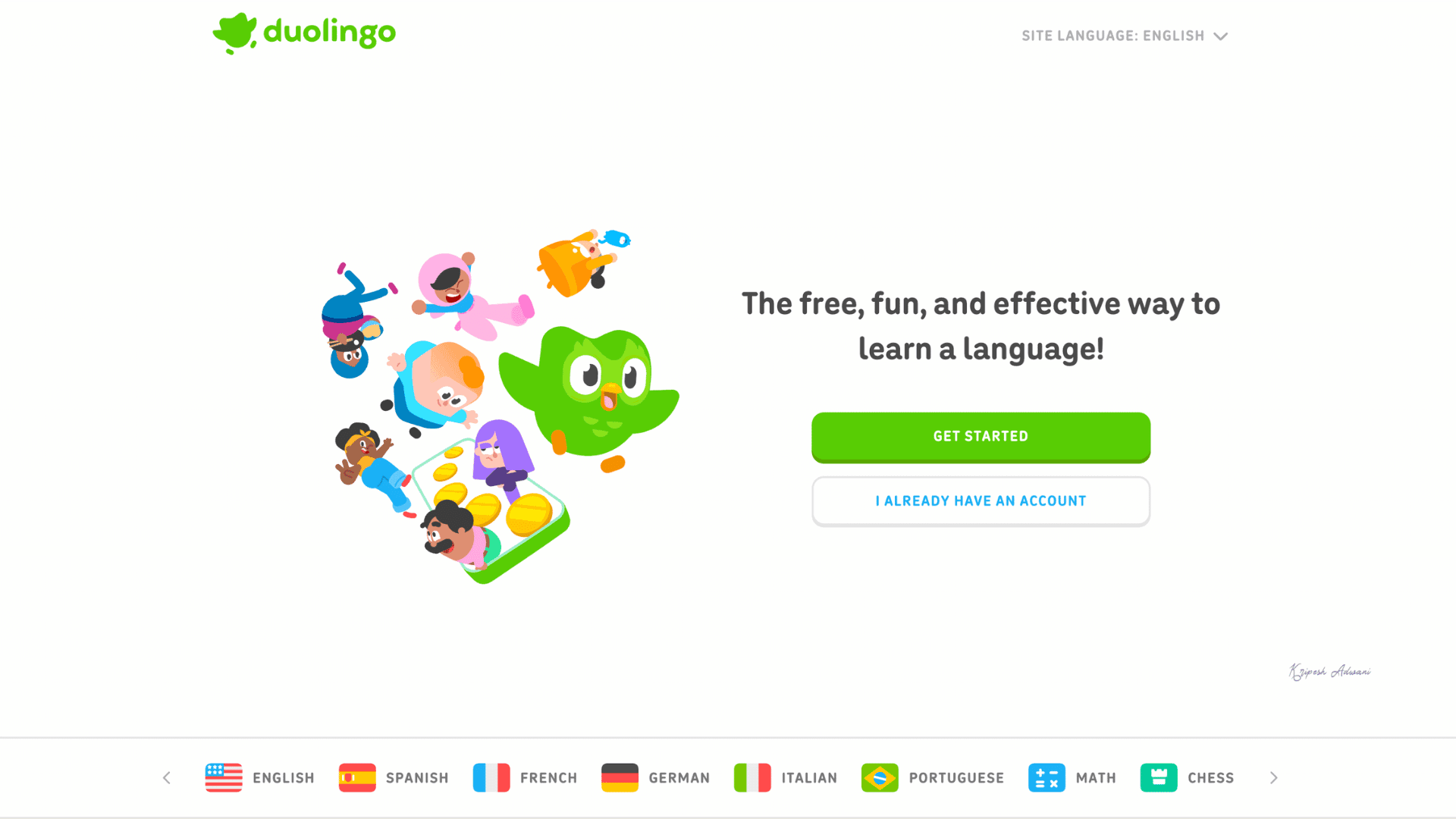
It offers CEFR-aligned (Common European Framework of Reference for Languages) courses in 40+ languages. We can learn popular languages like French, Spanish, and Japanese, and heritage languages like Hawaiian, Gaelic, Navajo, and Welsh. It’s absolutely best for beginners as it feels more like playing a game than studying.
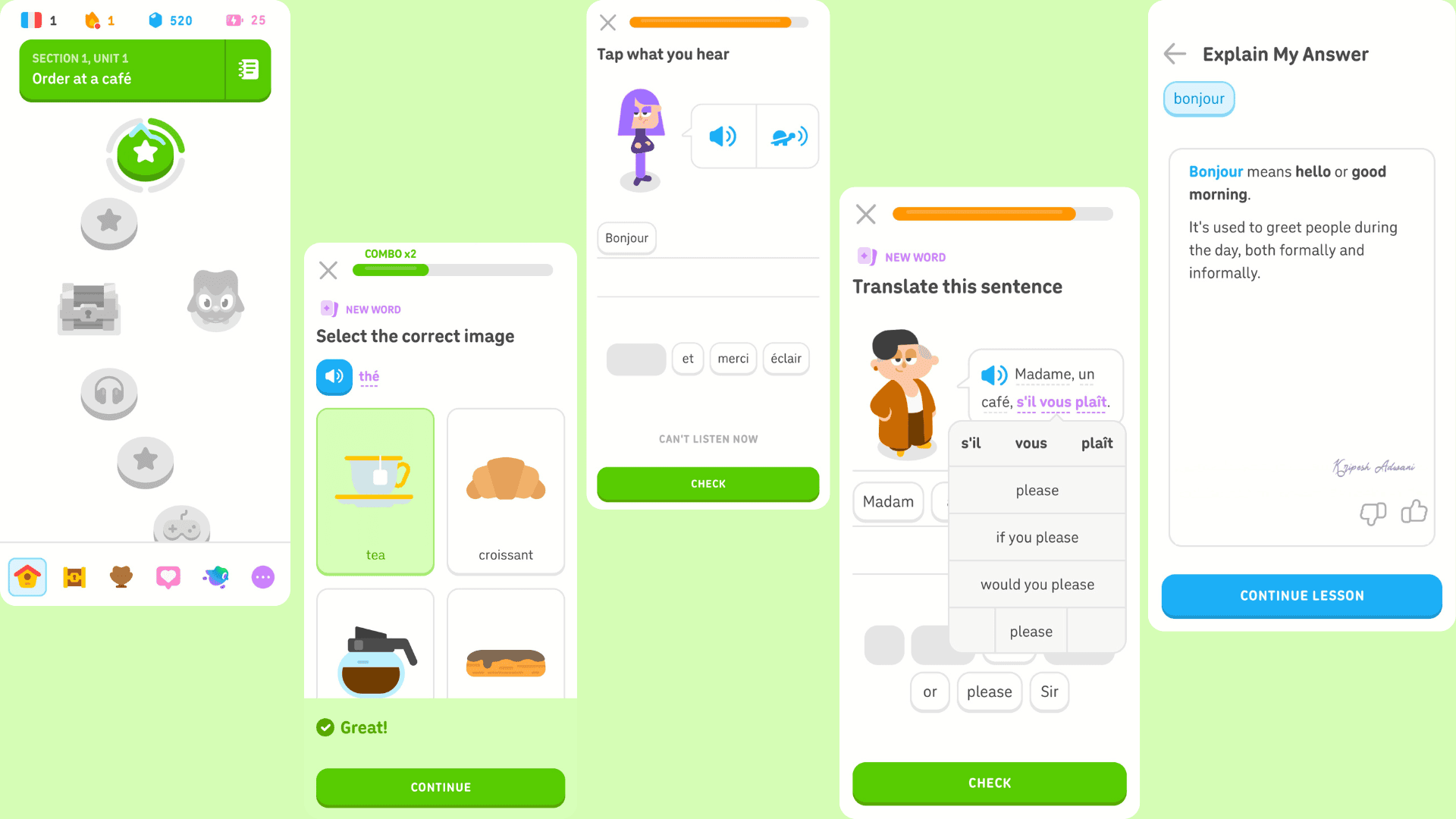
After every lesson, you earn experience points (XP) that count toward weekly leaderboards. If you’re a busy learner, the first task is building a habit. Duolingo’s streak system is surprisingly effective. It tracks how many consecutive days you’ve practiced.
Another useful feature is its AI-powered “Explain my Answer,” made free in January 2026. It provides personalized grammar explanations that make your foundation strong in a new language. To have a real-time conversation, you can either video call with Lily, a Duolingo character, or practice Role-play scenarios.
For vocabulary practice with realistic mini-dialogues, Duolingo stories will help. The app also includes speaking exercises. I found the voice recognition technology to be excellent. But you only get simple feedback (like correct or incorrect), not any phoneme-level help to improve your accent.
Limitations
- Grammar depth is basic; it won’t be enough for advanced learners
- Voice recognition does not highlight which phonemes need improvement
- AI Video Call and Roleplay features are limited to higher-paid tiers
- Most exercises rely on fixed sentence patterns; they don’t prepare you for real-world speaking fluency
Pricing
Duolingo is free to use, but the free plan comes with daily learning limits and ads. If you decide to upgrade, there are four paid plans: Super, Super Family, Max, and Max Family.
The Super plan removes ads and gives you unlimited energy so you can practice uninterrupted. The Max plan includes perks in Super, plus Video Call for conversational practice. Duolingo Super plan costs ₹566.59/month or around ₹6800 for 1 year.
Ideal Users
Absolute beginners with zero knowledge of a language, students, or casual learners who tried and quit traditional textbook-based learning.
2) Memrise: Best for Building Vocabulary
| Play store Ratings/ Downloads | 4.4/ 5Cr+ |
| App size | 27 MB |
| Style of Program | Spaced‑repetition vocabulary and phrase trainer |
| CEFR level coverage | A1–C2 for English; for other languages A1–B1/B2 |
| Average session length | 15–30 minutes a day |
Memrise is a British language-learning app currently used by 70 million learners worldwide. It follows scientifically informed memory techniques built around “Learn, Immerse, Communicate” to make language learning faster and more fun. The app offers courses in over 149 languages, including 30 major languages like French, German, English, Hindi, and many other community-generated courses.
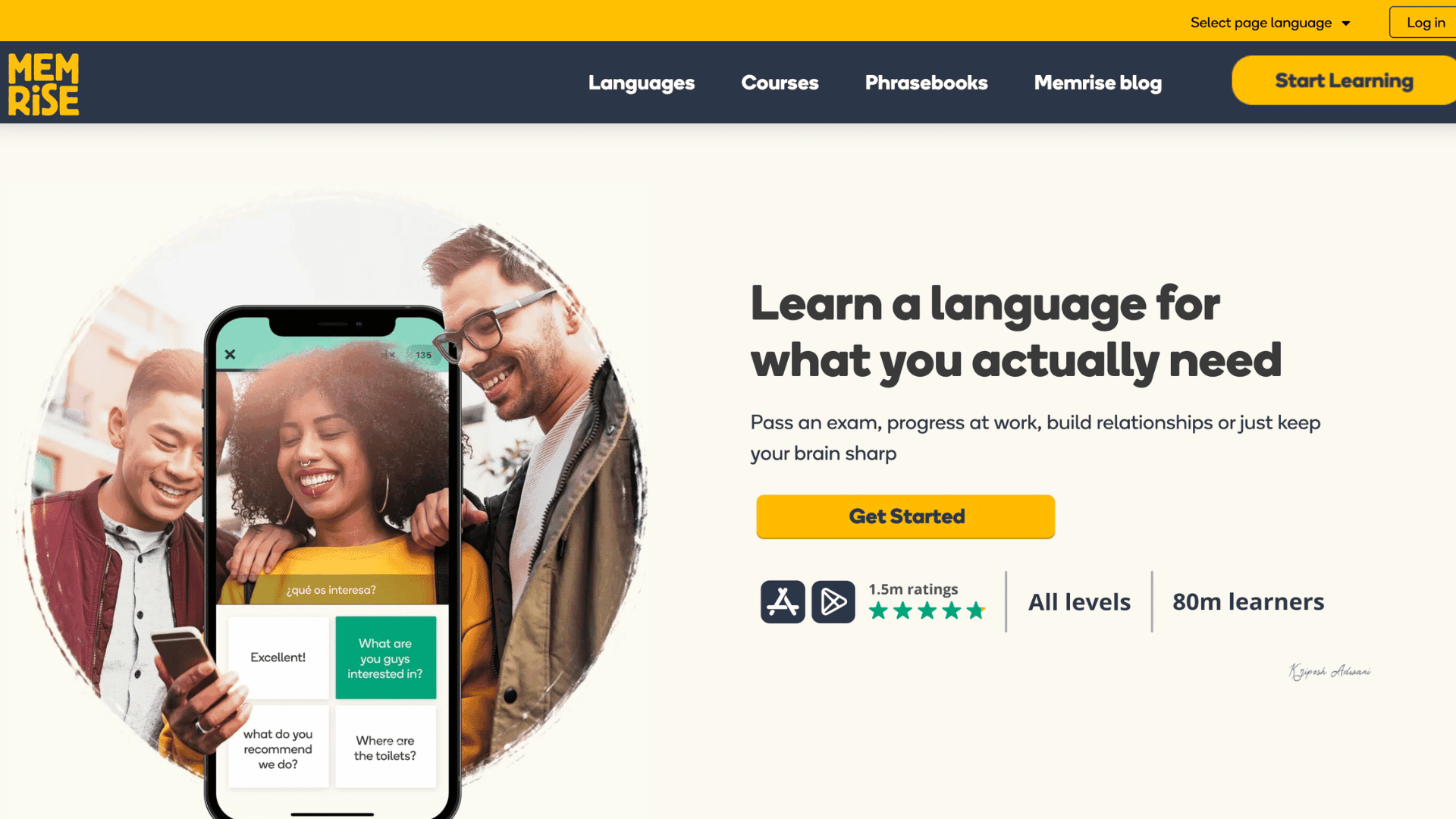
I have downloaded the app on my mobile, but you can access it on the web as well. This app builds your vocabulary through a Spaced Repetition System (SRS). The lesson includes flashcards, quizzes, typing exercises, and listening tests. It predicts when you’re likely to forget them and schedules reviews at the right intervals (such as 12 hours, 6 days, and 48 days) to help move vocabulary into your long-term memory.
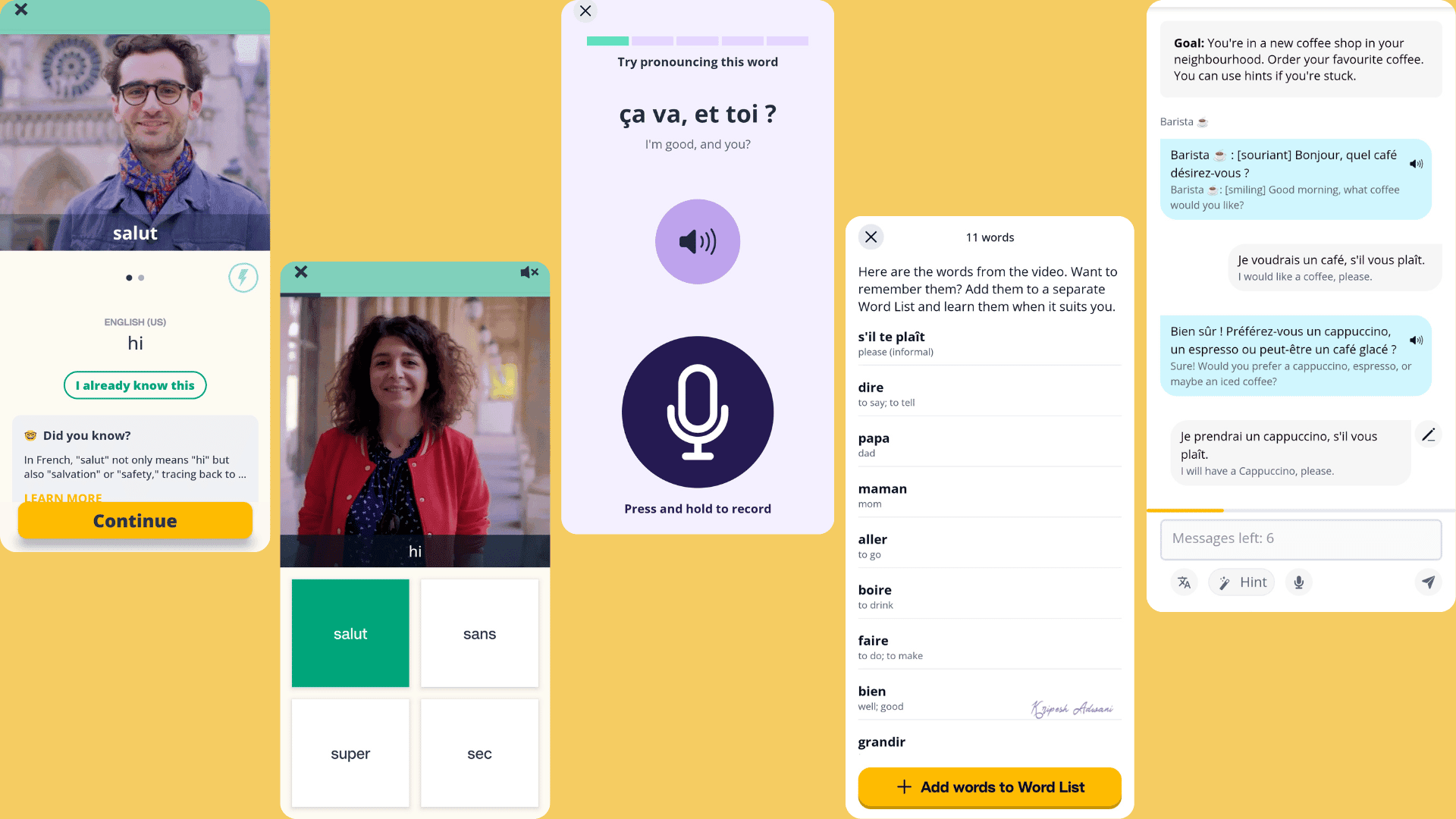
If your goal is to sound like a native speaker, “Learn with Locals” will help. It presents short videos of native speakers in real-world situations. Mnemonic techniques are another excellent way to help make difficult vocabulary easy to remember.
For speaking practice, I tried MemBot, which lets you have conversations either by typing or speaking. Its exercises are more diverse than Duolingo’s. We can practice MCQs, fill-in-the-blanks, listening exercises, speed review drills, and writing/typing activities. To keep you motivated, the app includes XP, points, daily streaks, leaderboards, and a progress tracker.
Limitations
- The app will not help to learn sentence structure, verb conjugation, or formal grammar in depth.
- Vocabulary targets B1/B2 level mostly; not advanced learners
- The user interface is still basic and disorganized
Pricing
Memrise offers a free plan, but you can watch up to three “Learn with Locals” videos, complete limited practice sessions, and use the AI chatbot only a few times. To unlock unlimited AI conversation practice, grammar and verb drills, the full vocabulary library, and an ad-free experience, you’ll need a paid subscription.
Memrise Pro annual plan costs ₹3,999 per year (about ₹333.25/month). You can purchase it for a lifetime at ₹18,000. Unless you’re certain you’ll stick with the app for years, I’d recommend starting with the annual plan instead of the lifetime.
Ideal Users
Beginner to intermediate learners and busy professionals who can only spare 5–15 minutes a day to build a practical vocabulary foundation.
3) Pimsleur: Best for Audio-based Learning
| Play store Ratings/ Downloads | 4.3/ 10L+ |
| App size | 48 MB |
| Style of Program | audio-first program |
| CEFR level coverage | B1 or B2 |
| Average session length | 30 minutes per day |
If you prefer learning by listening rather than reading and want a more structured approach, Pimsleur is one of the best language-learning apps I’ve tested. It was developed by Dr. Paul Pimsleur, a linguistics professor at Columbia University.
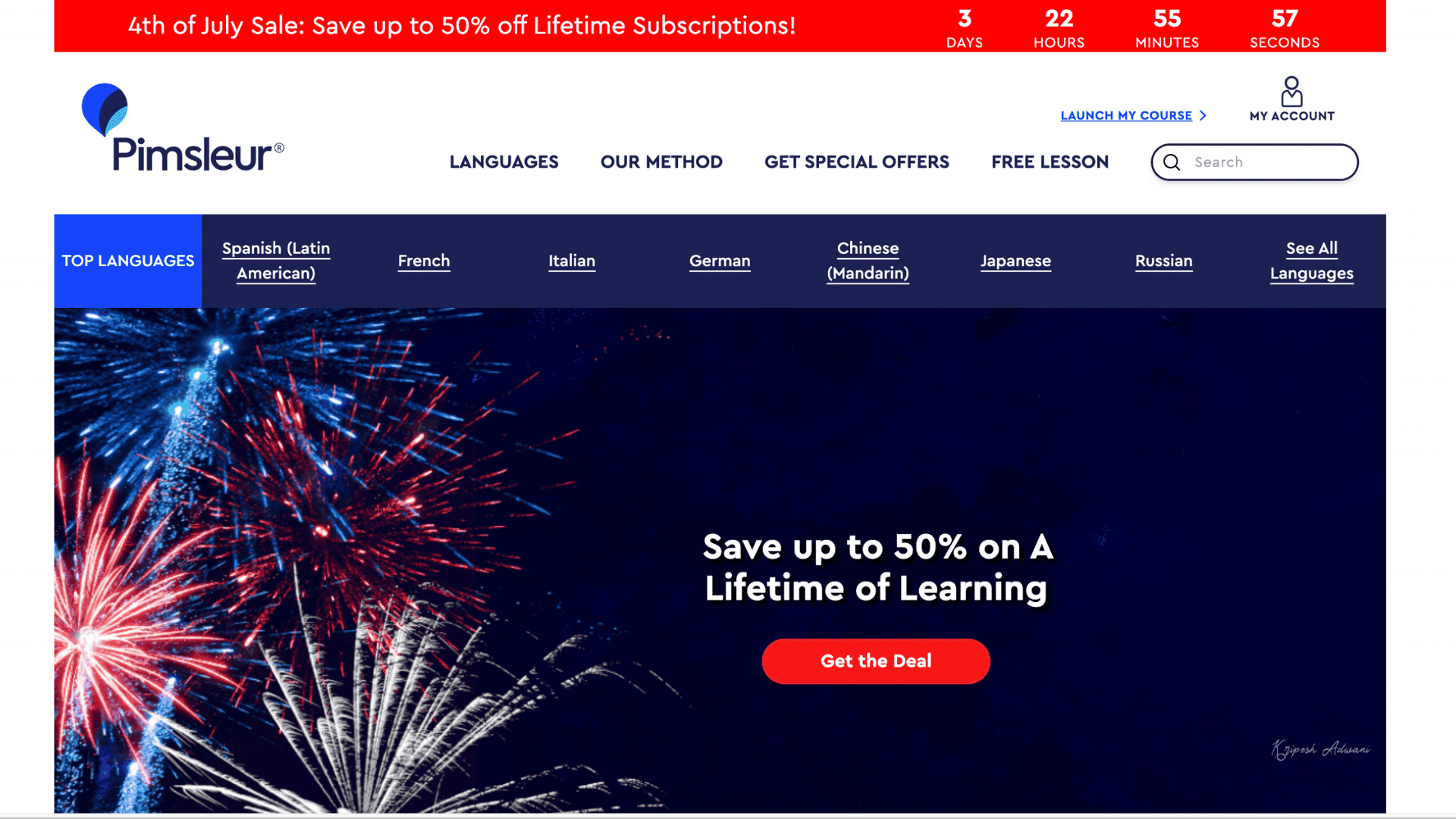
The app is built around an audio-based learning method because the human brain acquires languages more naturally through listening and speaking. It offers courses in over 50 languages, including Spanish, French, Japanese, Hindi, Punjabi, and several Arabic dialects.
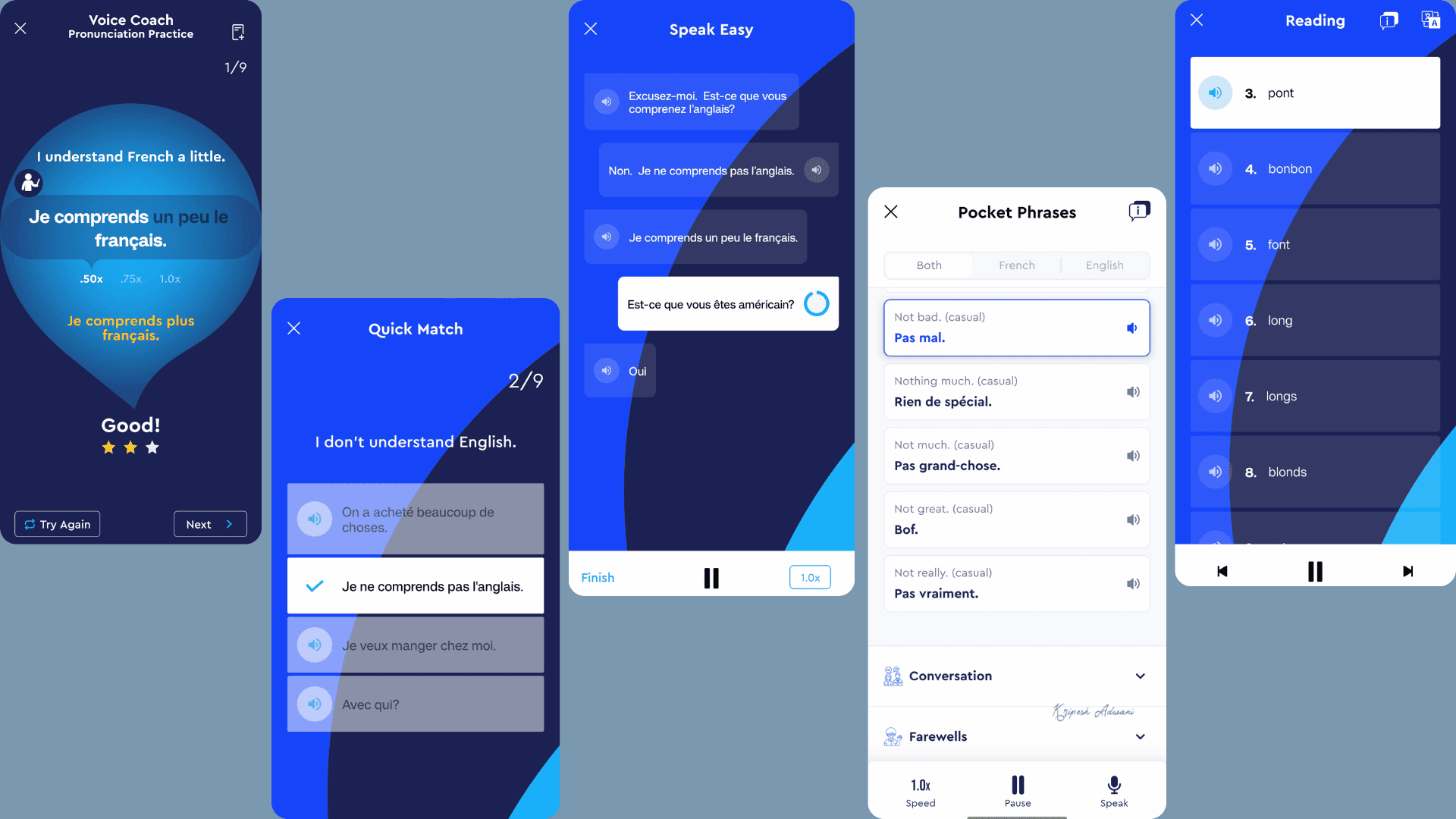
Pimsleur’s core experience revolves around 30-minute guided audio lessons. Each lesson introduces realistic conversations between native speakers. The narrator then asks questions like, “How would you say…?” and pauses. It’ll force you to speak the answer aloud before revealing the correct pronunciation.
This active recall method makes the lessons feel much more engaging than simply listening. As you progress, the narrator breaks down sentence structures and prompts you to respond entirely in the target language.
Next, the app builds vocabulary memory in another way. It applies Graduated Interval Recall (spaced repetition). Previously learned words and phrases reappear at carefully timed intervals to help move them into long-term memory.
For pronunciation practice, Pimsleur includes Voice Coach on premium plans. You can record your own voice, compare it with native speaker audio, and replay both to improve your accent.
In my experience, it’s useful for self-assessment, but the feedback isn’t as detailed as what you’d get from a human tutor.
There are also speed-round quizzes and flashcard exercises to check your progress. Speed rounds show recently learned vocabulary as a timed MCQ game. They also reward skill badges and include progress tracking layers within the app.
Limitations
- The app is audio-centric, so writing and reading help is almost absent.
- Learners get limited vocabulary lessons as the app introduces new vocabulary at a slow pace to protect retention
- Grammar rules are rarely explained
- The repetitive lesson structure feels monotonous for fast learners
- Its subscription is expensive, considering only audio-based lessons
- No real conversation or AI-conversation exercises are available
Pricing
Pimsleur offers limited free access to let you try a few lessons before upgrading. To unlock all 50+ language courses and share access with up to 3 household members, you’ll need a paid plan.
The subscription costs ₹599 per month and ₹4,799 per year. Pimsleur also offers a lifetime subscription for ₹84,000.
Ideal Users
Auditory learners, commuters who drive or take public transport, and busy professionals will find this app perfect for them.
4) LinQ: Best for Reading and Comprehension
| Play Store Ratings/ Downloads | 4.5/ 10L+ |
| App size | 60 MB |
| Style of Program | Input‑based reading and listening platform |
| CEFR level coverage | A2–B2 |
| Average session length | Not fixed by the app |
LinQ is the next app I would suggest if you love reading. It was developed by Steve Kaufmann based on the science-backed idea of learning our first language. We acquire language by consuming meaningful content rather than memorizing rules. LinQ offers 50 language courses, including Korean, Spanish, English, French, etc.
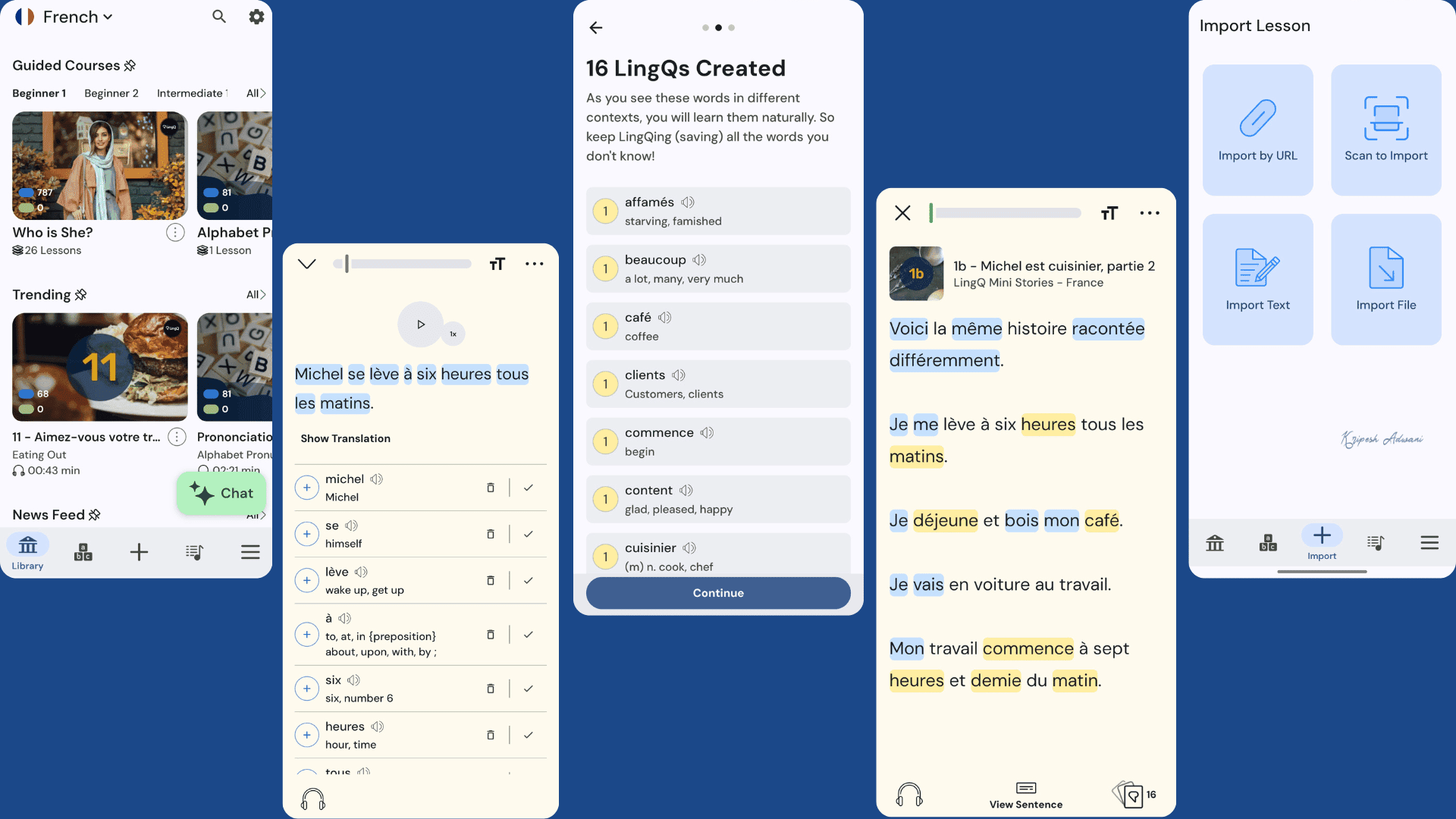
The first thing you’ll notice with LingQ is its huge library filled with content. Beginners can start with Mini Stories, while advanced learners can explore podcasts, books, YouTube videos, and articles. I really liked that we can import any article, eBook, podcast, or webpage from the internet, and LingQ automatically turns it into an interactive lesson.
Wherever I tap an unknown word, LingQ saves it as a LingQ (personal vocabulary). The app also tracks how many words you’ve learned, how much content you’ve read or listened to, and your overall learning progress. It lets users interact with content in multiple ways.
For example, Sentence View breaks down difficult passages into individual sentences with synced audio, and Karaoke Mode highlights each word as the audio plays to follow along. Flashcards help in reviewing vocabulary. Also, its AI tools can help turn videos/songs into interactive lessons by generating transcripts, translations, and audio.
Limitations
- The exercises and courses are not for absolute beginners
- LinQ does not function like a traditional grammar course with structured exercises
- The interface may feel complex to new users
- Free version includes only 20 saved LingQs and includes ads
- Compared to other apps, yearly plans are expensive.
Pricing
LinQ free users get access to 20 saved words and can create 5 lessons from imported content, 1 audio playlist, thousands of lessons, and flashcard quizzes. It offers two paid plans: Premium and Plus.
The premium plan will cost ₹11,700 for 1 year and will provide unlimited saved words, create lessons from imported content, audio playlists, and 600 transcribed audio options. Plus plan provides 3600 audio lessons, along with AI-enhanced text-to-speech, and simplifies lessons with AI at ₹27,800 for a year.
Ideal Users
Tech-savvy users, intermediate learners, and self-directed learners who want to create their own learning path will find LinQ perfect.
5) Langua: Best for Speaking Practice
| Play store Ratings/ Downloads | 4.0/1L+ |
| App size | 66 MB |
| Style of Program | AI conversation coach |
| CEFR level coverage | A2–C1 conversational practice |
| Average session length | 15–20 minutes daily |
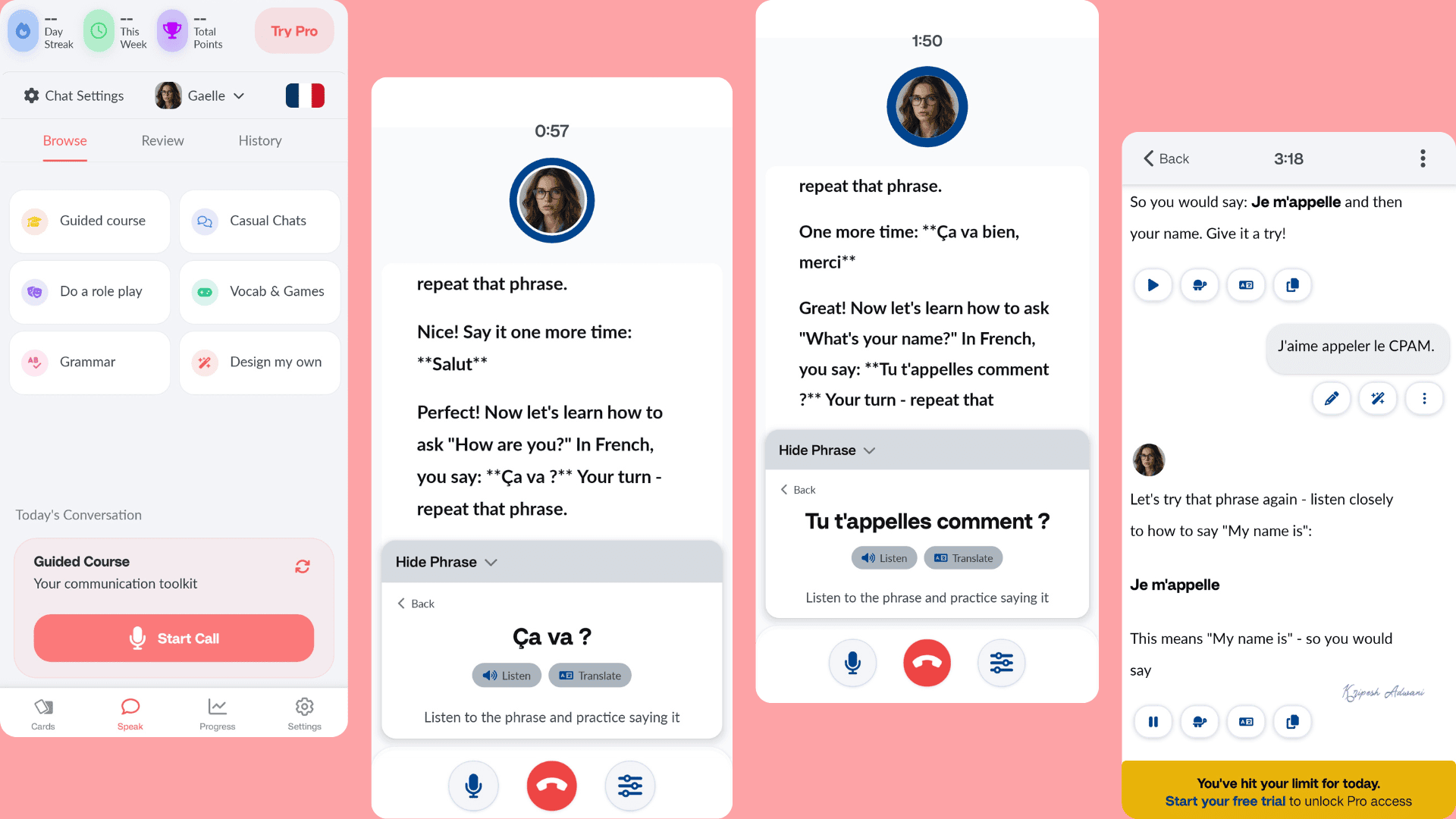
The most important thing in any language learning is to become fluent in speaking. For this, Langua by LanguaTalk is the perfect app. Instead of game-like vocabulary lessons or multiple-choice exercises, you can have conversations from day one. The idea is simple: the more conversations you have, the faster you build confidence like a native speaker.
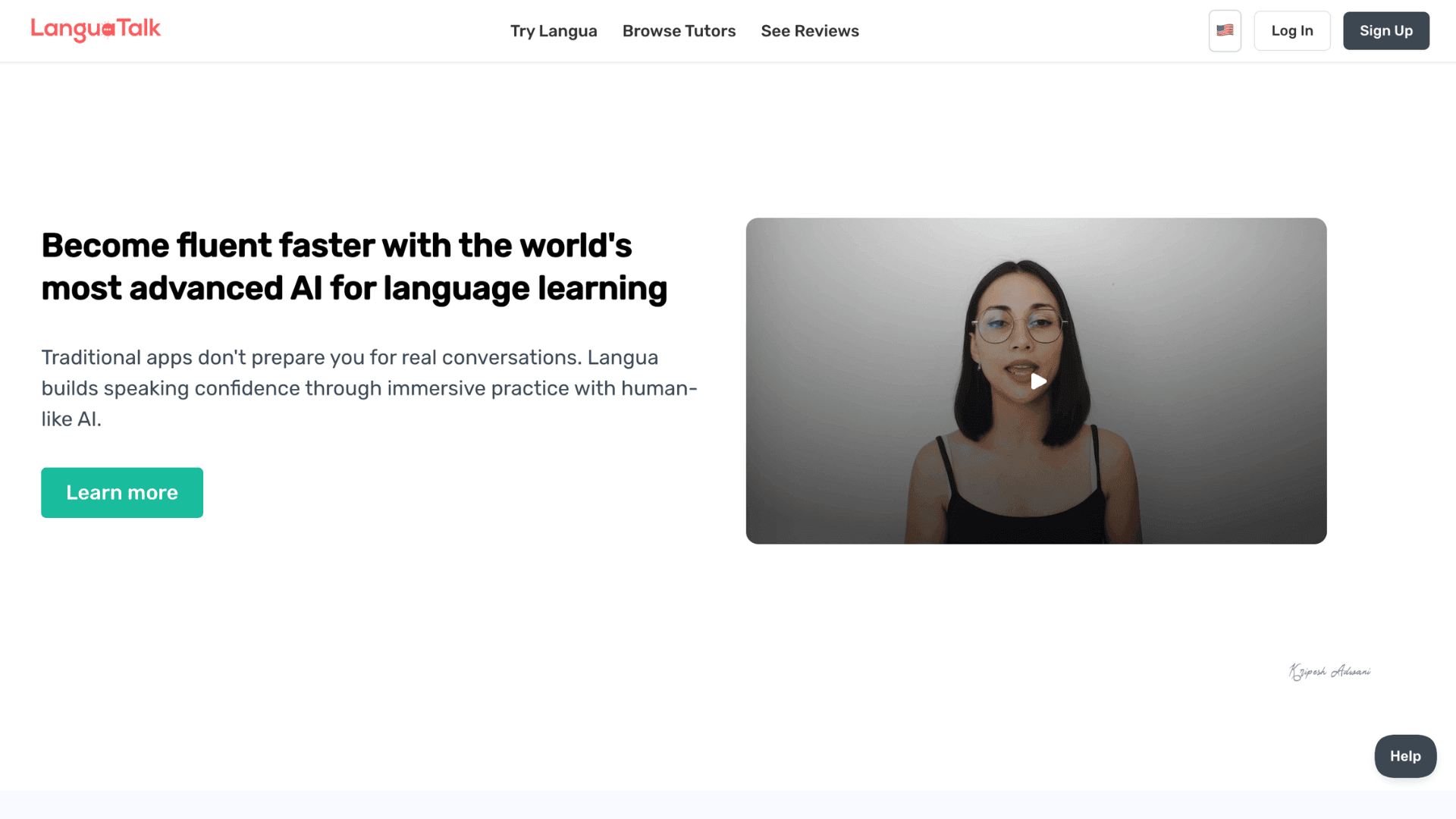
When I started using the app, it introduced very basic vocabulary, like greetings and simple everyday phrases. I had to record my responses, and it instantly gave me feedback on my mistakes. Unlike many AI language learning apps that follow scripted conversations, Langua lets you have free-flowing conversations with AI language tutors.
The platform also features AI clones of popular YouTubers, making conversations feel less robotic. One feature I particularly liked is Call Mode, which lets you practice hands-free while walking or driving.
Langua app feels mostly suitable for A2 to B2 learners, to me. But if you’re absolute beginners, the Guided mode suggests what you need to say so you don’t get stuck during practice sessions.
The platform also offers multiple conversation modes, including Guided, Role Play, Casual, Debate, and Vocabulary & Grammar Focused sessions. Another feature I found useful is that we can tap any unknown word during a chat and instantly save it to a flashcard deck for later review.
Limitations
- Langua’s voice recognition sometimes struggled to understand strong non-native accents
- Not an all-in-one language learning app with grammar lessons, reading libraries, etc.
- Subscriptions can feel expensive for occasional speaking practice
- Courses are not for absolute beginners with zero knowledge of the language
- The app sometimes glitches and stops working suddenly
Pricing
Langua offers a free plan that lets you send 20 AI messages per week and use Call Mode for 3 minutes per day. If you’re ready to upgrade, the Standard plan lets you send 75 AI messages and 30 minutes of Call Mode per day. It costs around ₹14,999 per year.
For learners who want unrestricted conversation practice, the Unlimited plan removes these limits along with AI voice clones based on native speakers. It costs around ₹12,900 per year.
Ideal Users
Langua is perfect for Intermediate learners who know the basics and Shy learners who do not yet feel ready for live tutoring.
6) Ling: Best for Hard-to-Find Languages
| Play Store Ratings/ Downloads | 4.6/ 10L+ |
| App size | 61 MB |
| Style of Program | Gamified, multi‑level course app |
| CEFR level coverage | A1–B1/B2 |
| Average session length | 5–10 minutes each |
Ling is a Thailand-based language learning app launched in 2017. Over 1 million people downloaded the app worldwide in less than a decade. Ling has become popular as language courses aren’t limited to popular languages like English, French, Spanish, etc. We can learn regional and lesser-known dialects like Lao, Kannada, Urdu, Khmer, Māori, Armenian, etc.
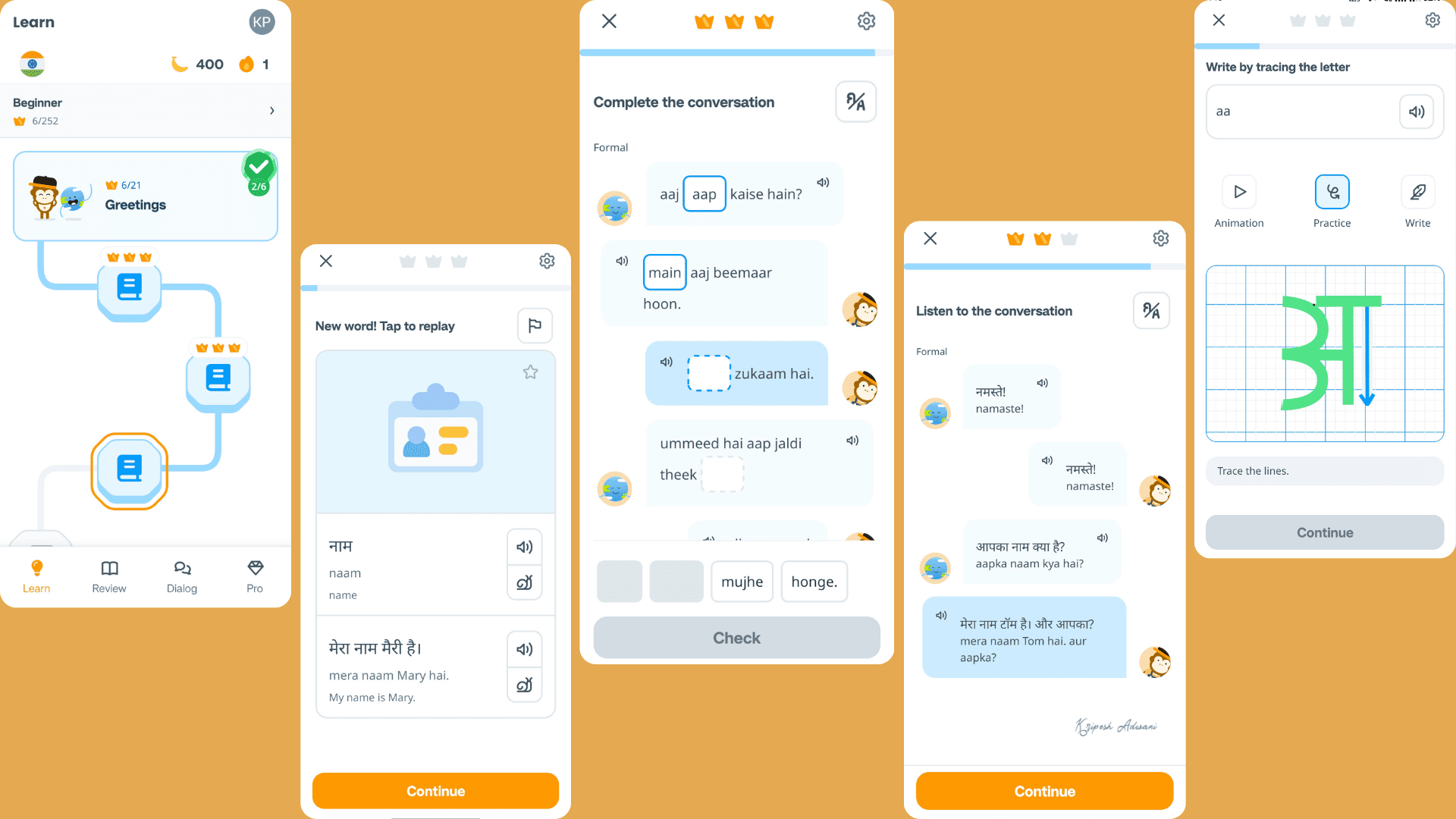
For testing, I chose Hindi as many global language apps cannot provide quality and structured practice for regional languages. The app surprisingly offered me an organised and gamified learning experience. The course is divided into 5 proficiency levels: beginner, Intermediate, Upper-Intermediate, Advanced, and Expert. On each level, we’ll see 10 modules with 6 groups of activities that include vocab lessons, speaking exercises, an exam, and review sessions.
After completing a unit, Ling provided a short dialogue section based on the vocabulary I had just learned. I could read the conversation, listen to audio, and then complete fill-in-the-blank exercises using the new words. Every lesson includes audio from native speakers so that we can learn accurate pronunciation.
This is the first app I found that includes writing practices for non‑Latin scripts, like Hindi. It teaches character writing with animated stroke order, guided tracing using arrows, and a free handwriting area where you can practice writing characters on your own. Ling app also features an AI-powered chat where we can practice speaking with Ling’s Dialog feature.
Limitations
- The lesson structure appears identical across all languages taught
- Some users have also reported bugs and user interface issues
- Grammar lessons disappear after the beginner stages, even for grammar‑heavy languages
- Faced frequent “voice capture error” in speaking exercises
- The review section doesn’t use the spaced‑repetition (SRS) system; instead, reviews just random words
- Ling is a great starting point, but not sufficient for deep fluency
Pricing
We will get access to 2 full units free per language, that is 8+ lessons. There is no daily cap for learning. If you want to unlock the full experience, including all lessons, flashcard reviews, exams, saved favorites, and unlimited access to 40+ language courses, you’ll need the Ling Plus subscription. The
Ling Plus plan will cost ₹999 for 12 months, more affordable than any app. You can try it just for 1 month by paying ₹179 before deciding whether to upgrade.
Ideal Users
Ling is ideal for travelers and expats who want everyday phrases before visiting a new country, and polyglots or language enthusiasts. It’s also a great choice for mobile-first learners who enjoy Duolingo-style gamified lessons but want access to a much broader selection of lesser-known languages.
7) Italki: Best for Live Tutoring/ Real conversation Practice
| Play Store Ratings/ Downloads | 3.7/ 50L+ |
| App size | 85 MB |
| Style of Program | Live‑lesson marketplace |
| CEFR level coverage | A1-C2 |
| Average session length | 30, 45, 60, or 90 minutes |
A serious language learner will obviously require something better than tap-and-match apps like Duolingo, Ling, or Memrise. So, the fastest way to improve is by speaking regularly with someone who can correct your mistakes in real time. Italki is one such all-in-one language learning app. It launched in 2007 as a language exchange community and gradually developed into a global marketplace for online language tutors.
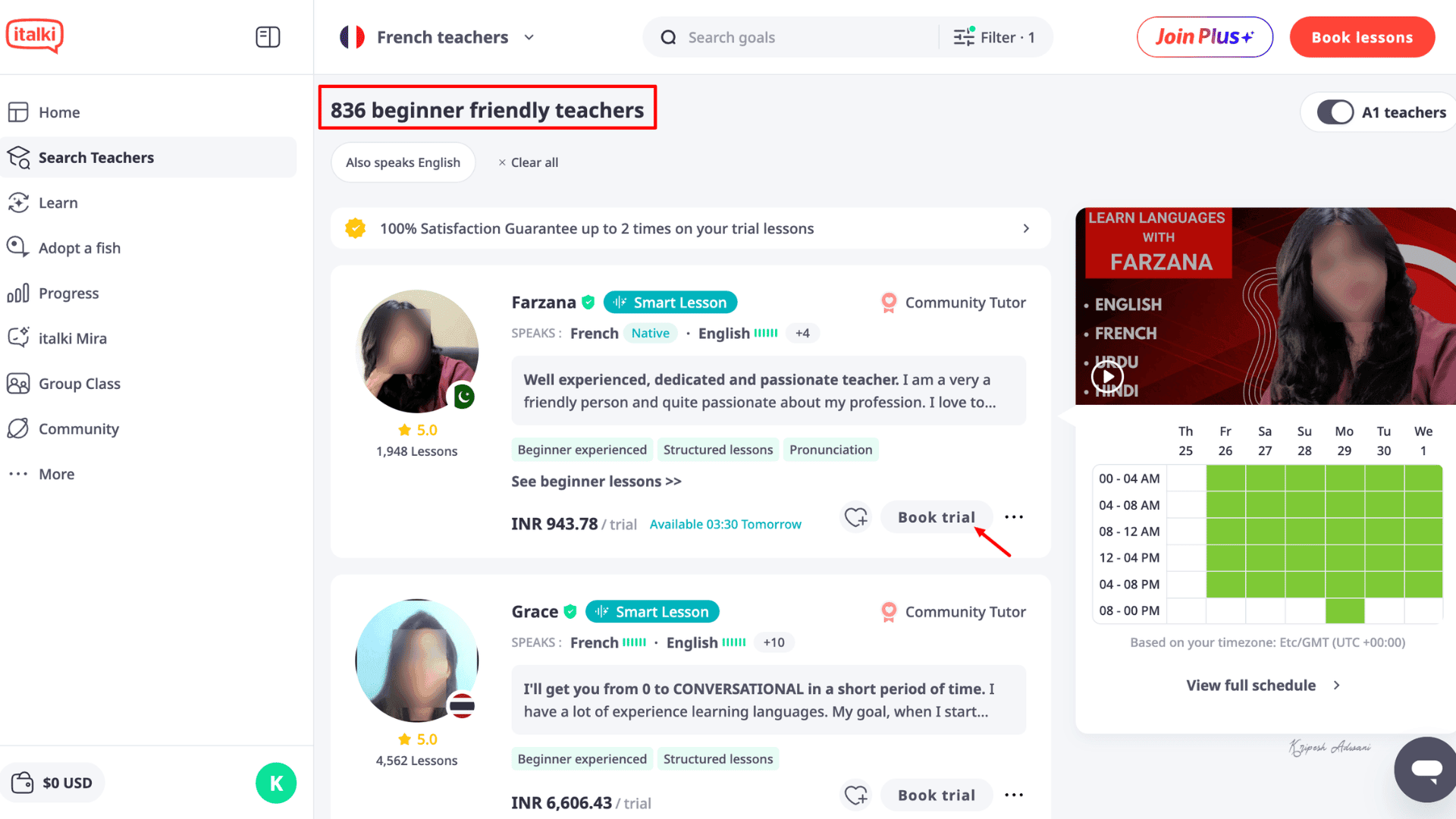
The platform offers two types of tutors. Community tutors are native speakers who help with routine speaking and conversations. Professional teachers are certified instructors who provide structured lessons, grammar training, writing practice, and exam preparation for IELTS or DELE. italki has more than 30,000 teachers and community tutors covering 150+ languages.
I found the tutor search system impressive. You can filter by price, country/region, availability, accent, languages spoken, and qualifications. Every tutor also has an introduction video and verified student reviews. Its content and community features include free resources like podcasts, quizzes, community forums, and libraries.
One advantage is its pay-per-lesson pricing model, so you’re not locked into a monthly subscription. Many tutors also give 30-minute trial lessons at very discounted rates. For a flexible experience, the platform runs classes via the italki Classroom or external tools like Zoom or Skype, with scheduling and time zone support. AI-powered study aids like lesson summaries, vocab lists, and flashcards are also available for premium users.
Limitations
- As italki is a tutor marketplace, it does not guarantee a uniform teaching method
- Lessons with experienced tutors can become expensive
- The platform itself does not provide a step‑by‑step course or learning path
Pricing
Italki doesn’t offer a free learning plan. Instead, it follows a pay-as-you-go model, so there are no monthly subscription fees. The lesson price depends on the tutor you choose. Community Tutors typically charge $4–$20 per lesson, while Professional Teachers usually charge $10–$40 per lesson.
Ideal Users
The best way to use italki is as a private language coach rather than a gamified learning app. It’s an excellent choice for adults preparing for relocation, work, or study abroad, for exam candidates preparing for IELTS, DELE, or JLPT, and for self-directed learners who prefer one-on-one coaching.
How We Evaluated Language Learning Apps
I started by researching the most popular language learning apps available in 2026. At first, I shortlisted more than 15 apps based on downloads, user ratings, reviews, and overall reputation.
Next, I downloaded every app on my Android phone, created an account, and used each for weeks. Rather than relying on marketing claims, I evaluated every app using the following criteria:
- Language selection: How many languages does the app support?
- Curriculum structure: Is there a clear learning path from beginner to advanced levels?
- Skills covered: How well does it teach vocabulary, grammar, listening, speaking, reading, writing, and pronunciation?
- CEFR alignment: Are the lessons aligned with CEFR levels, and what proficiency can learners achieve?
- Learning content: Does the app use native-speaker audio, authentic texts, videos, or mostly AI-generated sentences?
- Feedback quality: Does it explain mistakes in detail and identify recurring error patterns?
- Progress tracking: Does it provide meaningful stats on learning progress?
- Learning goals: Is the app suitable for casual learners, exam preparation, or long-term fluency?
- Value for money: Are the features worth the subscription price?
After comparing all the apps, I selected the 7 best language learning apps that offer the best overall experience for beginners to advanced language learners.
Why Should You Trust Me
For the past 10 years, I’ve worked in the technology industry. I’ve used, tested, and reviewed thousands of SaaS tools and AI products that make everyday work easier and more productive. You can check out Best AI Tools for Content Writing, Otter AI Review, Best AI Apps for Beginners, Best AI To‑Do List Apps, Best AI Browsers, etc.
Being a tech content creator, I have to travel to multiple countries to attend conferences, meet industry partners, and build affiliate relationships. One thing I’ve realized is that language should never be a barrier to connecting with people.
That inspired me to spend the last few months exploring and testing language learning apps. My goal wasn’t to find one app that’s “best” for everyone because every learner has different goals. Some are great for building vocabulary; others focus on conversation practice. That’s why this guide highlights the strengths and limitations of each app, so you can choose the one that best matches your learning style and goals.
Conclusion
In this article, I’ve reviewed 7 useful language learning apps that let you work on different language skills, be it fluency, grammar practice, or reading. If you’re just starting, Duolingo, Memrise, and italki are a well-balanced stack. Duolingo helps you build a daily learning habit, and Memrise expands your vocabulary lessons. Italki finally bridges the gap with 1:1 live tutoring.
The other apps, Pimsleur, LinQ, Langua, and Ling, also have their own unique strengths. Ultimately, no single app is perfect. The best choice depends on your current level, learning style, and what you want to achieve.
Whichever app you choose, consistency matters. Spend at least 10 to 20 minutes daily on focused practice to see a difference over the next few months.
So, don’t just bookmark this guide; pick an app and start learning today. Good luck!
FAQs
How much time should I spend daily?
Ideally, you should spend 15 to 30 minutes a day using a language learning app. This is enough to build a consistent learning habit, improve long-term memory retention, and avoid burnout. Consistency matters far more than studying for hours once in a while.
What is the best app for learning multiple languages?
Duolingo is an all-purpose app for learning multiple languages if you’re a beginner. If you’re already comfortable with the basics and want to improve your reading and listening skills, LingQ is a better choice.
Which language app is best for serious learners?
Italki is the best option for serious language learners. It connects you with professional teachers and community tutors for one-on-one lessons. You’ll receive personalized feedback and correct your mistakes in real time.
Which app is best for learning Asian languages?
For Asian languages, Ling is my top recommendation. It offers well-structured, gamified courses in Thai, Khmer, Lao, Vietnamese, Korean, Japanese, Burmese, Sinhala, Punjabi, Urdu, and many other languages that aren’t supported by mainstream language learning apps.