Are you a teacher struggling with managing the classroom and making learning fun and interactive for your students? Well, AI tools have disrupted many industries in the last year. Why should the education industry be left out?
This is why I’m here with the 13 Best AI Tools for Teachers. In this article, I will introduce you to some fascinating tools that cater to teachers’ and educators’ major pain points. I have spent a few weeks researching and testing dozens of AI tools before finalizing the ones listed below.
We have included the best AI tools from categories like lesson planning, feedback and grading, assessment and quizzes, research, student engagement, productivity, etc. So, are you ready to empower and elevate your teaching experience with some cool and unique AI tools? Let’s go!
- 13 Best AI Tools for Teachers 2026 [Quick Comparison]
- AI Tools for Lesson Planning and Unit Design
- AI Tools for Creating Classroom Resources and Worksheets
- AI Tools for Presentations & Visual Content
- AI Tools for Student Engagement & Interactive Learning
- AI Tools for Quizzes and Formative Assessment
- AI Tools for Higher-Education Support
- AI Tools for Grading and Feedback
- AI Tools for Academic Integrity and Originality
- What are the Benefits of AI Tools for Teachers?
- Why Should You Trust Me?
- Conclusion
- FAQs
13 Best AI Tools for Teachers 2026 [Quick Comparison]
| Tool | Best For | Integrations | Pricing | Ideal Users |
| MagicSchool | Create a complete lesson plan | Google Classroom, Canvas, Schoology, Clever, ClassLink, and Microsoft | Free; $8.33/mo, yearly | K-12 teachers who want a free, all-in-one planner |
| Eduaide | Build guided classroom resources | Exports to Google Docs, Google Forms, Word, PDF, and plain text, and major LMS | Free; $4.17/mo, yearly | Teachers whose schools require a 5E, UbD, UDL frameworks |
| Brisk Teaching | Turn a video or article into materials | ClassLink, Blackboard, Canvas, Schoology, YouTube, Kahoot!, Nearpod and Wayground, Lovable. | Free; Custom pricing | Google or Microsoft Classroom teachers who want AI inside their existing workflow |
| Diffit | Create levelled worksheets | Google Classroom, Canva, Claude, Microsoft Office | Free; Custom pricing | Teachers of ELL, special-education, or mixed-ability classes who need one text at several levels |
| Canva for Education | Create presentations, worksheets, posters, and visual lessons | Google Classroom, Canvas, Moodle, Schoology, D2L, Blackboard, and Microsoft Teams | Free for verified K-12 teachers and students | K-12 teachers at accredited schools who want visuals and student design projects |
| Slidesgo | Make editable educational presentations | Google Slides, PowerPoint, Canva, Keynote, AI Presentation & Content Tools | Free; ₹62.42 /mo, yearly | Teachers who want quick, editable slides for classroom lessons |
| Curipod | Run interactive lessons | Sign in with Google, Clever, and ClassLink for teachers | Free; $19/mo, yearly | Teachers who want every student to participate through polls, writing, discussion, and revision |
| SchoolAI | Give students controlled AI activities | Canvas, Google Classroom, Schoology, Clever, ClassLink, Microsoft | Free; Custom pricing | Teachers with 1:1 devices who want supervised AI tutoring |
| Conker AI | Create quick quizzes | Google Classroom, Canva, Schoology, Clever | Free; $2.08/mo, yearly | K–12 teachers who need fast formative quizzes, exit tickets and practice assessments |
| Elicit | Research academic papers | Zotero, EndNote & Mendeley | Free; $49/mo, yearly | University lecturers, graduate students and education researchers |
| CoGrader | Grade essays with a rubric | Google Classroom, Canvas, Schoology, Blackboard, DMAC Solutions, Brightspace, Microsoft Teams. | Free; $15/mo, yearly | US-style K-12 teachers who want rubric-based grading for frequent written assignments |
| Gradescope | Grade structured exams | Canvas, Blackboard, Brightspace, Moodle, Sakai | Free; Custom pricing | University and STEM Teachers grading paper exams in large numbers |
| Copyleaks | Check originality | Canvas, Moodle, Blackboard, Brightspace, Google Classroom, Schoology, Sakai and Edsby | Free; $13.99/mo, yearly | Teachers who want to confirm suspected AI use |
AI Tools for Lesson Planning and Unit Design
1) MagicSchool
MagicSchool is an all-in-one teacher-focused AI platform. It helps teachers create lesson plans, worksheets, quizzes, rubrics, differentiated materials, and classroom communication, and it also provides feedback on student work.
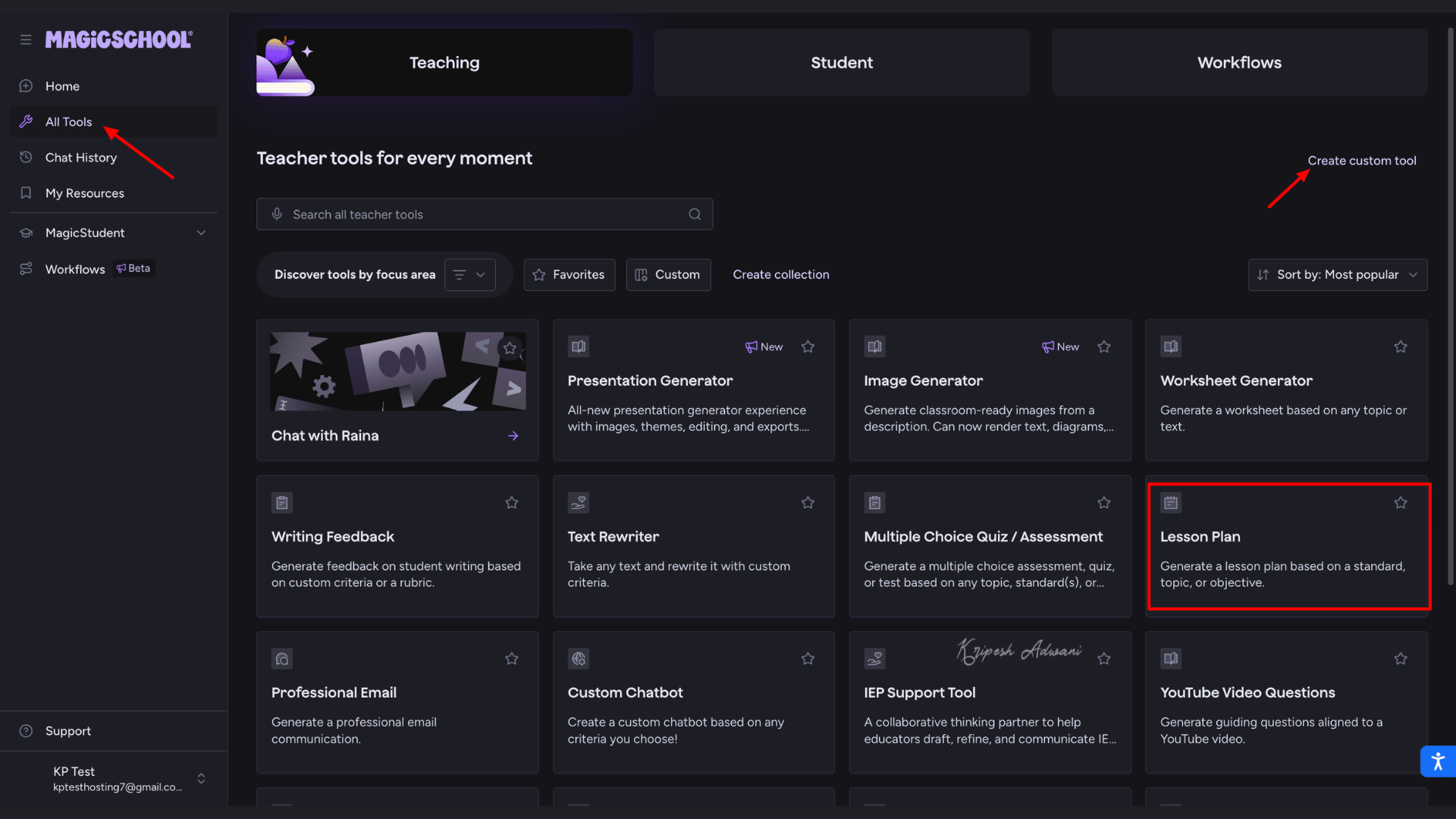
You simply select a tool, fill out a short form, and get an editable draft. If you don’t want to waste time searching for the right tool, you can describe what you need to its AI assistant, Raina, and it will open the right tool for you.
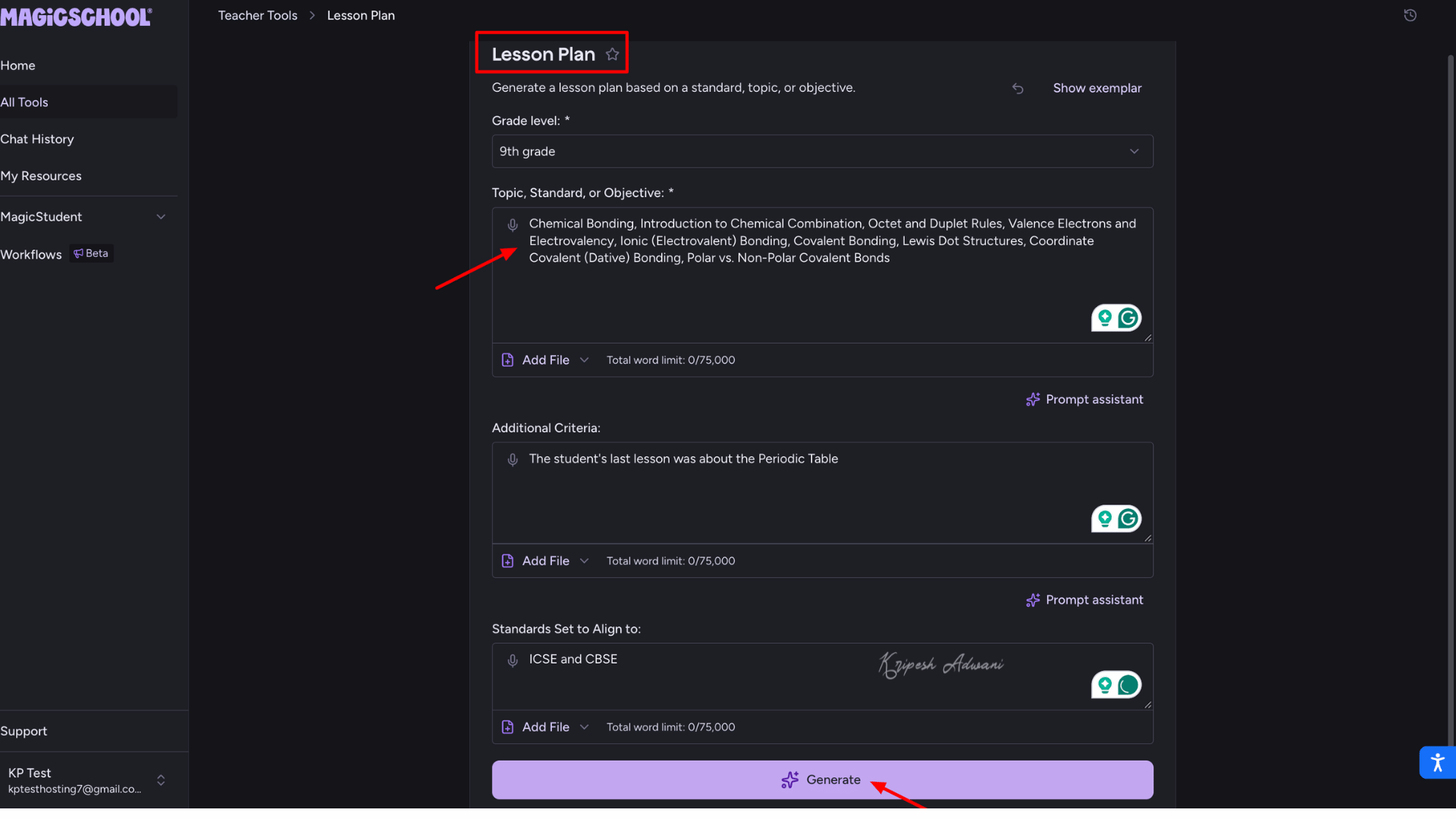
MagicSchool is especially useful if you want one education-focused platform for handling routine teaching tasks instead of relying on a general-purpose AI chatbot. For example, you can create a Class 8 science lesson by entering the topic, learning objective, lesson duration, grade level, and relevant standard. The tool then generates a lesson structure with activities and an assessment that you can edit before using.
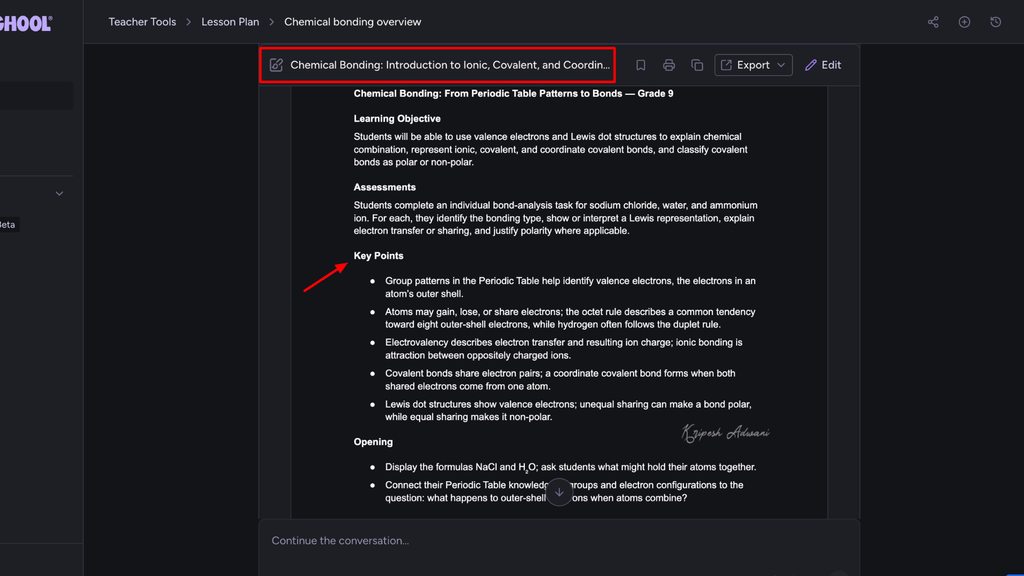
I particularly liked the detailed and comprehensive lesson plans it generated. Next, its Worksheet Generator created fill-in-the-blanks, MCQs, and open-ended questions, along with an answer key. The Student Work Feedback tool was also a huge time-saver.
Overall, I liked how MagicSchool brings so many teaching-related tasks together in one place.
Limitations
- If you provide only a topic without the grade level or other details, the generated content can be quite generic.
- Since the platform relies on LLMs, you should verify scientific and numerical claims and answer keys before using them.
Pricing: 80+ teacher tools, the Raina chatbot, quizzes, Class Writing Feedback, basic support and professional development, and FERPA, COPPA, SOC 2, GDPR, and Ed Law 2-D compliance are available for free. The Plus plan starts at $8.33/user/month when billed annually.
2) Eduaide AI
If your school follows a specific lesson-planning framework, like 5E, Backward Design, or UDL, Eduaide AI may be a better fit than MagicSchool. It helps teachers create lesson plans, worksheets, assessments, classroom games, and discussion activities.
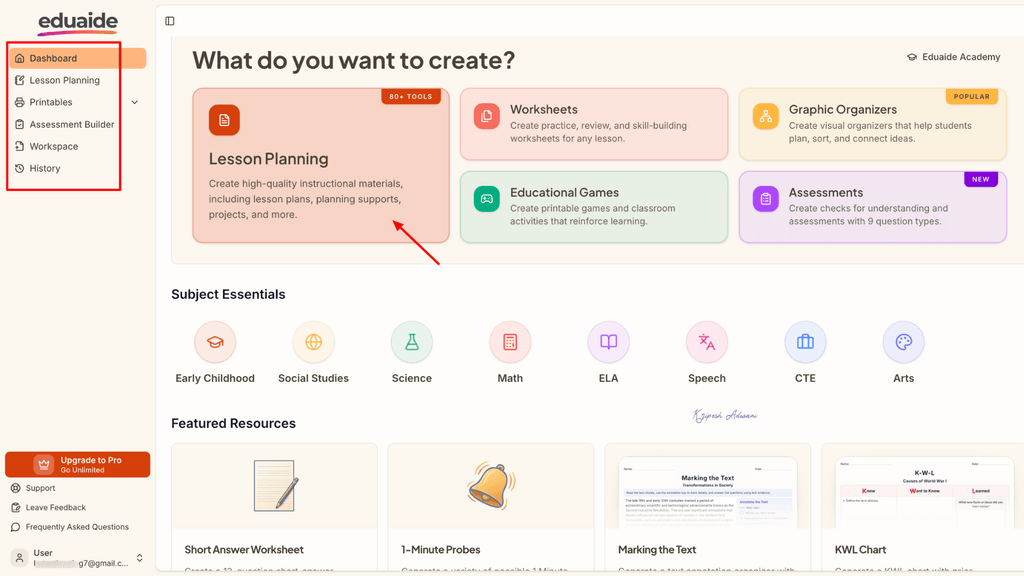
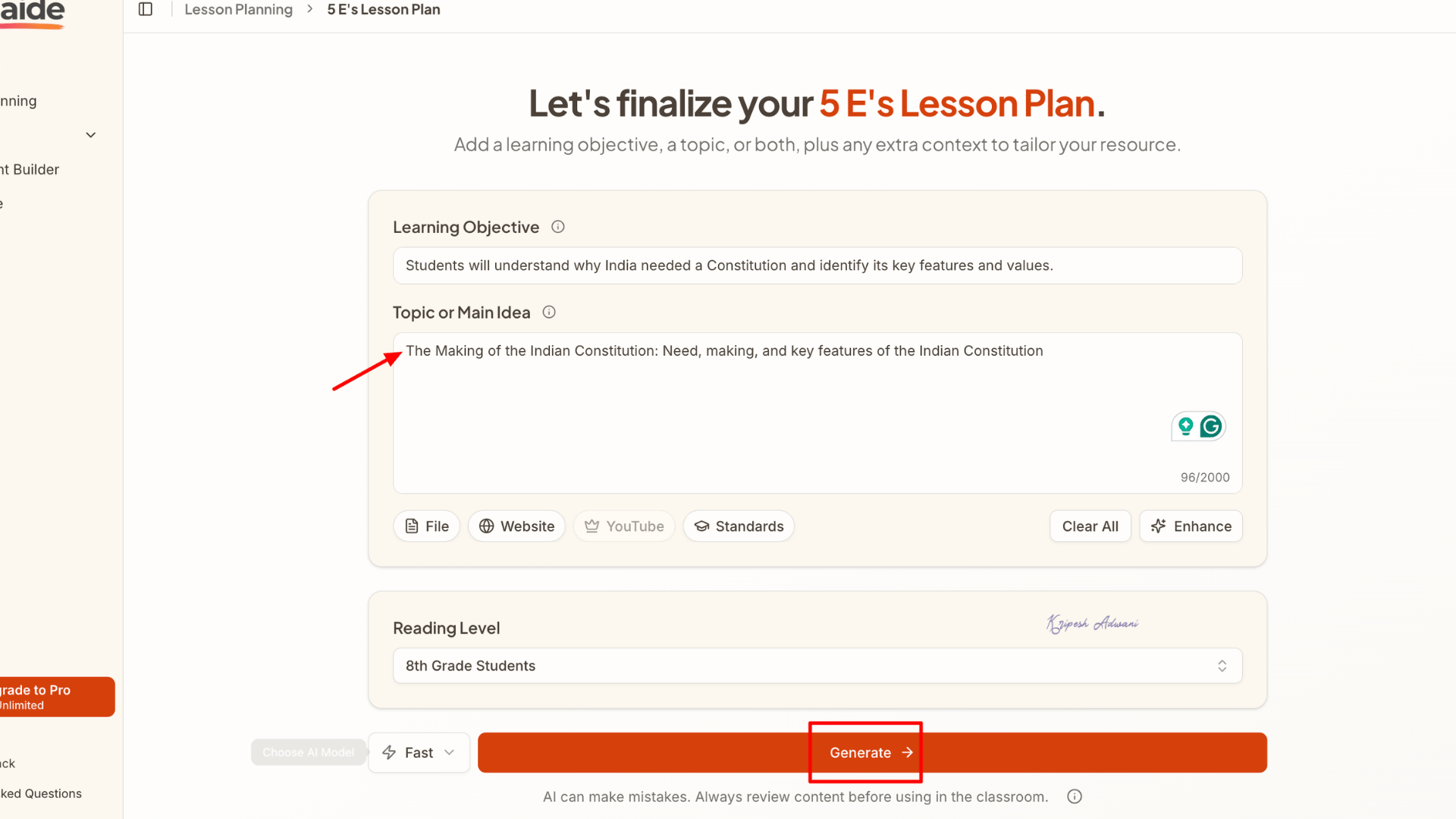
To use Eduaide, first we need to sign up for a free account and select Lesson Planning from the dashboard. Choose a framework, such as the 5E model, and enter details like the topic, learning objectives, and grade level. Eduaide then generates a lesson plan based on your selected framework.
Lesson and unit plans are available in 11 instructional models, including 5E, Backward Design, Hunter’s Model, Gagné’s Nine Events, UDL, PBL, and Montessori. For example, a math teacher can create a Backward Design unit on modeling real-world situations with functions. You can review the draft using built-in evaluators and then export it to Google Docs, Word, Google Forms, or PDF.
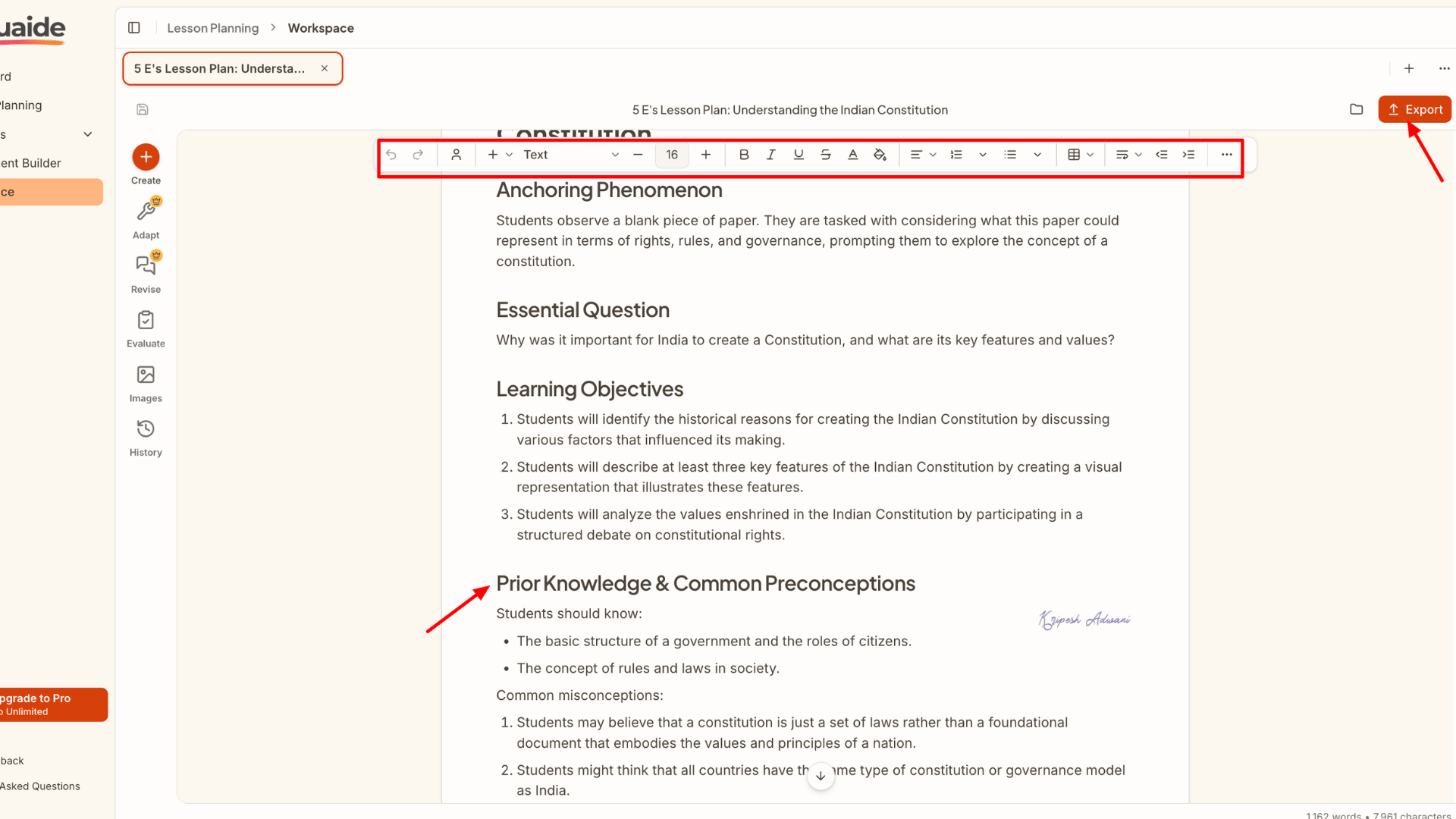
Eduaide offers seven assessment builders, including MCQs, True/False questions, Vocabulary & Concepts Practice, Comprehensive Unit Tests, and more. It’s also a good option for teachers who want more control over assessments, including question types and difficulty levels, without spending much.
Another thing I liked is that Eduaide can work with uploaded documents, websites, and YouTube videos. So, as an educator, I can create materials based on the content I actually plan to teach.
Limitations
- Features like Document Chat for Revisions, Add Questions, Rubrics, Reading Supports, Study Tools, and Translations are locked behind paid plans, unlike MagicSchool.
- Its standard library appears to be US-focused, and I didn’t see an Indian curriculum framework listed.
- The lesson plans are less detailed than MagicSchool
Pricing: 8 resource generations/month with limited input context for topics, standards, and uploaded documents on the free plan. Eduaide Pro starts at $4.17/month when billed annually.
AI Tools for Creating Classroom Resources and Worksheets
3) Brisk Teaching
Brisk Teaching is an AI teaching assistant that works as a Chrome and Edge extension. It works with tools teachers already use, like Google Docs, Word, Google Slides, PowerPoint, PDFs, webpages, online textbooks, and YouTube.
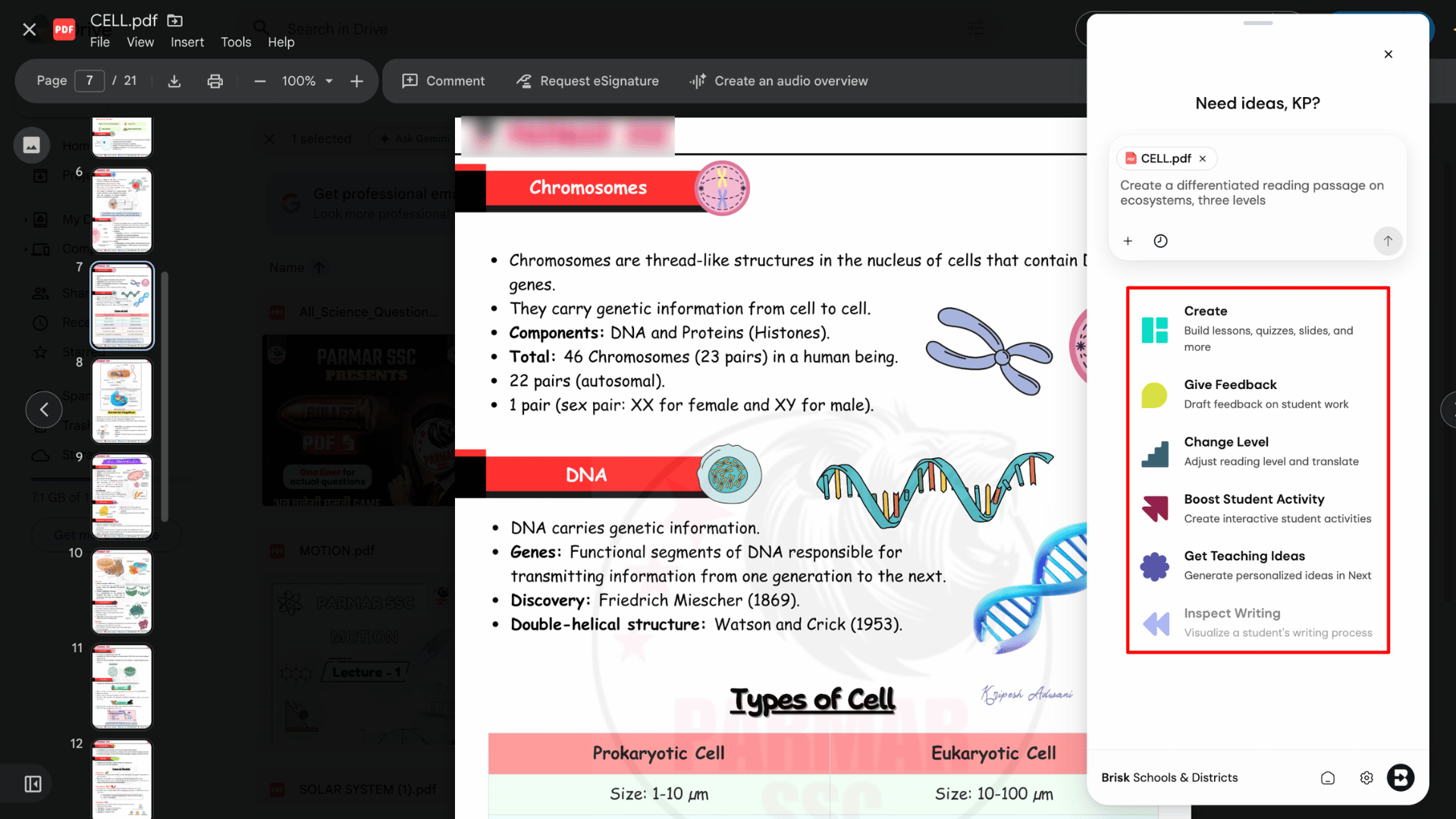
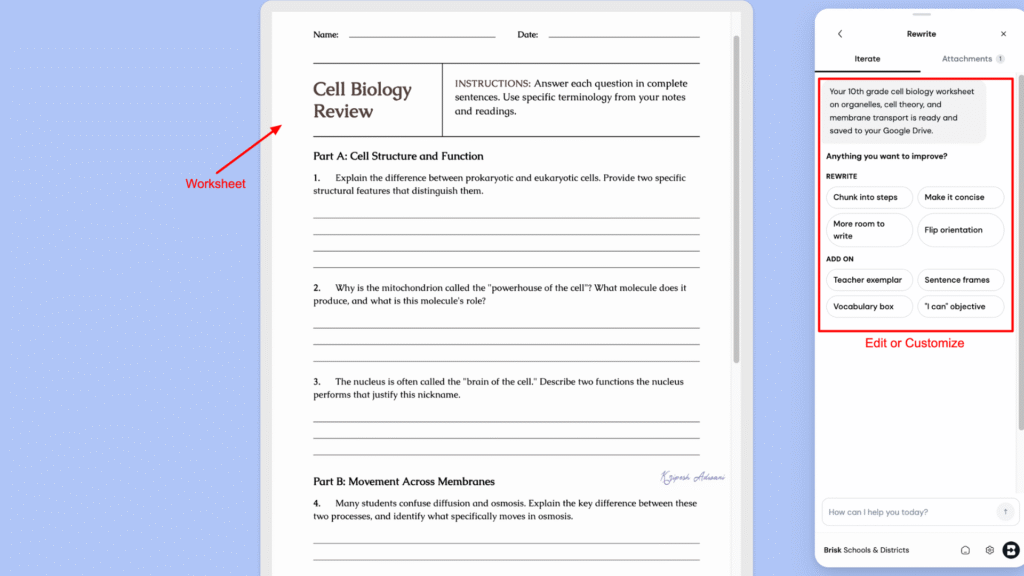
To use it, simply open an article or YouTube video, click the Brisk icon, and select a tool. Brisk can then generate lessons, worksheets, quizzes, guided notes, presentations, and student activities based on that content. You can customize the output by choosing the grade level, format, and number of questions or slides.
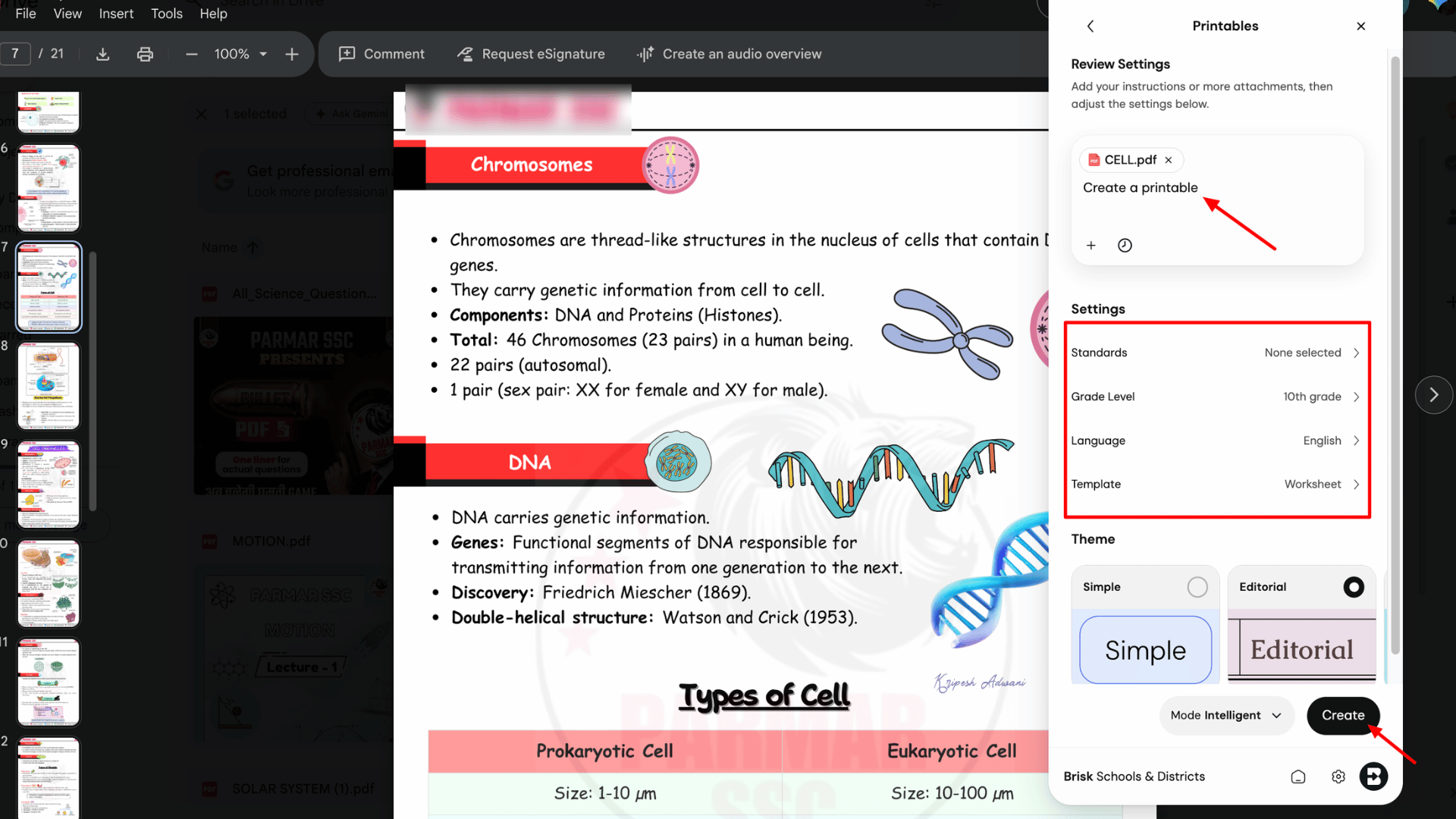
When I’m generating a worksheet on Cell Biology, I like how Brisk asked me which areas I wanted to focus on, what my teaching objectives were, and whether students have any misconceptions about the topic. This helped me create a more targeted worksheet rather than a generic one.
Brisk can also generate up to 20 multiple-choice, short-answer, or open-ended questions, which you can export to platforms like Google Forms, Kahoot!, Nearpod, or Wayground. Another useful feature is Brisk Next, a web-based planning hub where you can keep all the resources you’ve created for a particular topic, such as slide decks, quizzes, and worksheets. It also helps teachers organize lessons, create instructional materials, and track student progress in one place.
Limitations
- Brisk works best when you already have reliable source material. If the original content contains errors or unclear explanations, those issues may carry over into the generated resources.
- Pricing for the paid plans isn’t publicly disclosed.
Pricing: Access to 20+ teaching tools, standard access to AI models, limited batch feedback, Brisk Next, and content generation in 50+ languages for free; Premium and Intelligence plans come with custom pricing.
4) Diffit
Suppose you need classroom resources for students at different reading levels. In that case, Diffit may be a better fit than Brisk Teaching. You can start with a topic, PDF, webpage, or video transcript, and Diffit will create levelled reading passages, vocabulary activities, questions, worksheets, and assessments.
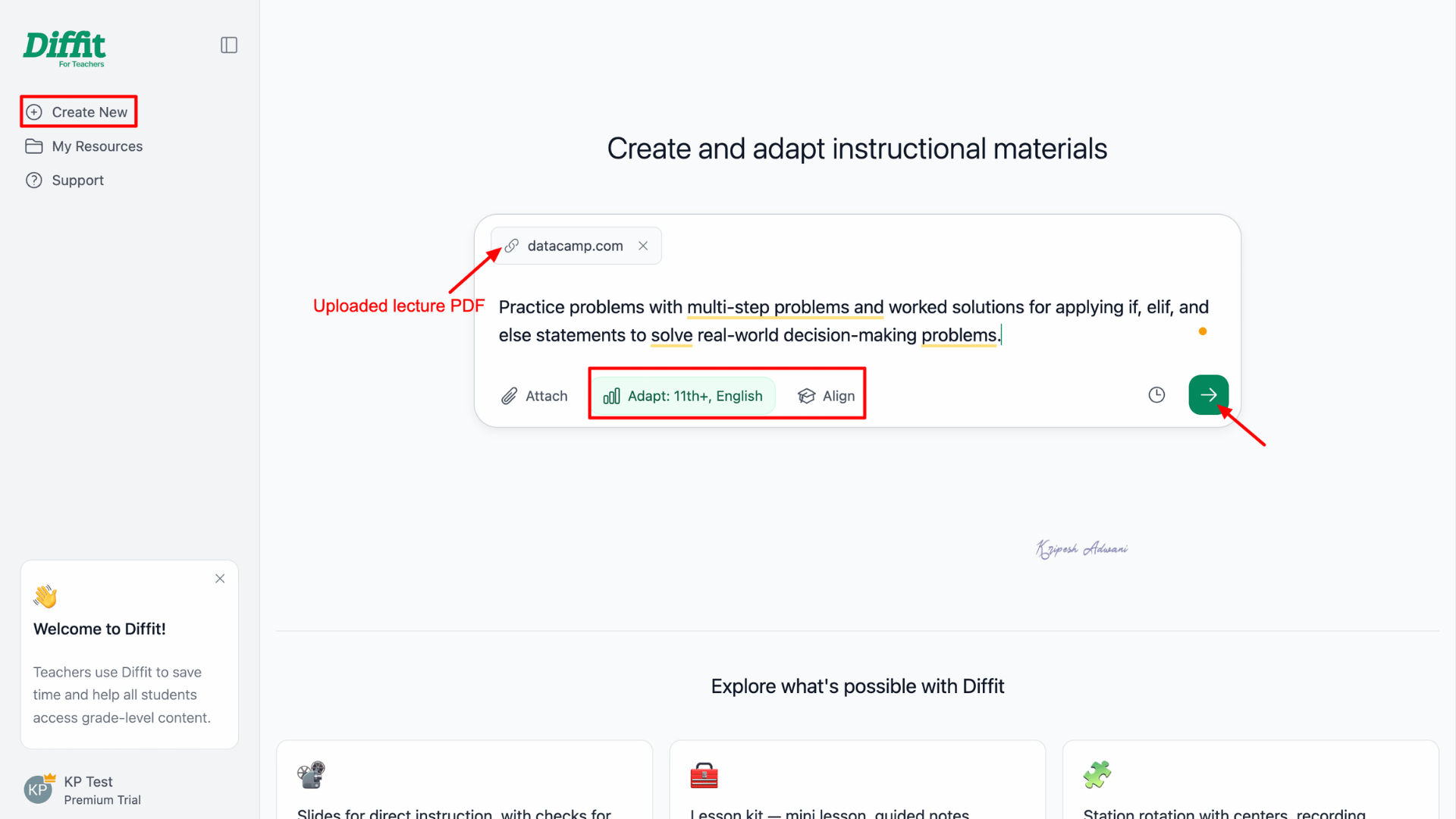
The key idea is simple: instead of creating a separate lesson from scratch for every learner, you can adapt the same content for students at different levels. This can be especially useful for ELL, special education, or mixed-ability classes. Diffit supports content levels ranging from 2nd grade to college.
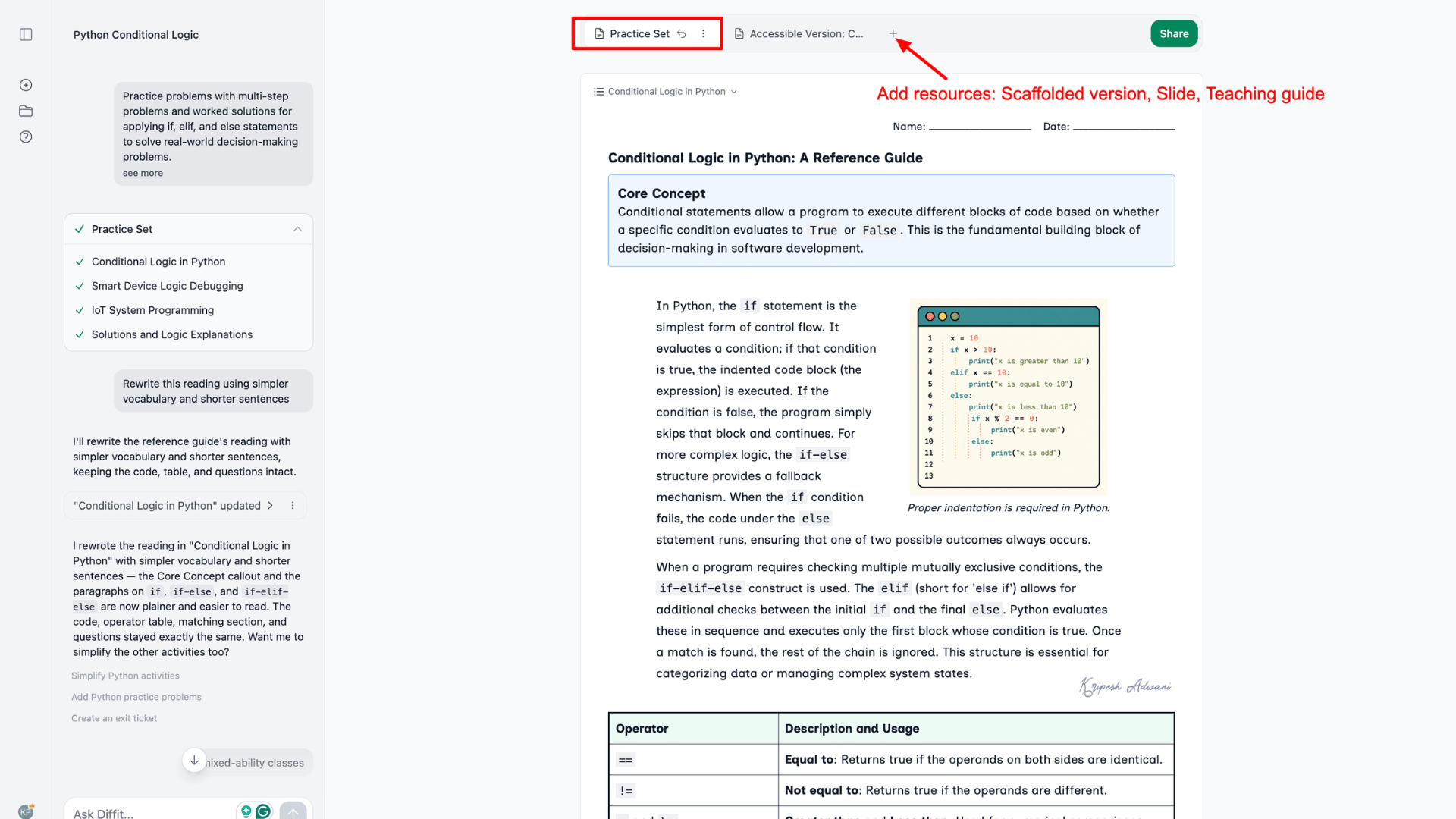
I really liked that when I generated practice problems on computer science topics, the worksheets included key terms with student-friendly definitions. Diffit’s Chat feature also lets teachers revise the generated material using plain-language instructions. You can ask it to change the challenge level, adjust the language, add scaffolds, or align the content with specific standards through AI chat.
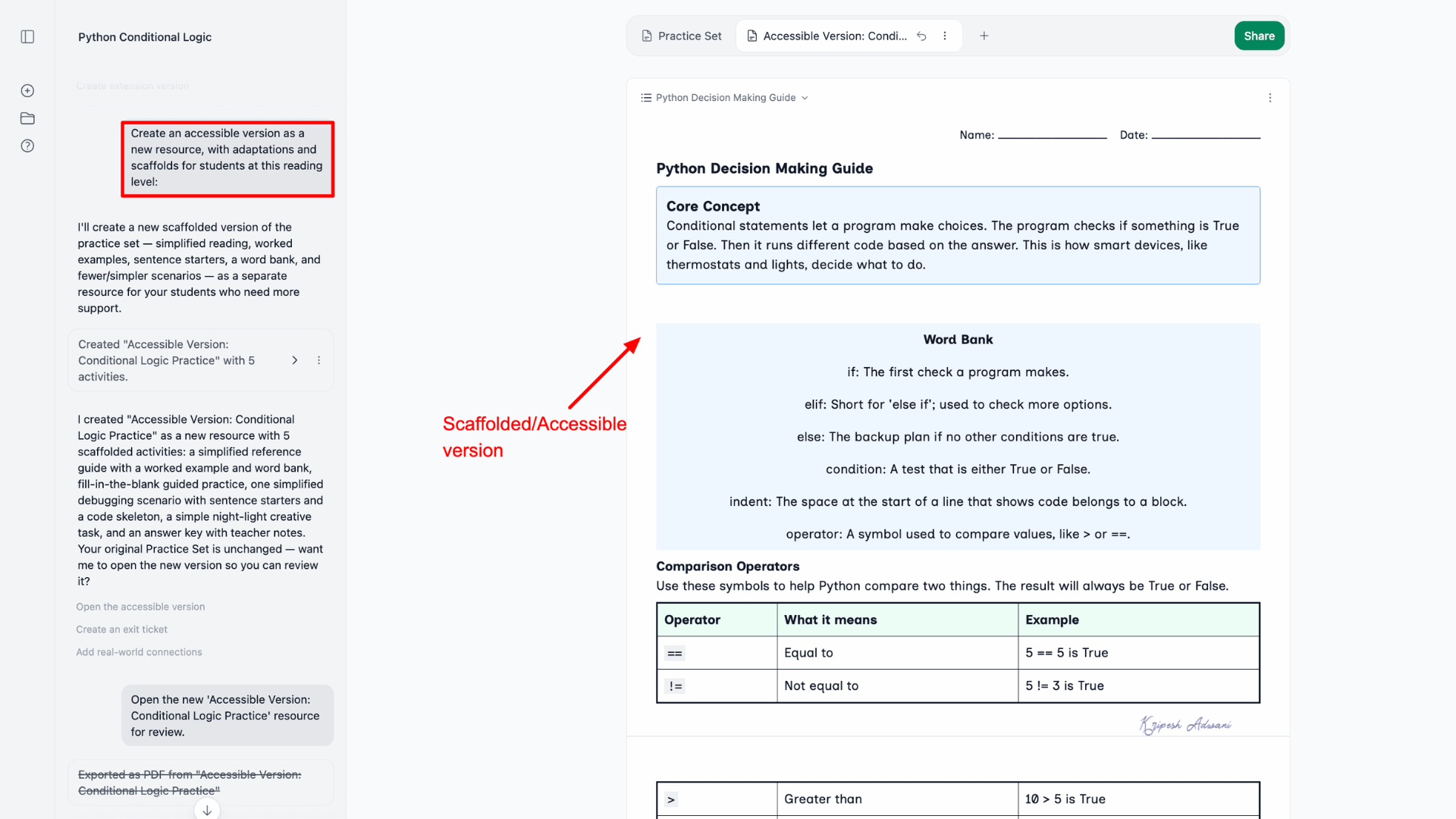
The platform excellently balances automatic generation with teacher editing. You get a ready-made structure, but you can still change the text, activities, challenge level, and scaffolding before sharing the resource with students.
Limitations
- You can’t export classroom resources to Google, Canva, Microsoft, and other formats on the free plan.
- Diffit is more focused on adapting content than designing complete units from scratch.
- The platform is more reading- and text-focused, so it’s particularly strong for text and comprehension materials.
Pricing: The free plan lets you create classroom-ready content, download resources as PDFs, print or share them with colleagues, edit and adapt resources, and access content created within the last 90 days. Diffit for Schools offers custom pricing.
AI Tools for Presentations & Visual Content
5) Canva for Education
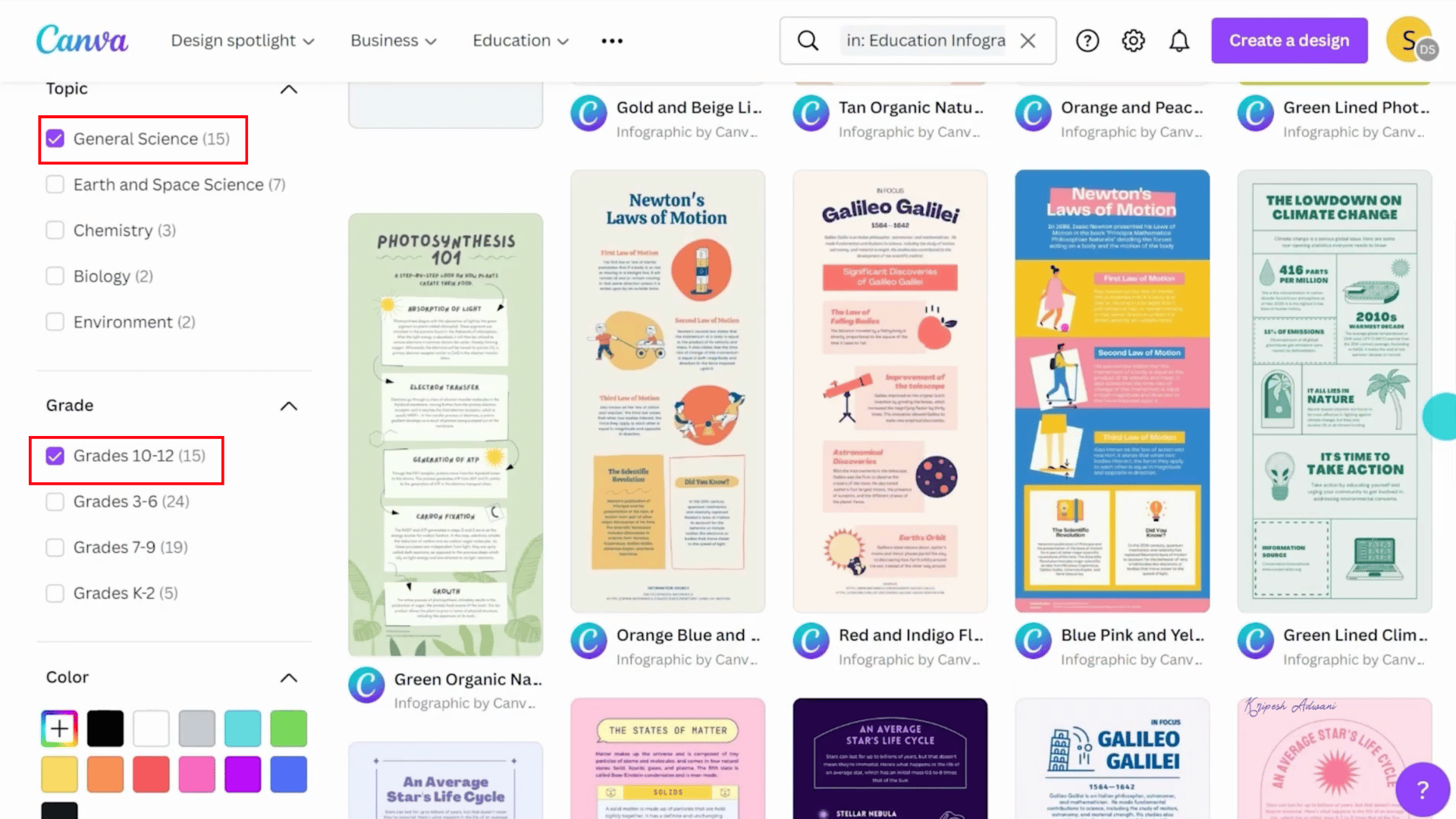
Canva is already a popular design tool, so there’s no need to introduce it here. Canva for Education, however, is exclusively designed for K–12 teachers and students. It’s a design and classroom platform that lets teachers create lesson presentations, infographics, worksheets and revision sheets, educational videos, whiteboard activities, and visual explanations for younger learners.
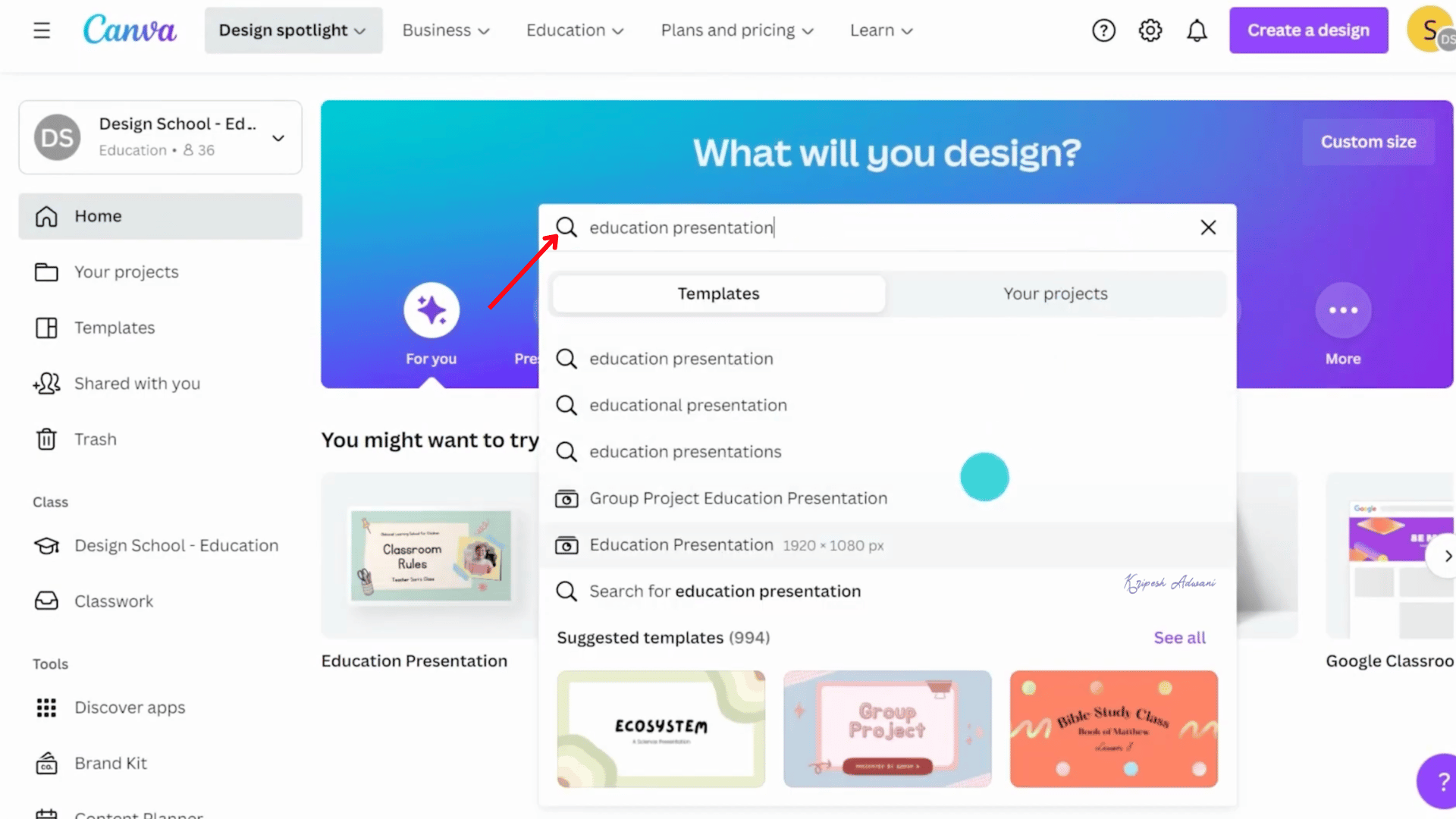
To generate a presentation, choose Canva AI and enter a prompt, such as “Create a 10-slide Class 8 presentation on the causes of air pollution.” The AI will generate a slide deck for you in minutes. Magic Write can help you generate, rewrite, summarize, and expand text within Canva Docs and designs.
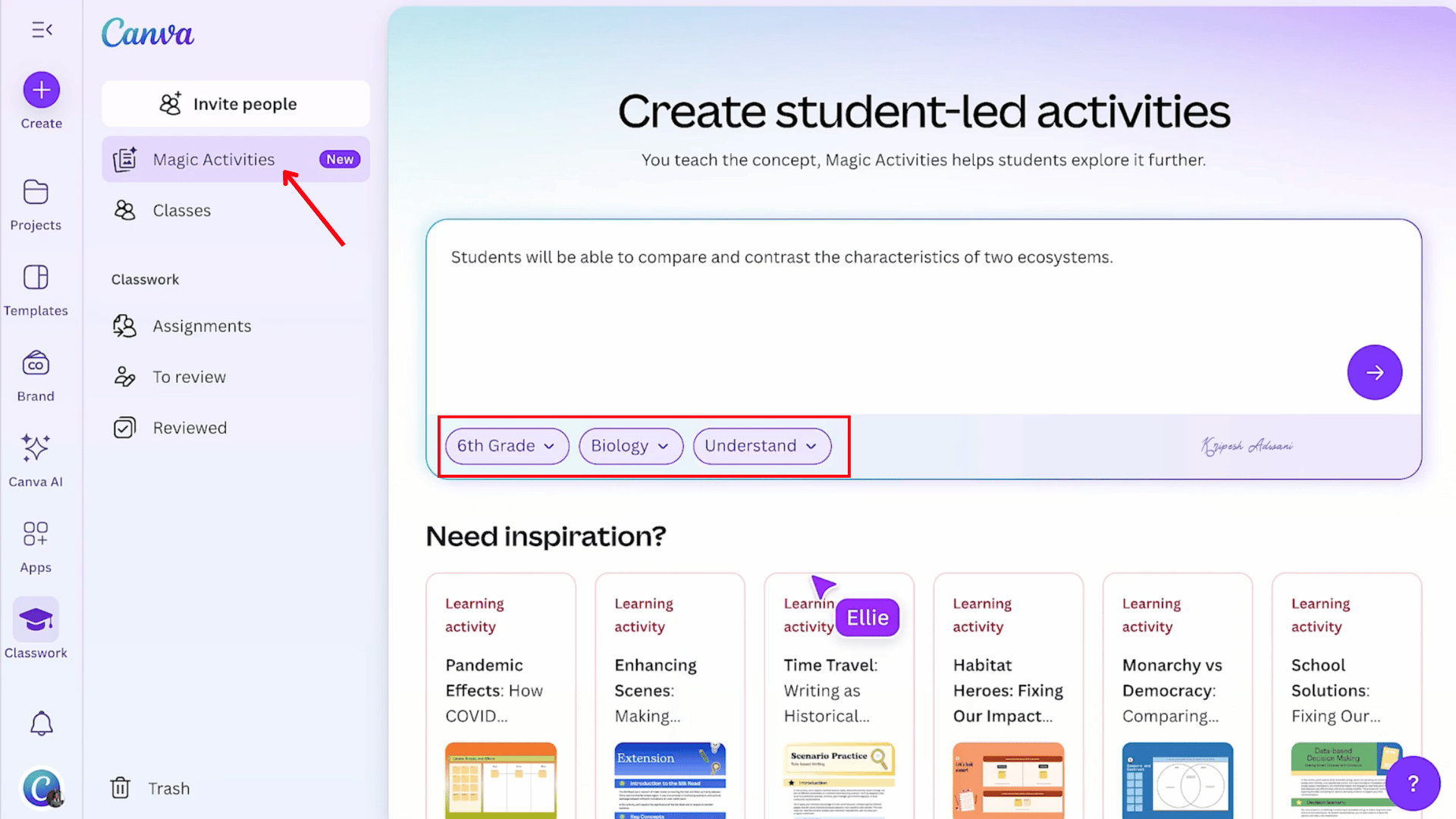
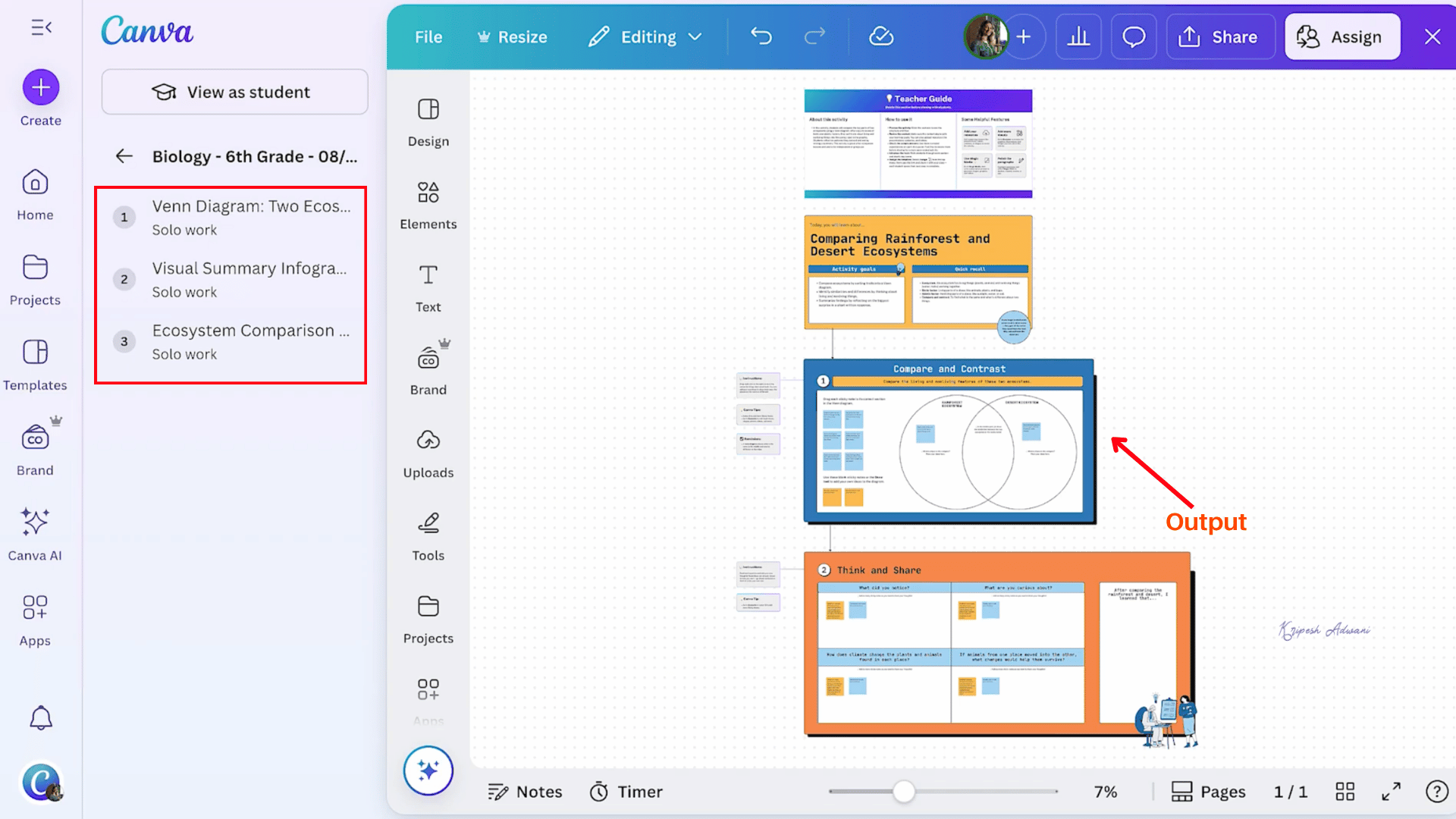
Magic Activities is another useful feature that helps teachers generate classroom activities without having to start from scratch. Go to Classwork on the homepage and select Magic Activities. Then, choose the grade, subject, and learning goal. You can either write your own prompt or select a Canva template to generate the activity.
The main advantage is that teachers don’t need to switch between a text generator, slide maker, and design app. You can create a lesson resource, edit it visually, add images or videos, share it with students, and collect their work through an LMS.
One thing to note: you may need to sign up with an eligible education email address or provide proof of employment to access Canva for Education.
Limitations
- Canva is stronger at creating visual content than handling detailed curriculum planning.
- LMS integrations may require a school account or administrator setup.
Pricing: Canva for Education is 100% free for eligible K–12 educators, their students, and qualifying school districts and institutions.
6) SlidesGo
As educators, we often need AI tools that can help us create classroom presentations quickly. Slidesgo is a good free AI presentation maker if you want an editable slide deck from a text prompt. Go to the AI Presentation Maker, enter your topic in detail, choose a theme, and your presentation will be ready in minutes.
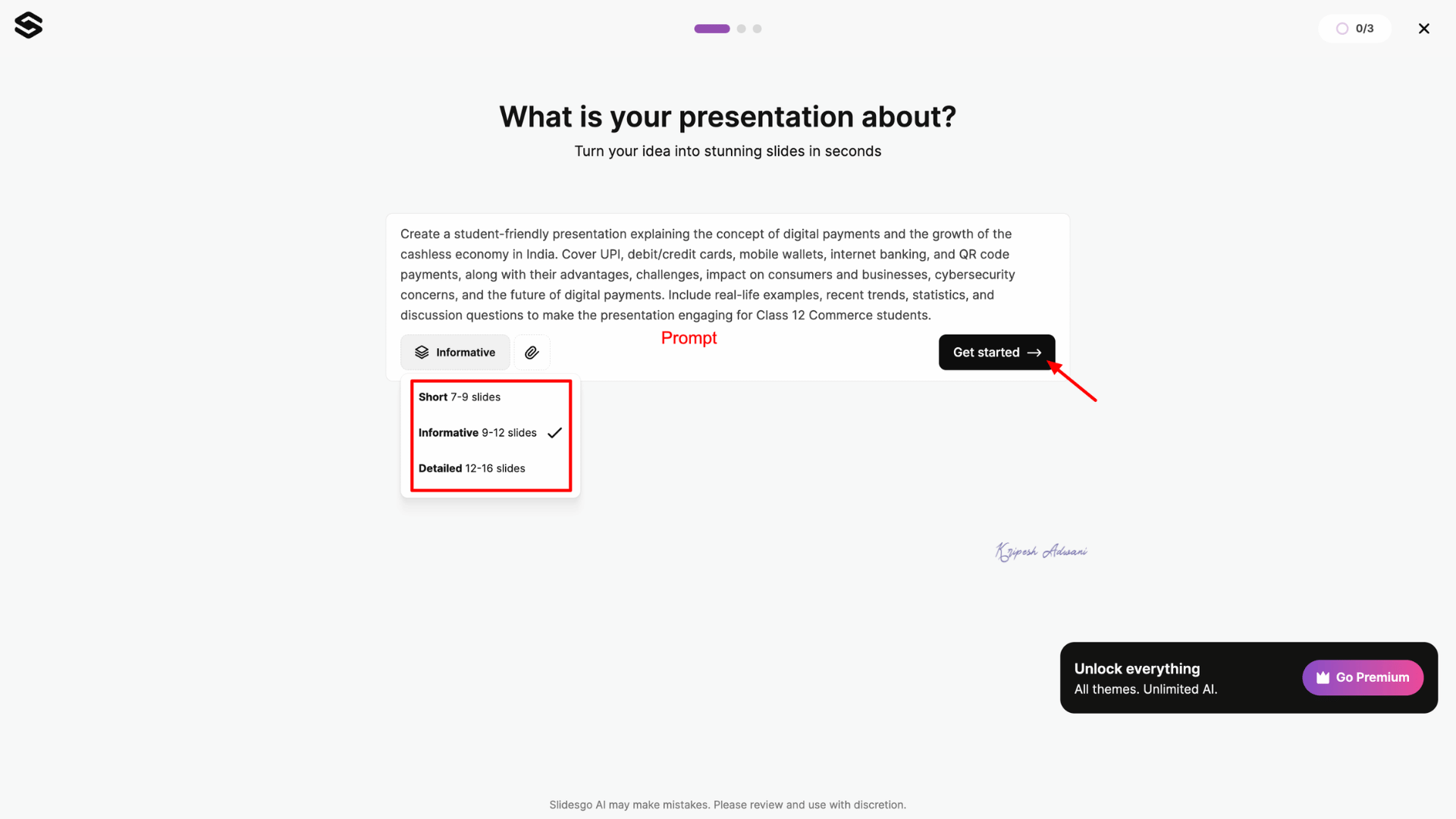
Once the slides are generated, you can change the language, choose a tone (professional, casual, creative, or concise), and apply different themes or image styles. You also have control over the slides, so you can edit the content before exporting the presentation to PowerPoint or Google Slides.
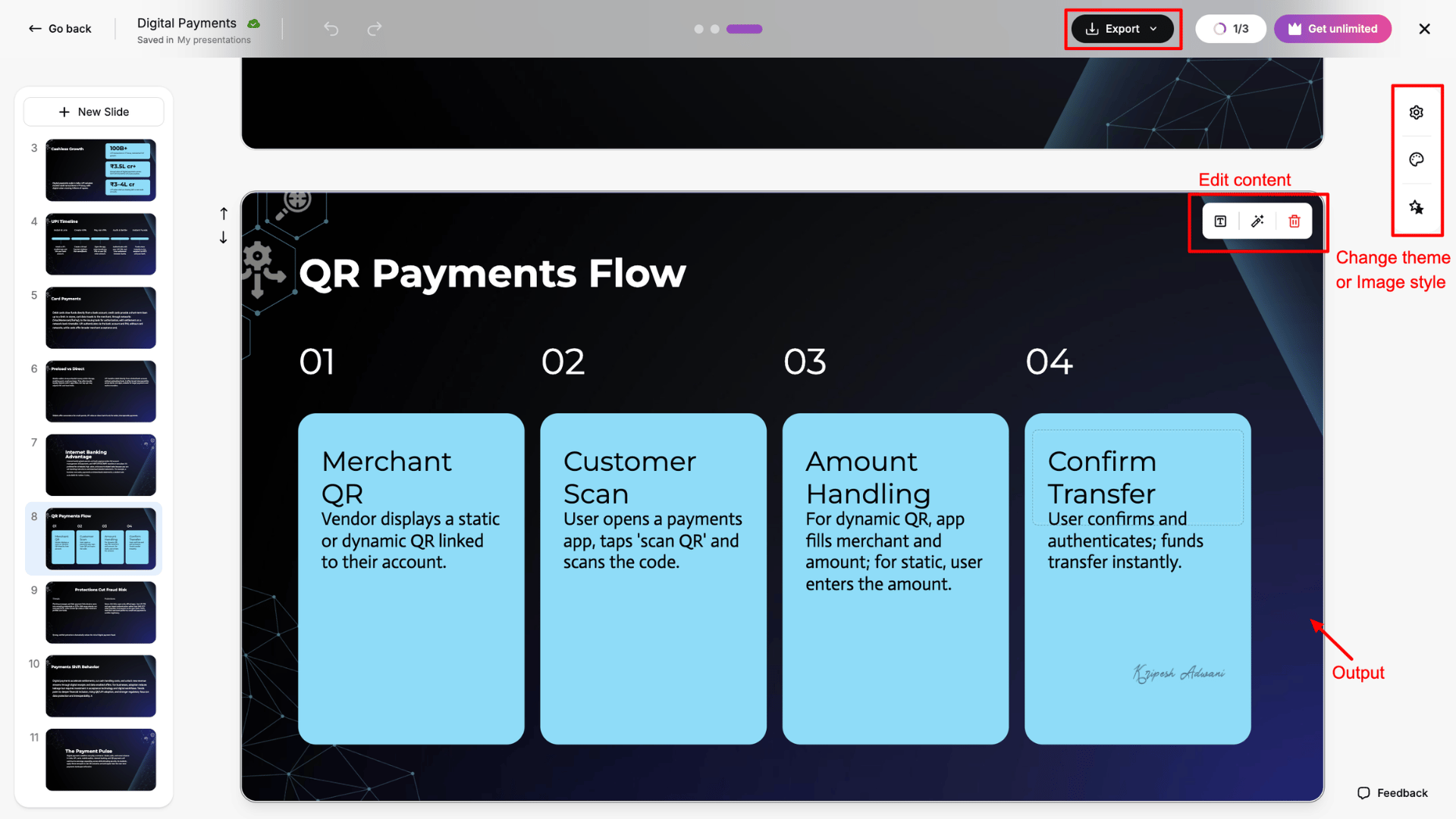
Slidesgo offers 800+ presentation templates. Teachers can choose from simple academic layouts to more colorful designs for younger students. In my testing, the slide content was fairly informative, but you should verify any statistics and facts generated by AI. I wish more of the presentation templates were available for free.
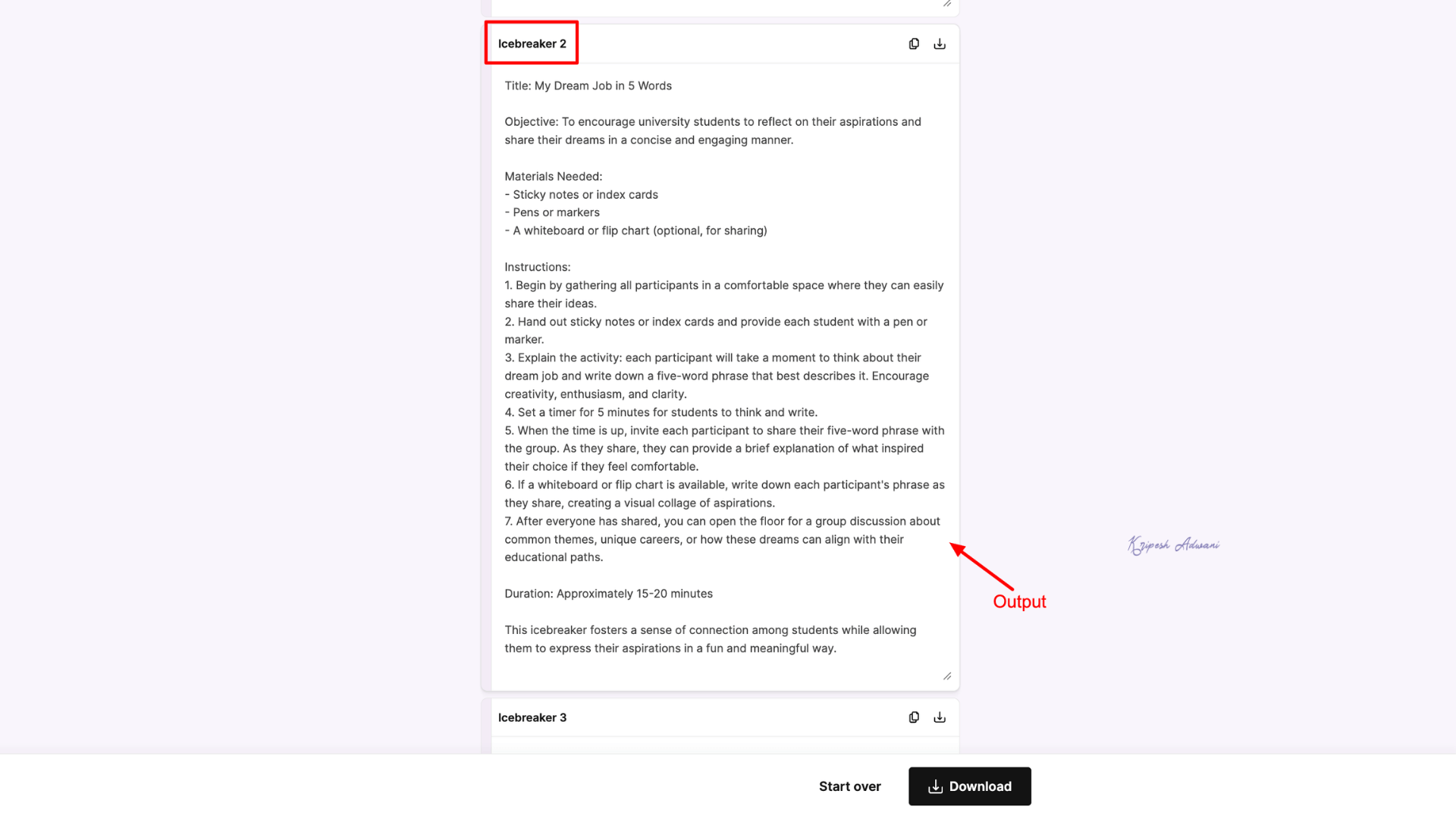
Alongside its presentation maker, we can use AI Quiz Maker, Icebreaker Generator, and Exit Ticket Generator for other visual resources. For example, you could turn a PDF chapter into a presentation and then create a quiz from the same material.
Limitations
- AI-generated content may not always be detailed or accurate, so you should review it before using it in class.
- The free plan allows only 3 AI-generated presentations per month.
- Slidesgo currently doesn’t allow you to upload your own images. Teachers may need to download the presentation first and then add school-specific visuals manually.
Pricing: The free plan includes 3 AI-generated presentations per month, 3 Slidesgo template downloads per month, and limited access to Slidesgo templates. The Premium plan costs ₹62.42/month when billed annually.
AI Tools for Student Engagement & Interactive Learning
7) Curipod
Students can easily become passive during presentations, especially when only a few students answer questions aloud. If your main goal is to increase participation during live lessons, Curipod is a great AI-powered platform to try. It’s a lesson-delivery platform that helps teachers get students to read, write, discuss, and respond during class.
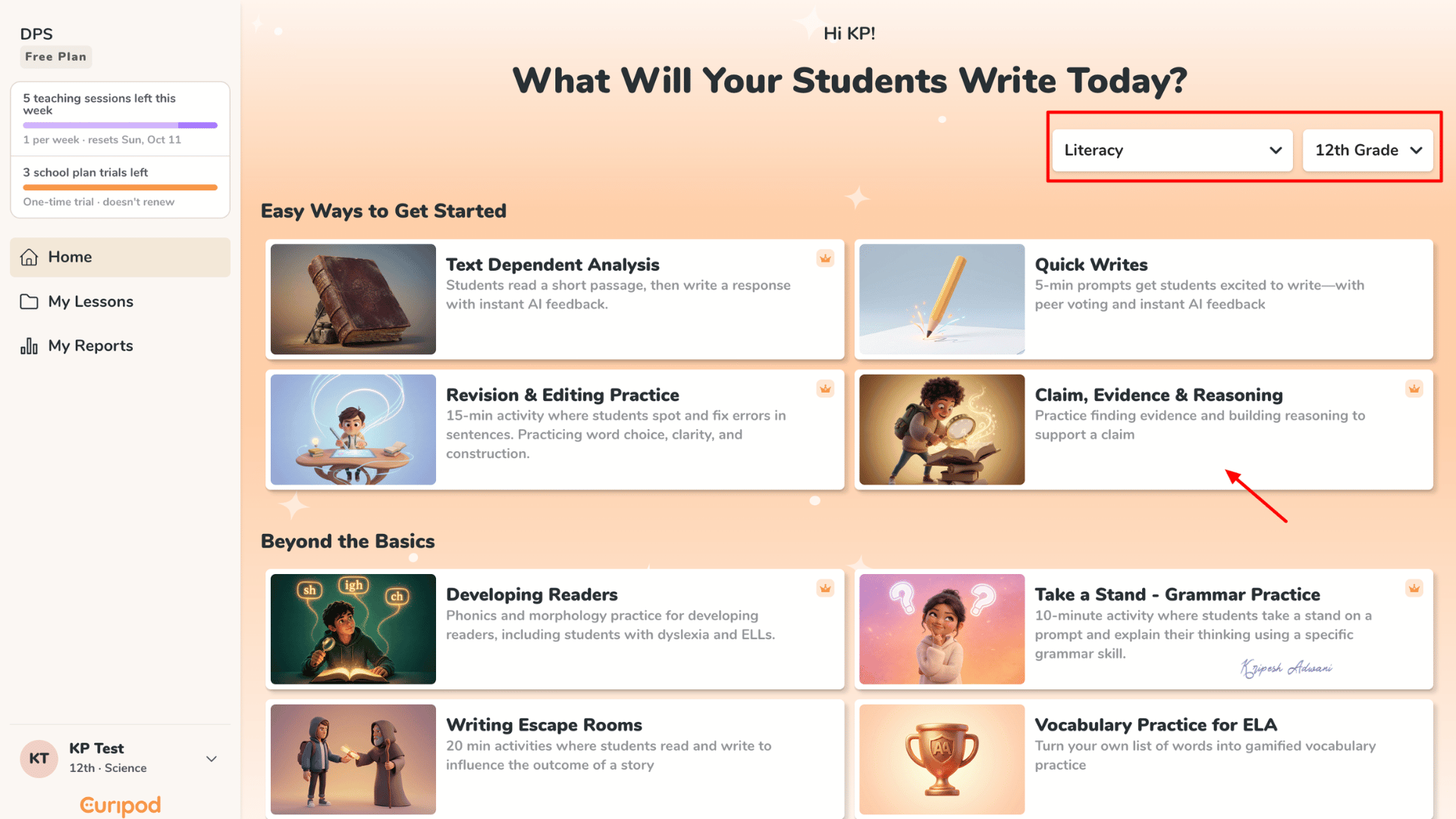
Teachers can create interactive lessons that include polls, open-ended questions, word clouds, drawing activities, writing tasks, and formative checks. To get started, sign in to the dashboard and select your subject and grade level. You’ll then see different interactive lesson options.
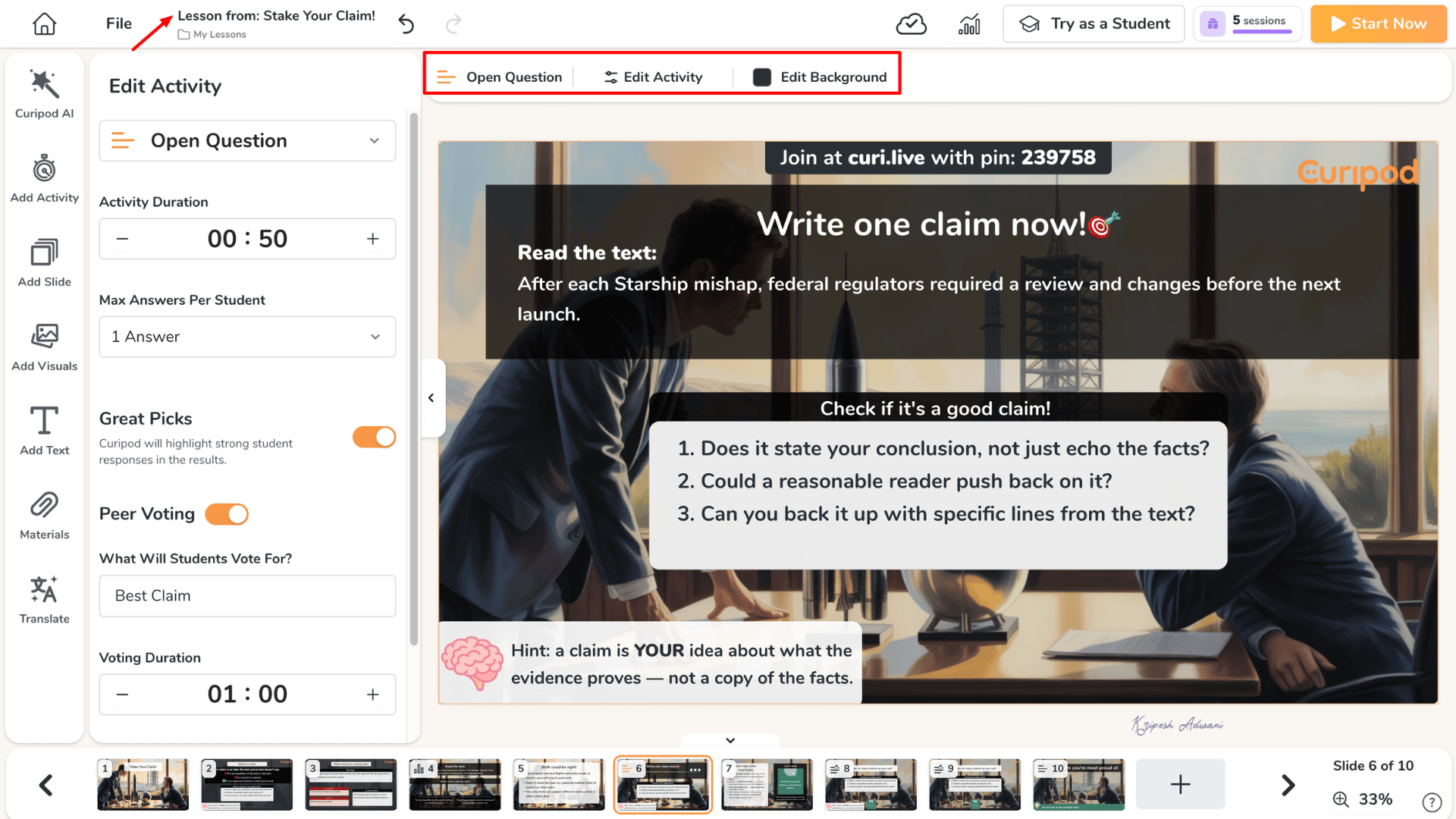
I started with a Claim Practice lesson on “SpaceX Starship Development.” It generated a complete lesson with polls, open-ended questions, and student activities. You can also edit the content completely before using it.
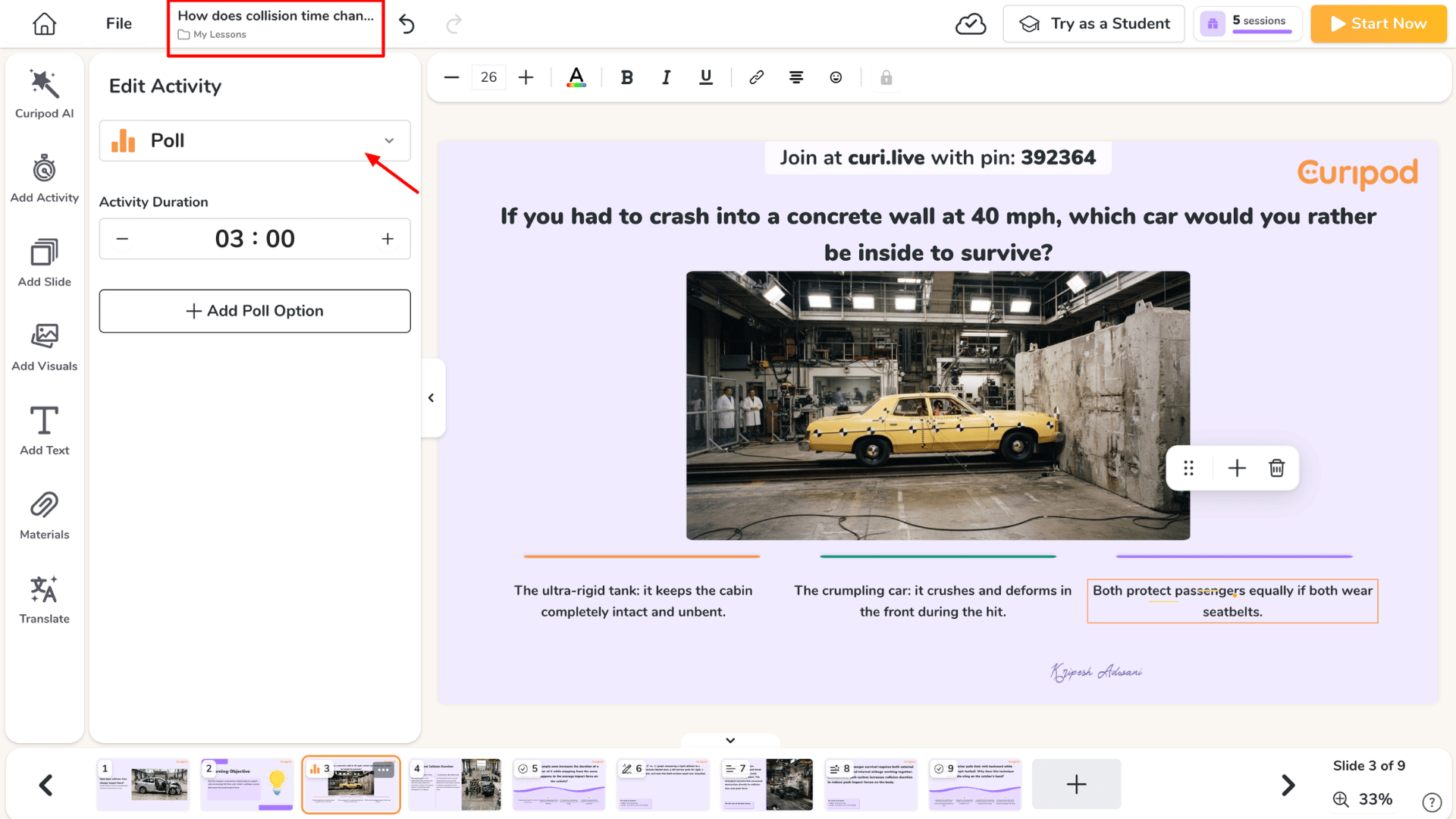
Once your lesson is ready, click Start Lesson to begin the live session. Students can join immediately using the code you share with them. You can also use Curipod for regular writing-practice sessions. Its Glow & Grow feedback system provides students with immediate, personalized feedback on their writing and responses during live lessons.
Limitations
- Curipod works best when students have individual devices and a reliable internet connection.
- Its state test practice, bilingual features (TELPAS, ELPAC, and WIDA), and some curriculum resources are heavily aligned with US schools.
- It focuses more on teacher-led lessons, writing practice, and classroom participation than on complete curriculum planning like MagicSchool.
Pricing: The free plan includes 5 teaching sessions per week, 3 School Plan trials for lifetime use, student written responses of up to 1,000 characters, and limited writing practice; Premium plan starts at $19/month when billed annually.
8) SchoolAI
Suppose you have 50+ students in your class. It’s completely normal that you don’t get enough time to personally help every student with their doubts. Under those circumstances, SchoolAI can offer great help. It lets students use AI for personalized learning without giving them completely unrestricted access to a general chatbot.
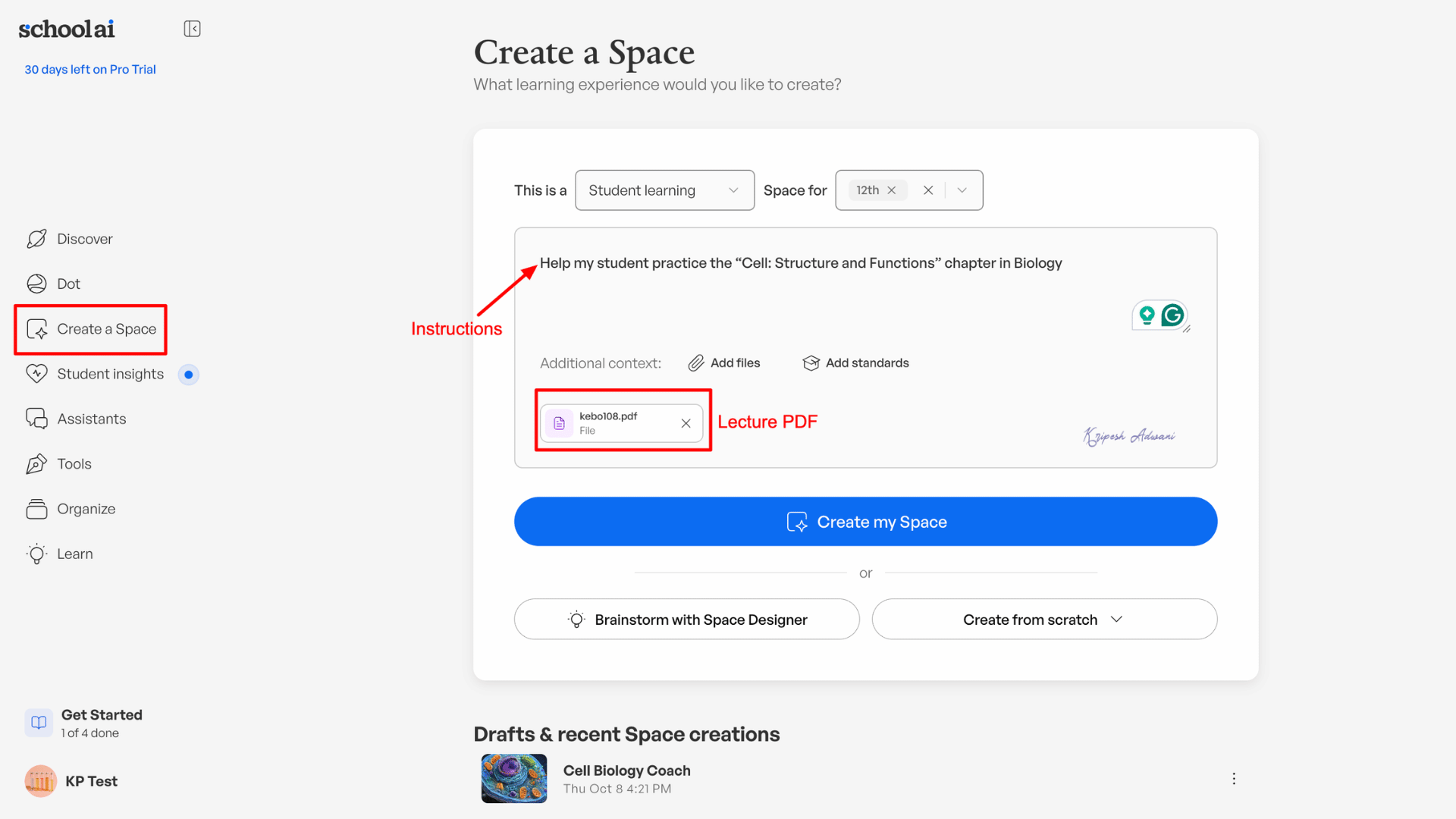
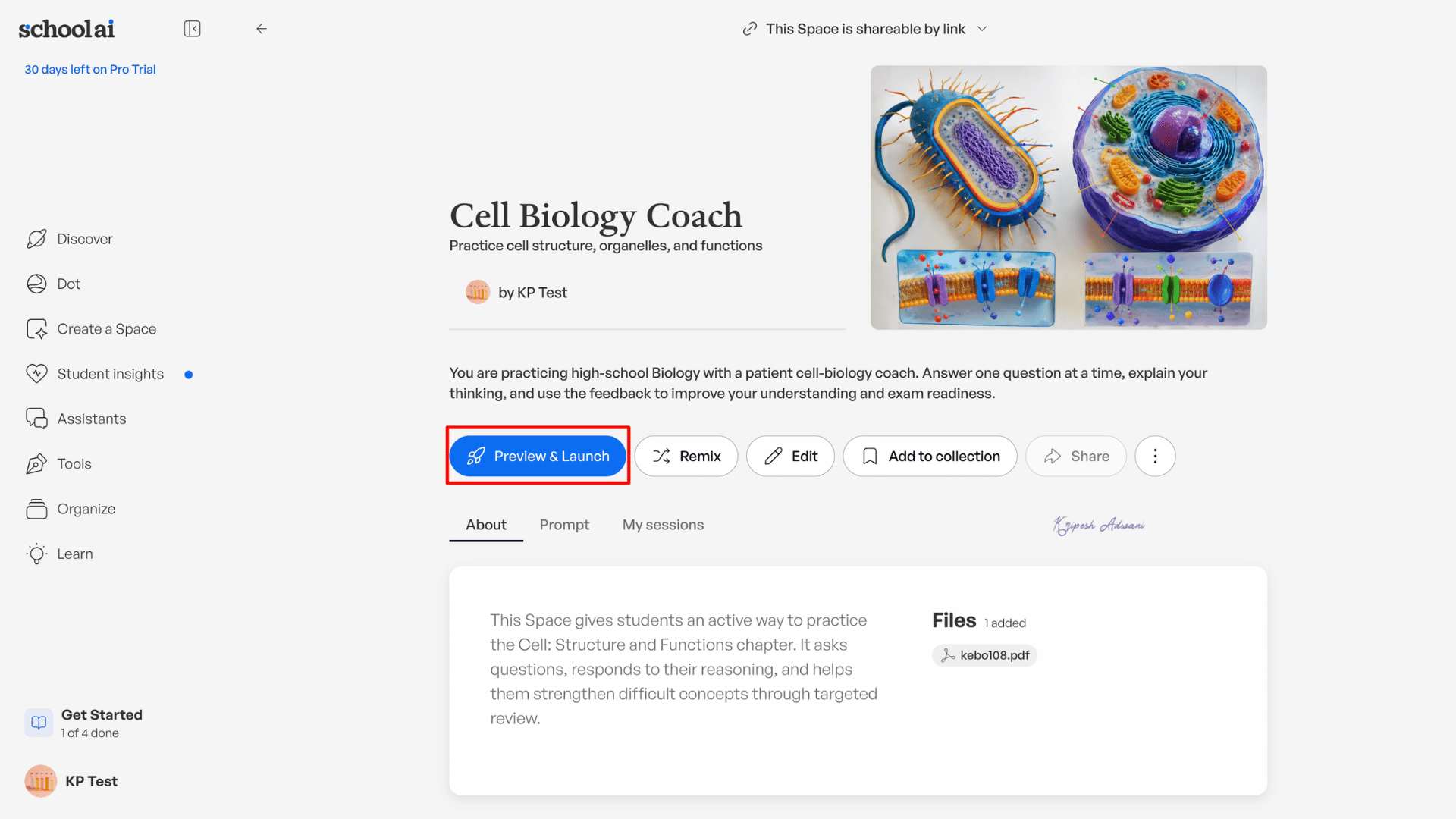
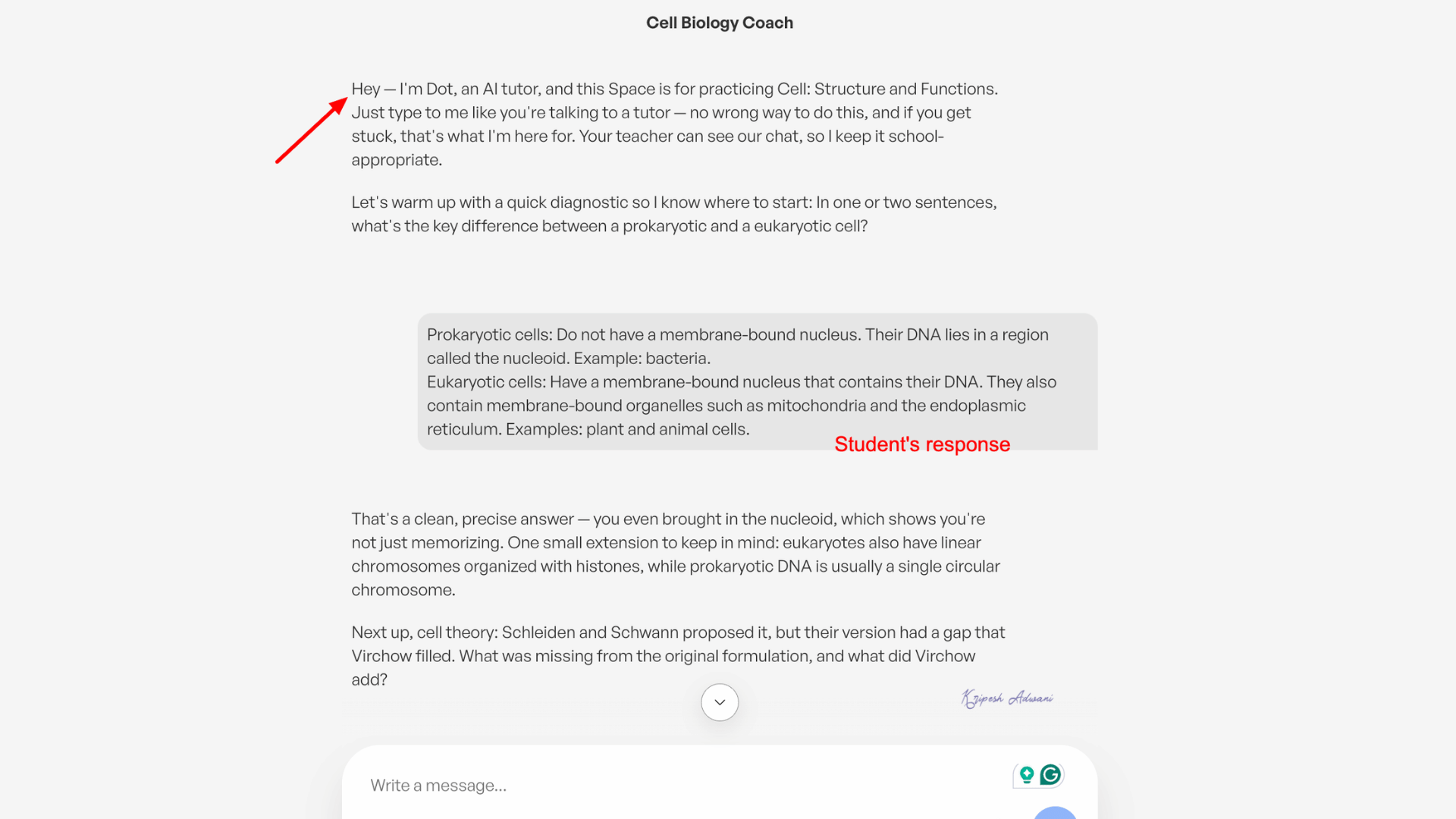
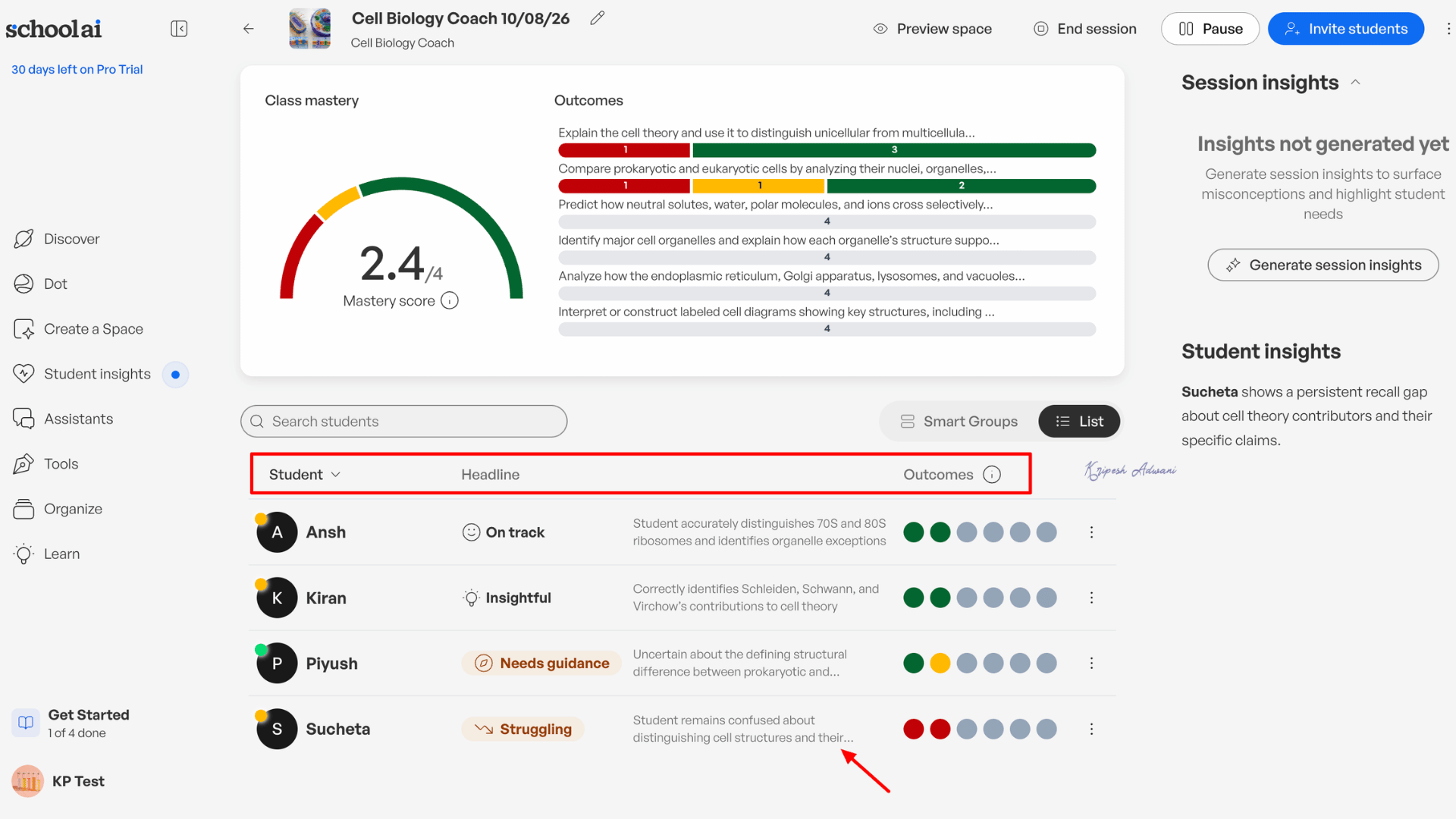
For example, I recently taught a class on Cell Structure and Functions and wanted my students to clear their doubts through a practice session. So, I created a Space and uploaded the lecture PDF. Students could then chat with the AI. The AI is designed to ask students questions, use their interests to explain concepts, and encourage them to reason through examples.
There’s also a feature called Mission Control inside each Space that lets me see students’ progress and conversations in real time. It summarizes their strengths and knowledge gaps and groups the class based on what students have demonstrated.
I really liked how SchoolAI includes both student interaction and teacher visibility. Many AI tools for students provide a chatbot experience but give teachers little insight into what students are actually doing. SchoolAI’s Spaces and Mission Control make it much easier for teachers to follow up and identify where students need help.
Plus, SchoolAI’s PowerUps provide focused activities within the AI experience. Available options include document creation, image generation, presentation creation, guided video exploration, flashcards, and mind maps.
Limitations
- SchoolAI offers only a free trial, while Pro and Scale plan pricing isn’t publicly disclosed.
- There may be a slight learning curve when you’re getting familiar with all the features.
- A Space may not provide a useful learning experience if the teacher gives it weak instructions or no clear boundaries.
Pricing: The free plan includes 5 Space launches per year, limited browser-extension availability, and access to 200,000+ pre-made Spaces and resources. Pro and Scale plans have custom pricing.
AI Tools for Quizzes and Formative Assessment
9) Conker AI
Conker is basically an AI-powered quiz generation platform. Teachers simply enter a topic, select a grade level, upload reading materials, and choose their preferred question types. The AI then generates a quiz in seconds. It supports four question formats: multiple-choice, mixed, read and respond, and fill-in-the-blank.
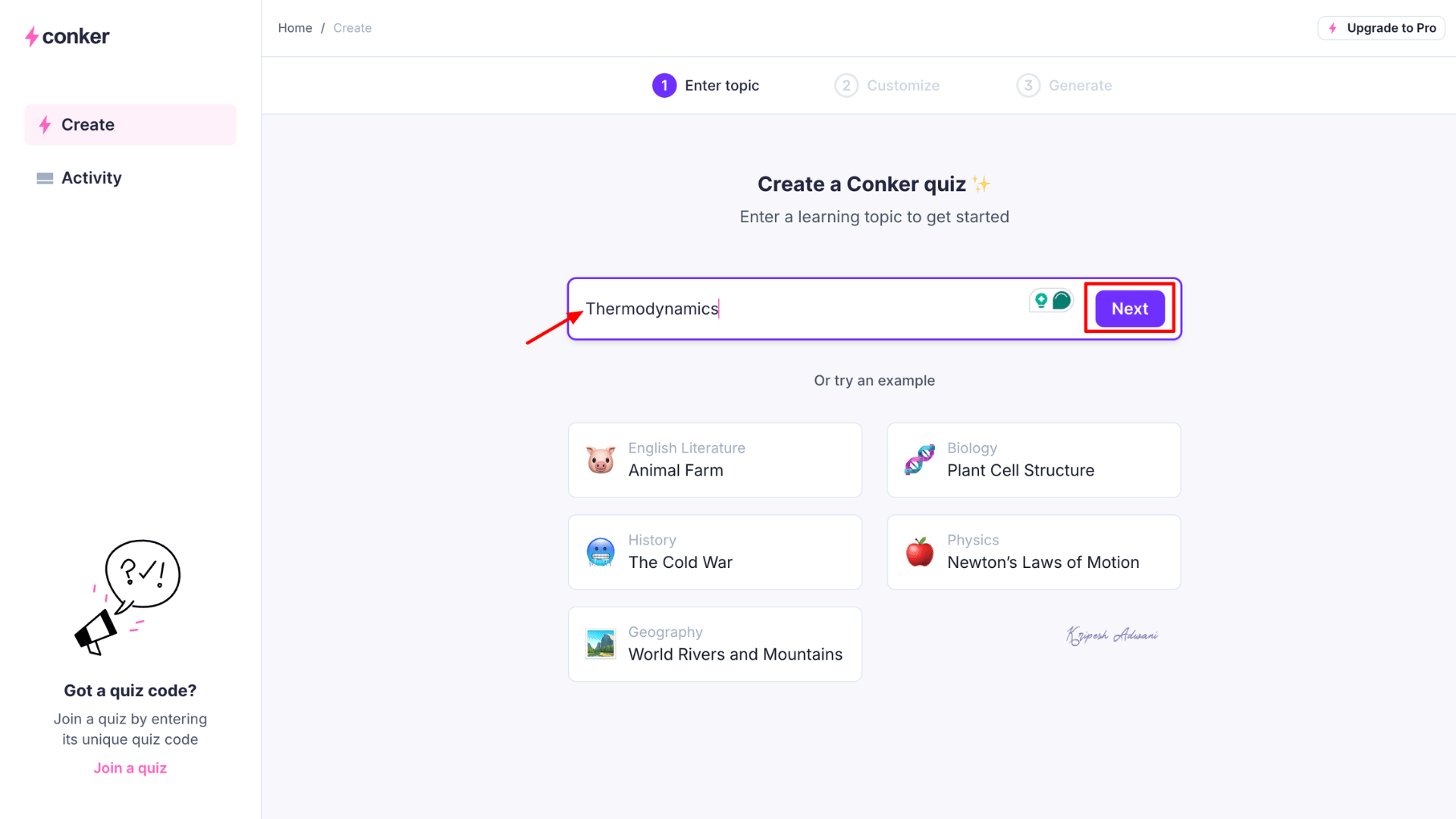
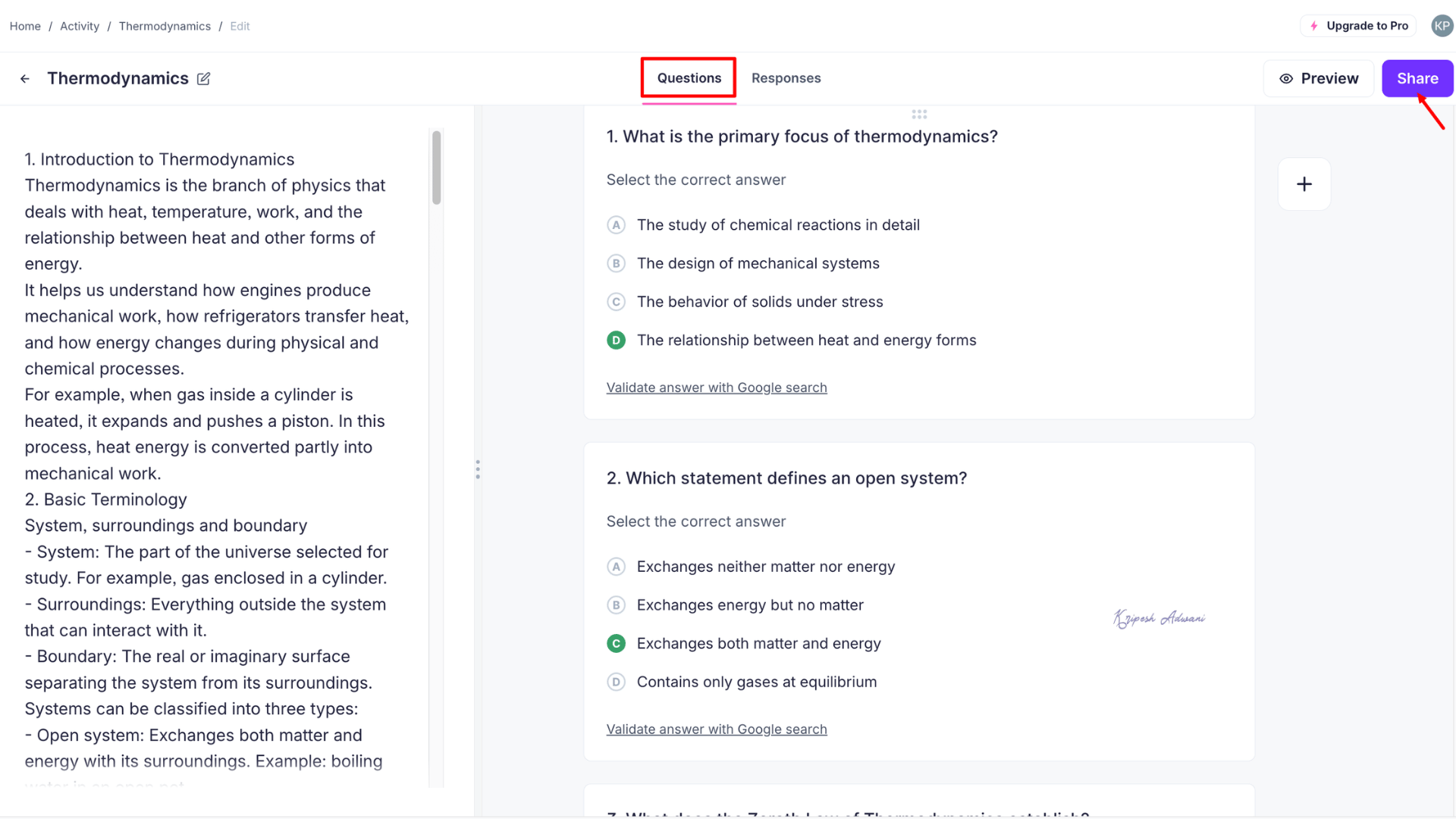
You can edit the entire assessment before sharing it via a link or exporting it to Google Forms. You can also distribute the quiz to your students through a QR code, printed materials, or embed it on your website.
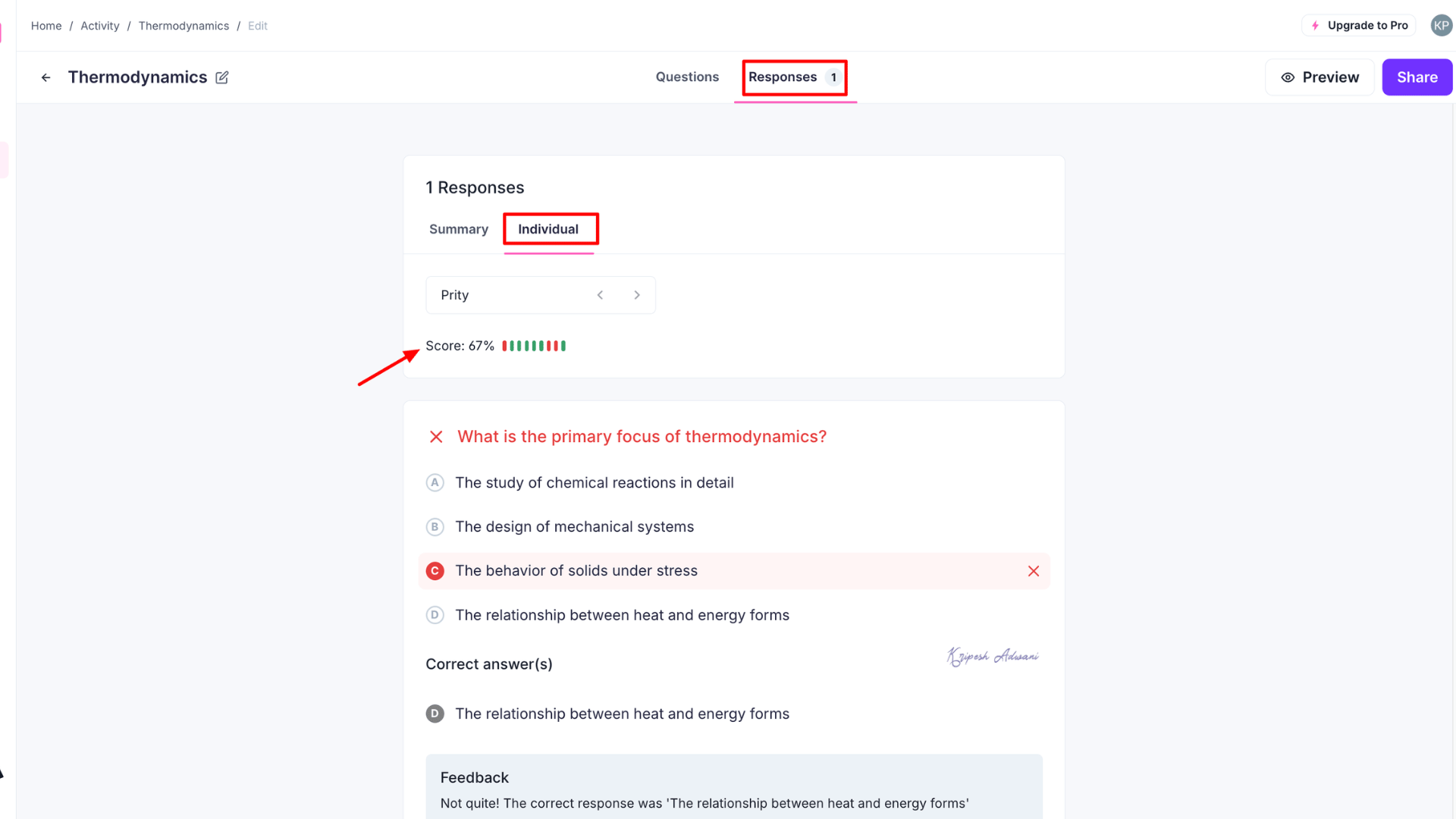
Once students submit their assessments, you can view their responses from the Conker dashboard. It provides a summary of the results, plus individual student performance. So you identify the questions they struggled with the most.
All Conker quizzes also include built-in read-aloud support to help students listen to the questions. Conker also offers thousands of ready-made K–12 assessments aligned with standards such as NGSS and TEKS.
Limitations
- AI-generated questions still need to be reviewed, especially when dealing with science or math topics.
- Some standards and curriculum features focus on US standards. Indian teachers should check whether the content aligns with their own syllabus before using pre-made quizzes.
- Students can see the reading materials while taking the quiz, which may make it harder to assess their actual understanding of the topic.
Pricing: We can create up to 10 quizzes, share 5 quizzes, and collect up to 50 responses for free. Each quiz can contain up to 10 questions, and you can provide reading materials of up to 1,200 words. Paid plans start at $2.08/month, billed yearly.
AI Tools for Higher-Education Support
10) Elicit
As a university lecturer, you often need to prepare research-heavy topics for seminars. This means reviewing multiple papers and comparing what they studied, how they conducted their research, and what they found. Elicit AI can help automate this process and save you time.
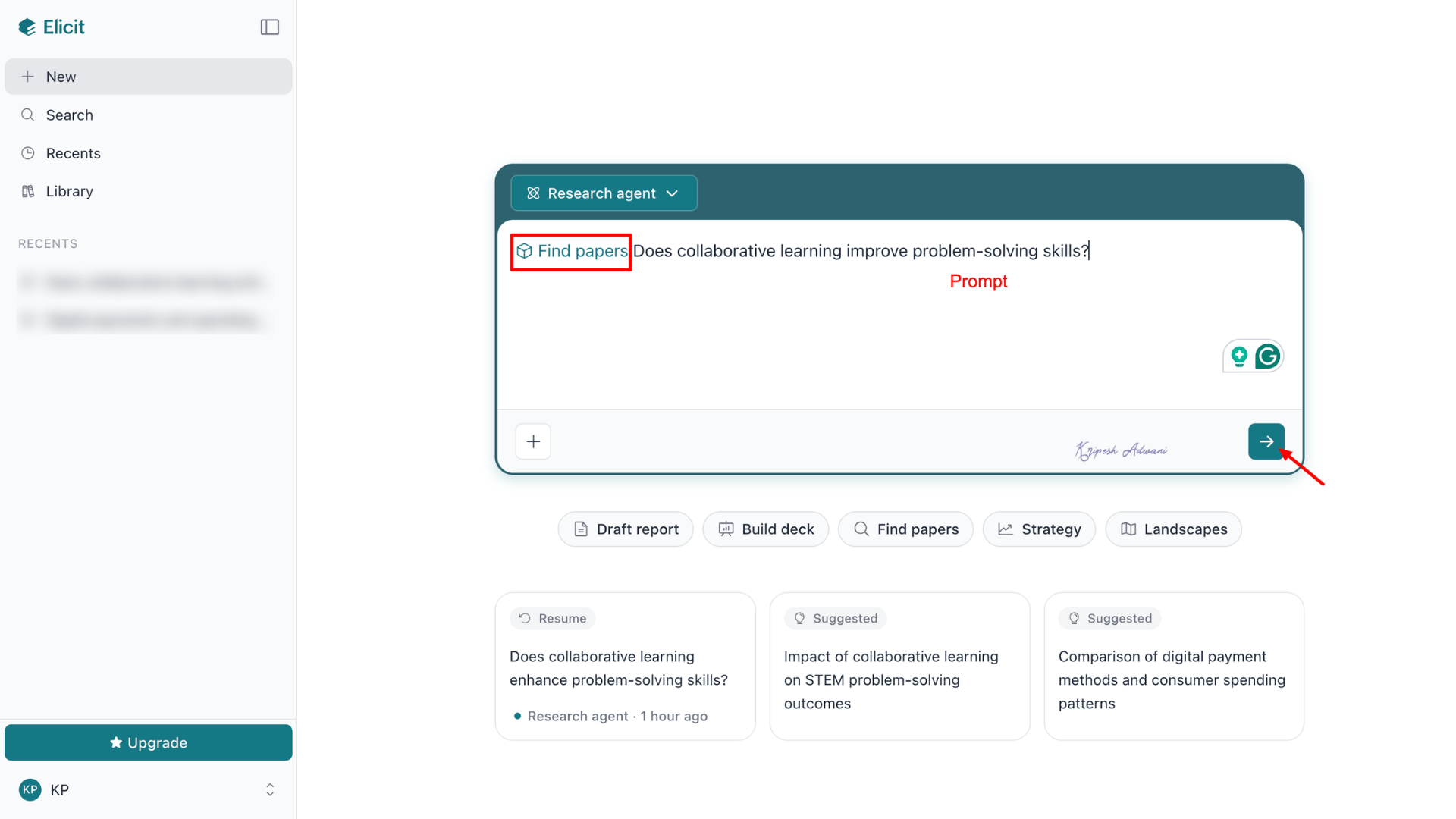
You can ask a research question in everyday language, and Elicit searches its academic paper database to provide relevant answers with citations. You can also sort the results by relevance, publication date, citation count, or alphabetical order. Its database covers over 138 million academic papers and clinical trials.
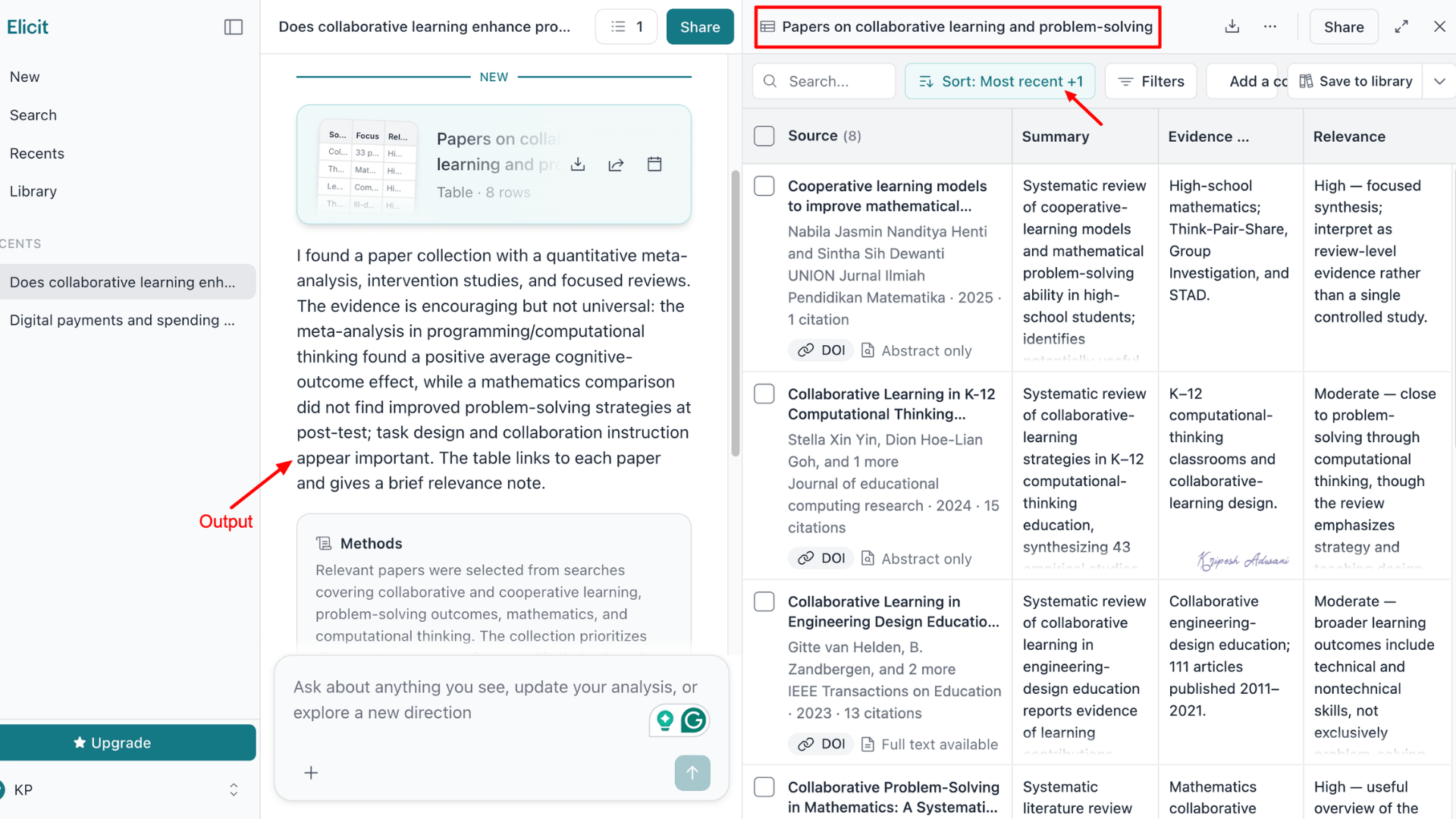
Elicit can extract details such as sample sizes, research methods, and outcomes from multiple papers and organise them into a comparison table. The systematic review workflow can also help you screen papers, extract data, and synthesise evidence.
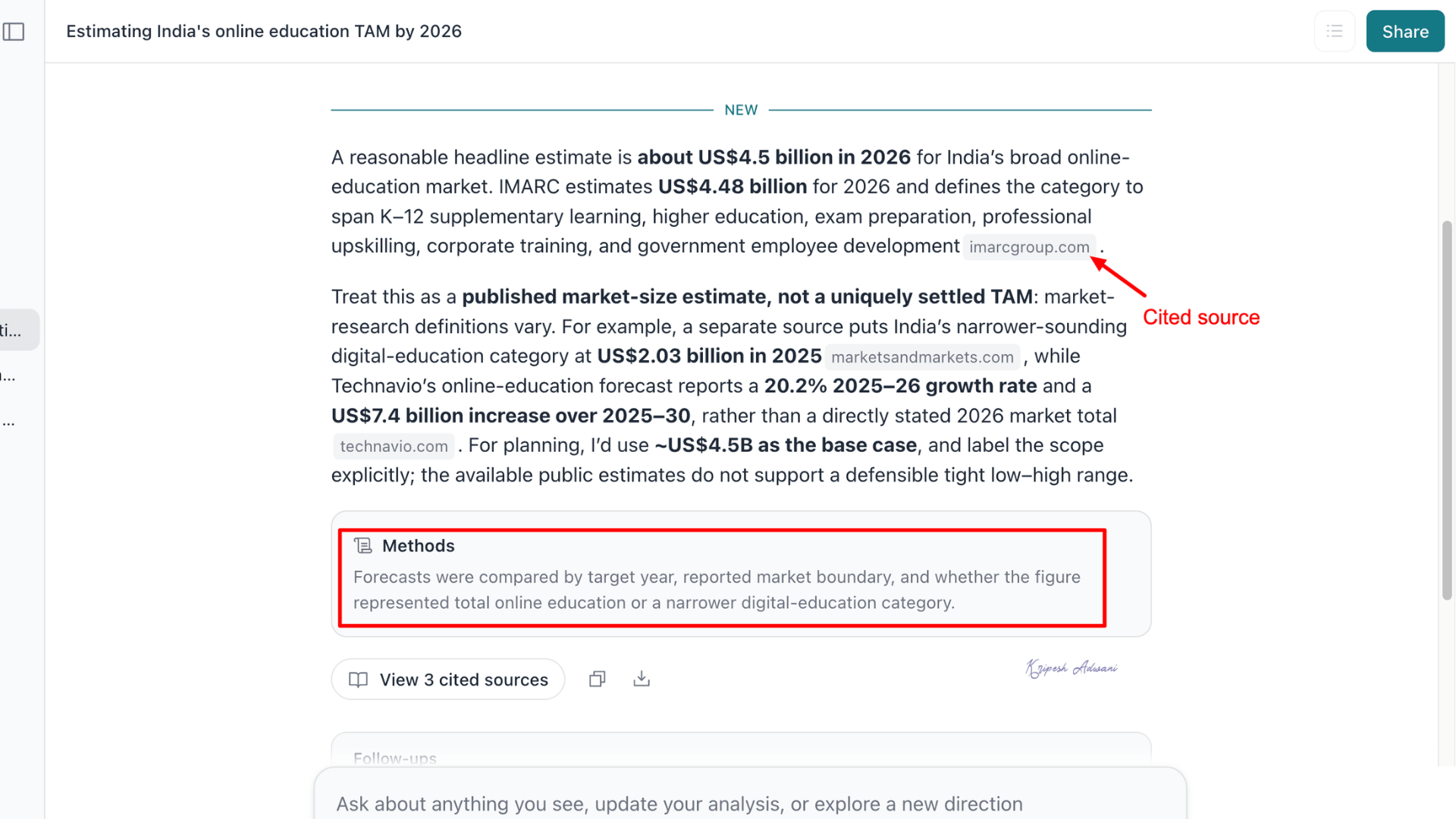
I’m really impressed with its quantitative data extraction capabilities. It can surface specific figures, such as sample sizes, effect sizes, and p-values, to make research findings easy to compare.
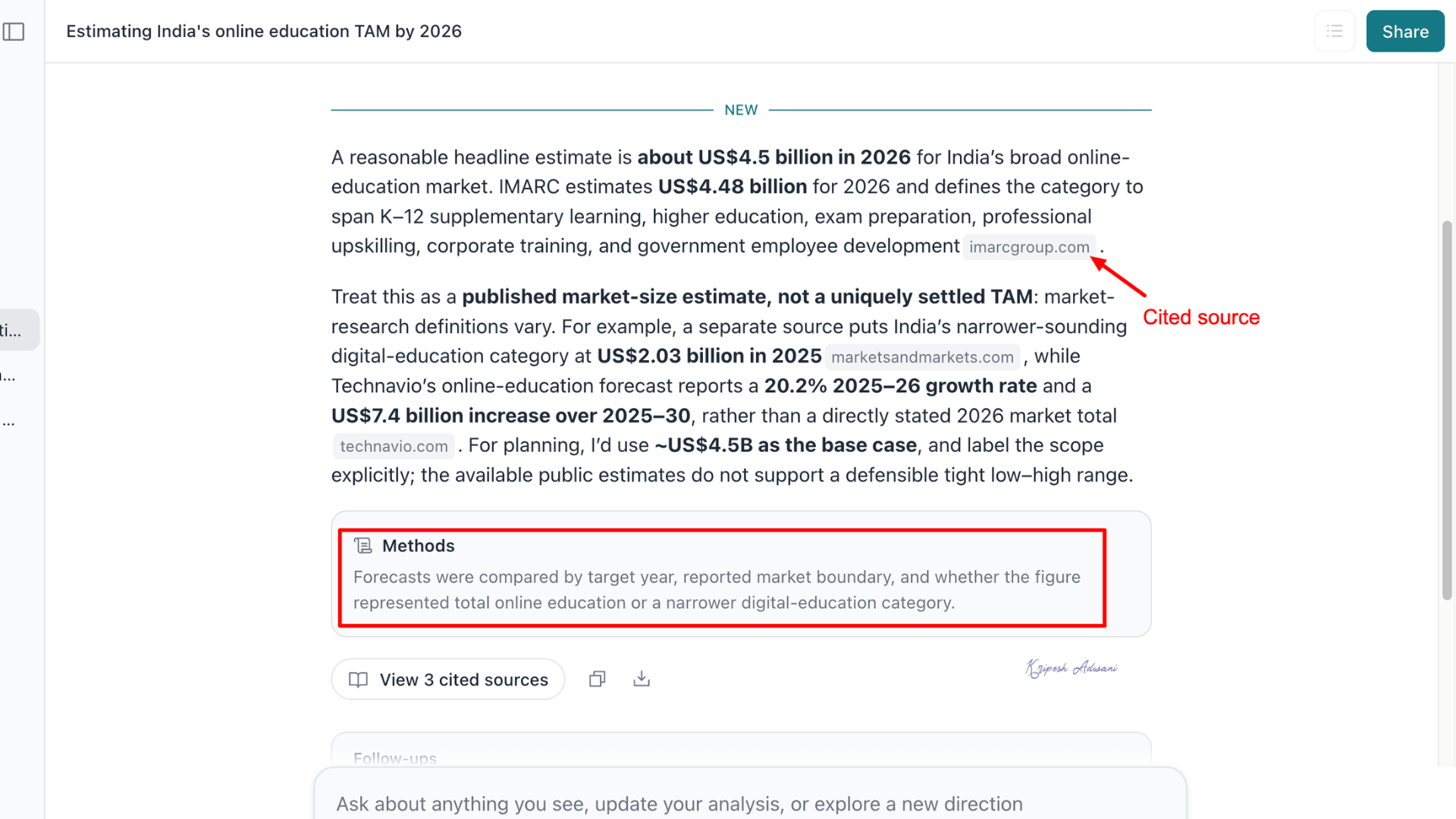
More importantly, the platform is designed around research workflows rather than just generating conversational answers. Paper searches, summaries, comparison tables, citations, and review steps are all integrated into one place.
Limitations
- Search coverage depends on the available sources and your query.
- Consider Elicit as a research assistant for systematic reviews, not a comprehensive scholarly database.
- Paywalled papers may only be accessible through their abstracts, which can limit the accuracy and completeness of data extraction.
Pricing: The free plan offers limited usage of Research Agent and Research Reports, access to research agents and reports, a maximum of two columns per table, and up to 10 sources per report. You can also access research papers through the free plan. Paid plans start at $49/month.
AI Tools for Grading and Feedback
11) CoGrader
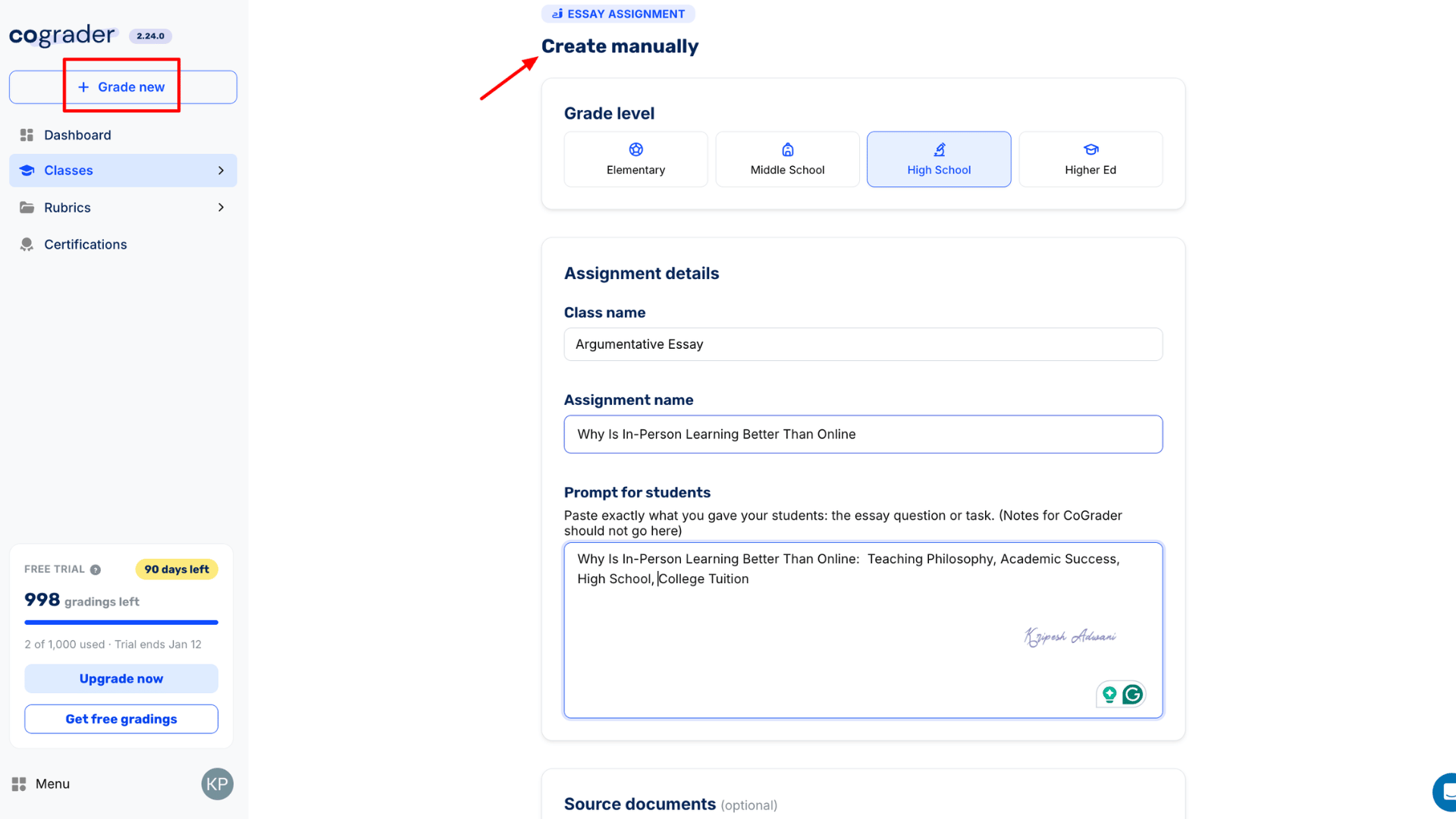
CoGrader is a rubric-based grading assistant for written assignments. Teachers can upload student work from Google Classroom, Canvas, Schoology, or other platforms, attach a rubric, and get feedback with AI detection, plagiarism, and grammar-check scores. They can review and edit the results before sharing grades.
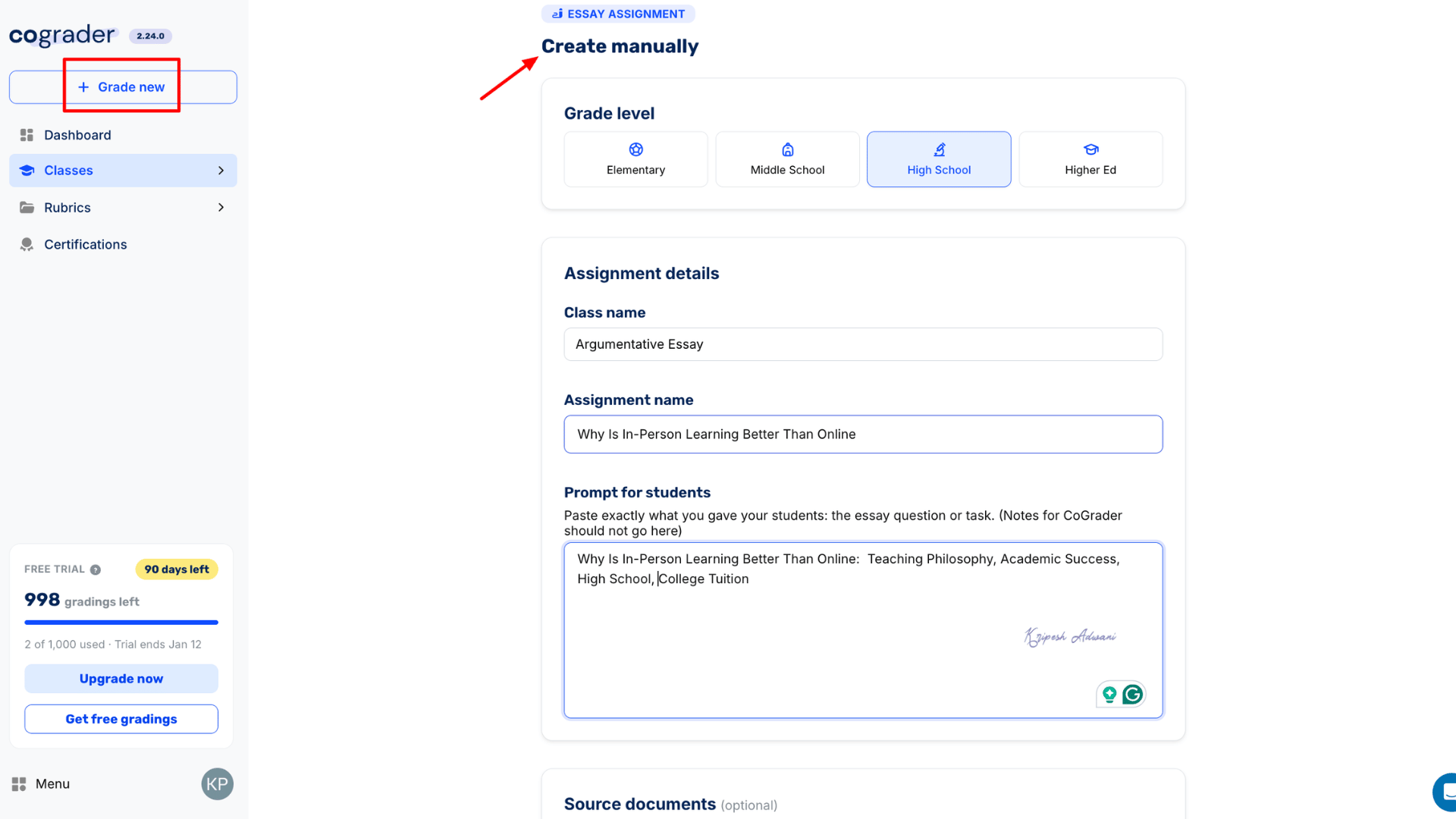
For teachers dealing with a heavy workload, it can reduce repetitive grading while keeping them in control of the final grades and feedback. I find it useful mainly for open-ended writing tasks and essays. We can also upload handwritten assignments, DOCX files, or other supported documents manually.
The tool includes over 500 state-aligned rubrics, and you can also upload your own rubric or marking scheme. There’s an option to choose from different feedback styles, including TAG (Tell, Ask, Give), 3-2-1 Feedback, WWW/EBI (What Went Well / Even Better If), and PQP (Praise, Question, Polish).
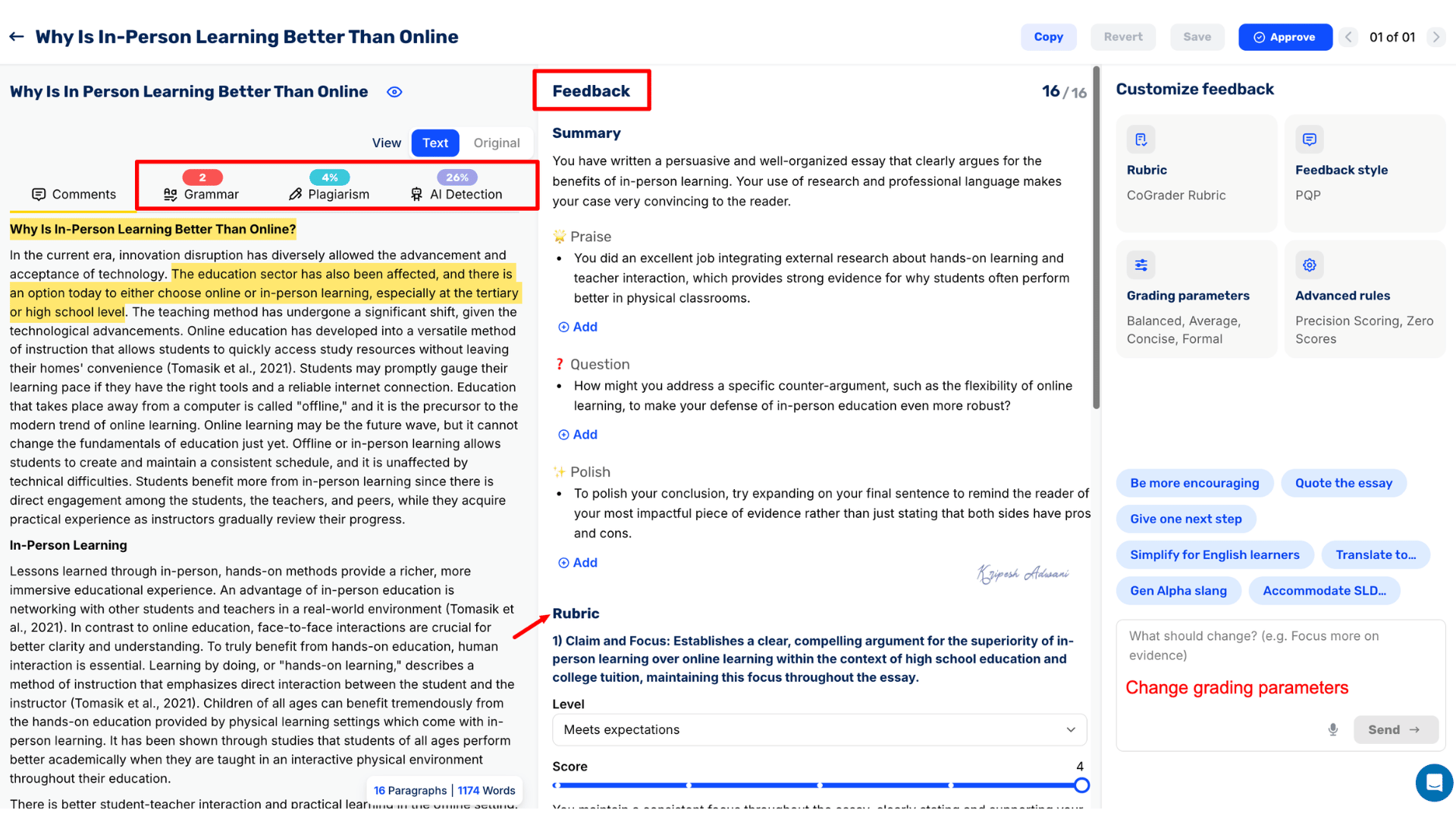
You know the USP of CoGrader is its teacher-controlled grading workflow. The AI provides an initial assessment, but teachers can review the scores and comments before sharing them with students. So, teachers remain responsible for the final grading decisions.
Limitations
- CoGrader works best for written assignments and essays, not for mathematics, coding, or lab work.
- Its rubric library focuses mainly on US assessments, including Common Core, TEKS, STAAR, California Smarter Balanced, and AP/IB rubrics.
Pricing: The free plan includes up to 150 student submissions per month, FERPA compliance, integrations with Google Classroom, Canvas, and Schoology, and handwritten assignment submissions. The Individual Educator plan costs $15/month, billed annually.
12) Gradescope
Gradescope by Turnitin is a better fit than CoGrader if you need to grade structured assignments in subjects like mathematics, science, or programming. To get started as an instructor, you’ll need to set up an account with an institutional email ID, create courses, and add your students to the class roster. The entire setup will take decent time. I’d recommend going through the user guide, as the initial setup can be challenging to figure out.
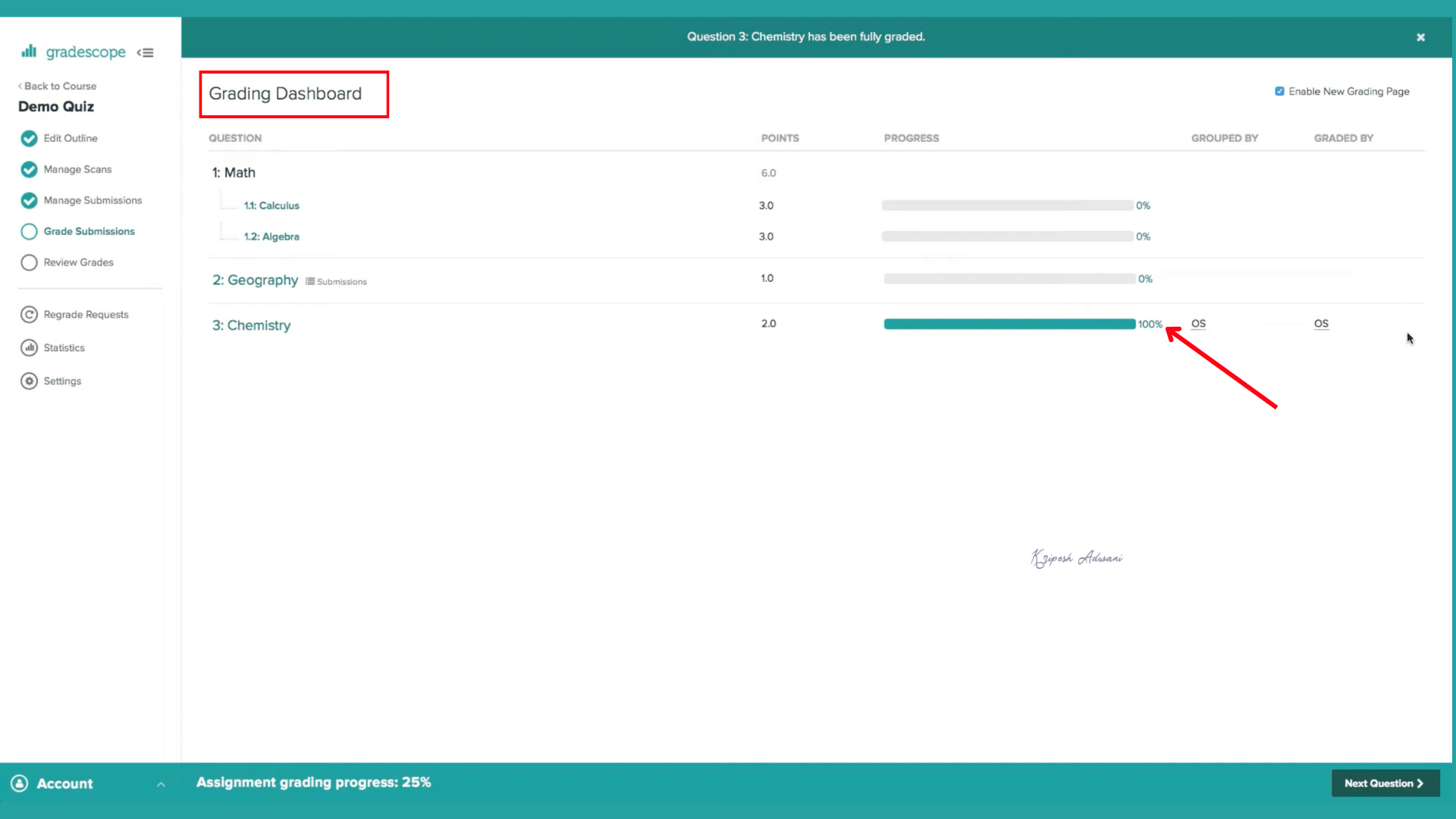
Once everything is set up, you can scan paper exams or ask students to upload PDFs or photos of their homework. You can then grade one question at a time across the entire class using a rubric. Once grading is complete, you can share grades with students or export the results to your gradebook.
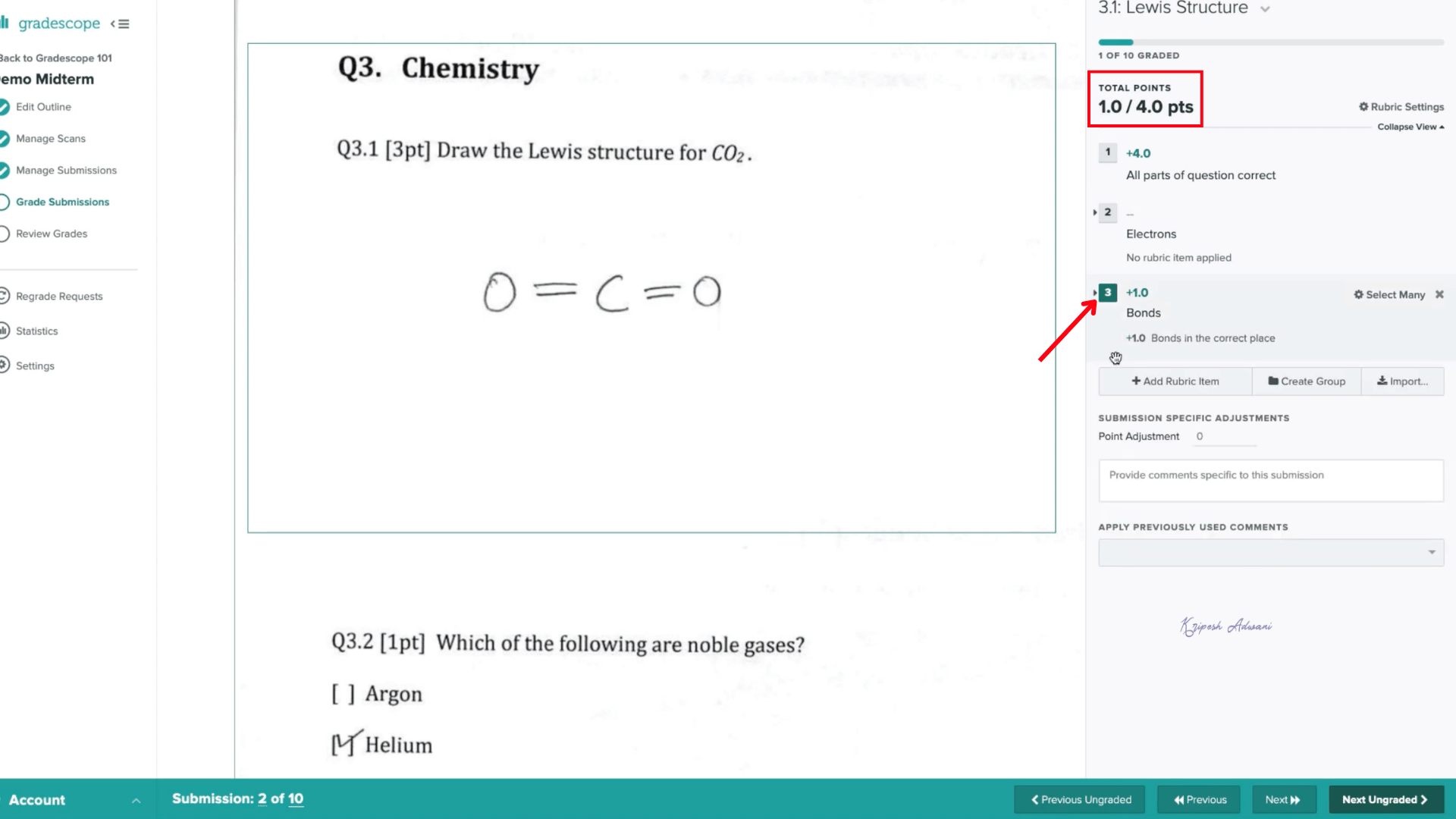
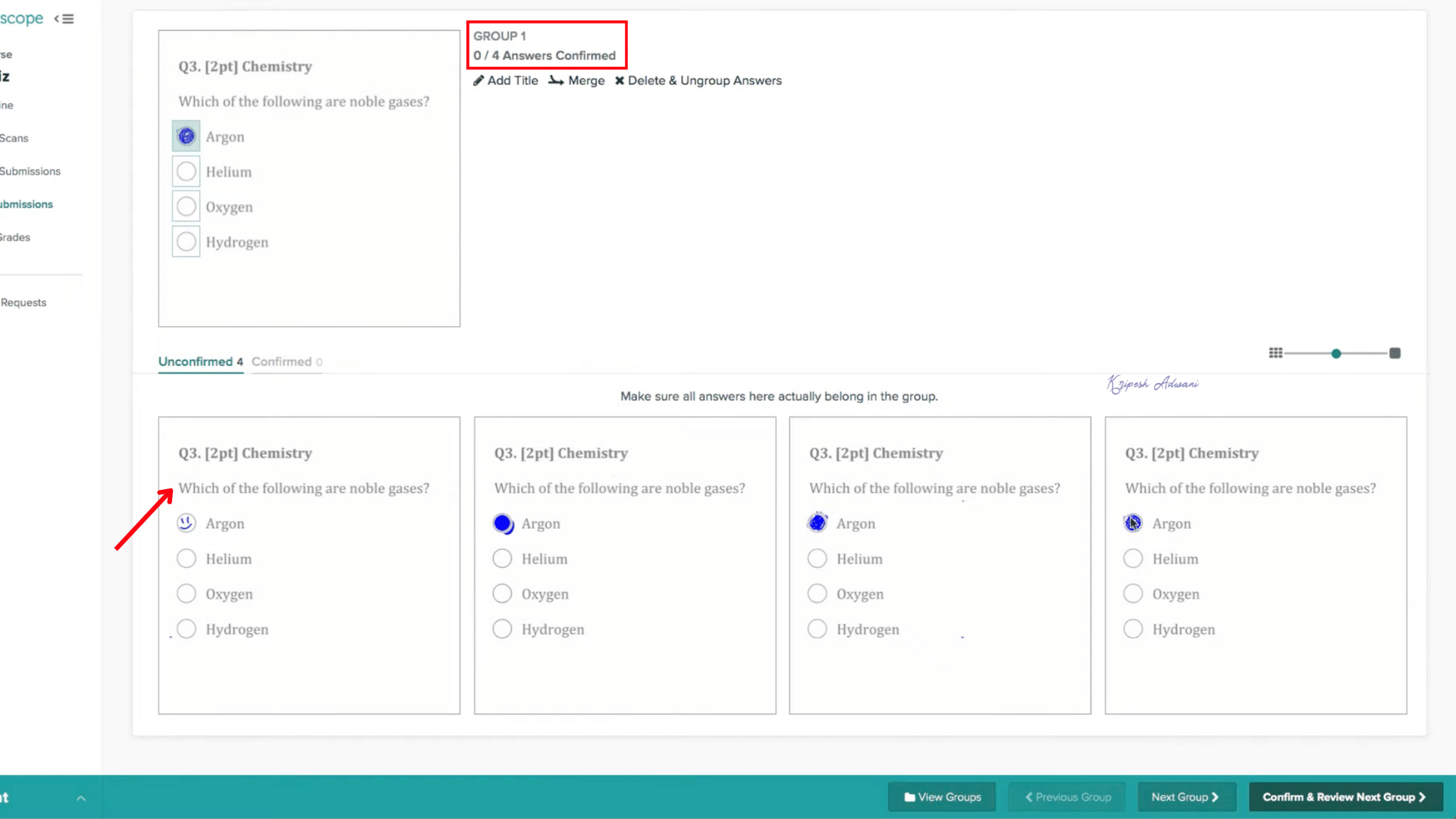
One feature I particularly like is AI-assisted answer grouping. For fixed-template assignments, Gradescope can group similar student answers, so teachers can grade multiple responses together. The AI suggests the groups, but you review and confirm them before grading. For example, if 40 students make the same mistake while balancing a chemical equation, you can apply the same feedback and point deduction to all those responses.
After grading, you can view statistics for individual questions and rubric items. These insights can help you identify common mistakes and understand which topics need more attention in your next class.
Limitations
- Gradescope has a learning curve, especially if you’re using it for the first time.
- It’s less suitable for long-form writing, essays, or research papers.
- Some features, including AI-assisted grading, collaborative grading, and LMS integration, are available only on the Institutional plan.
Pricing: The free plan includes dynamic rubrics, question-by-question grading, PDF assignment uploads, assignment statistics, regrade requests, data export, and the student mobile app. Institutional pricing isn’t publicly listed, so you’ll need to contact Gradescope for details.
AI Tools for Academic Integrity and Originality
13) Copyleaks
Wondering if your students wrote their assignments themselves or used AI? Use Copyleaks to be sure! Copyleaks is a popular AI content detection tool that can detect content generated using AI tools and bots like ChatGPT, Gemini, etc.
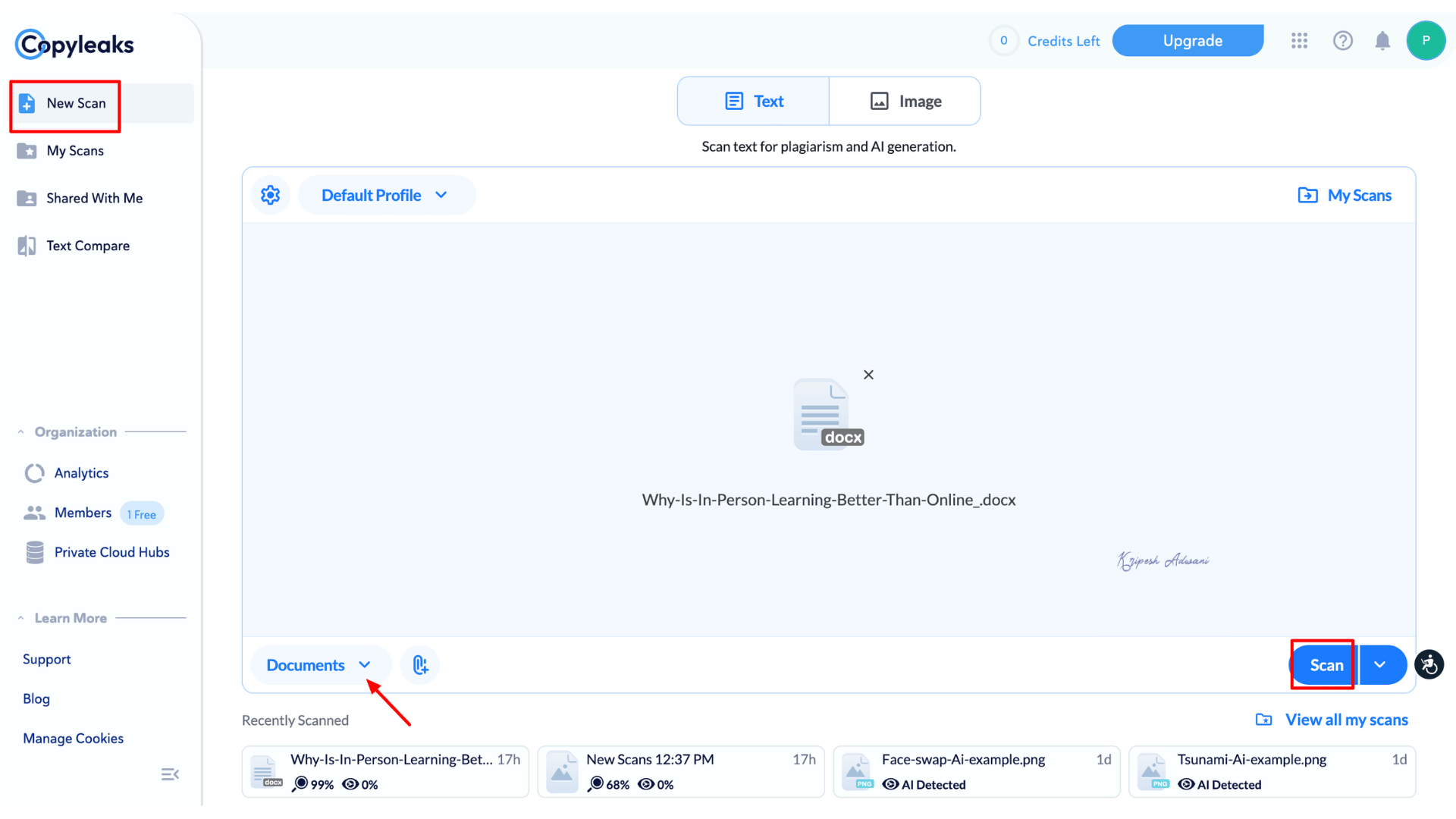
To begin with, you can upload your assignments, paste them as plain text, or enter a URL. Next, it allows you to select your sources, match types, and enable cheat detection. You can also perform a cross-language search by selecting a language from its list of 30+ languages.
Once you run the AI detection, it analyzes the text and displays the matching percentage and the number of similar words. I love that Copyleaks goes one step ahead and classifies similar words into identical words, paraphrased words, omitted words, and words with minor changes.
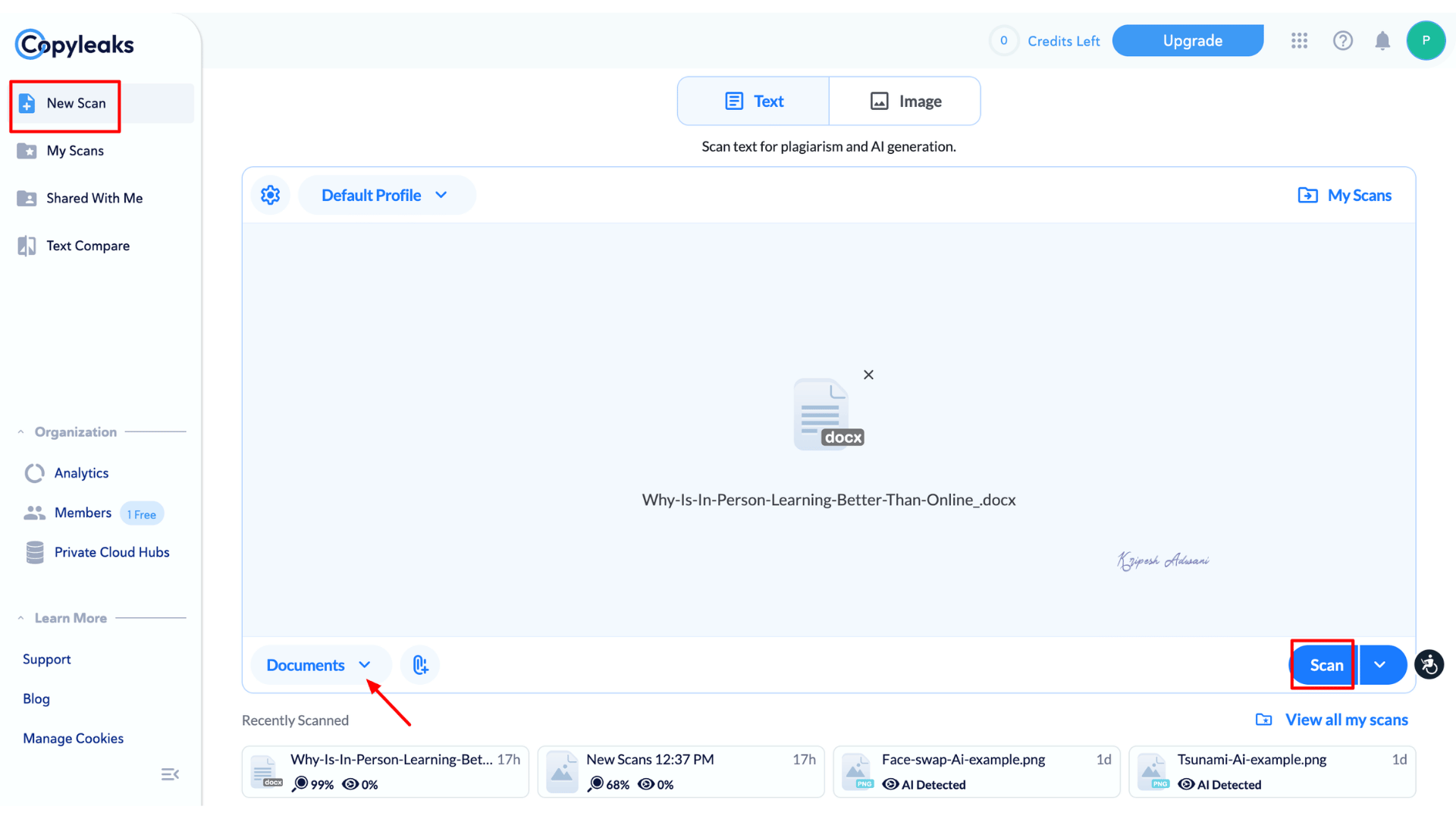
To provide evidence of plagiarism, Copyleaks also cites the sources from which the text was plagiarised. Overall, if you are concerned about AI usage in homework and assignments, Copyleaks is a powerful detection tool.
Limitations
- AI detectors work by identifying statistical and linguistic patterns, and those patterns can sometimes appear in human writing. So, don’t take it as sole evidence.
- Detectors can’t separate fully AI-generated writing from AI-assisted prose in a single score
Pricing: 5 credits available on the free plan. The paid plan, with combined AI and plagiarism checker, is priced at $13.99/mo.
What are the Benefits of AI Tools for Teachers?
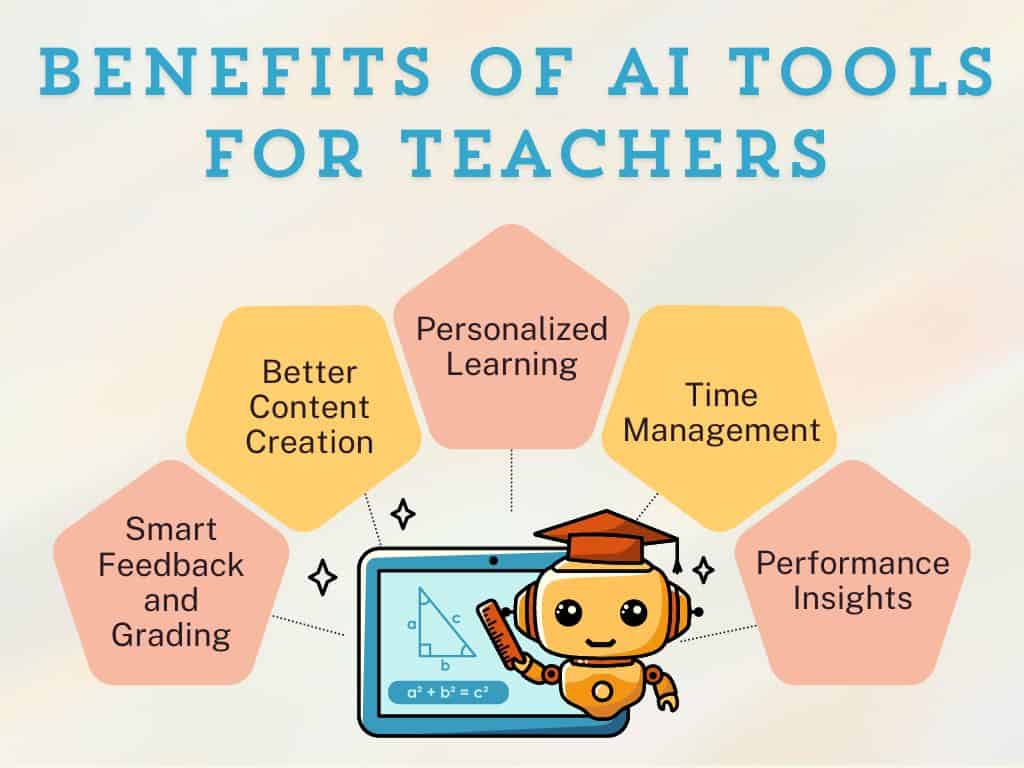
Introducing AI tools into a teacher’s workflow can be extremely useful and productive. Let’s look at the key benefits it offers.
1) Smarter Feedback and Grading
Tasks like grading assessments and multiple-choice questions can take up a lot of valuable time in a teacher’s day. With AI tools, teachers can automate grading and feedback on students’ assignments. They can also offer suggestions and areas for improvement for a more personalized approach.
2) Better Content Creation
With AI tools, educators don’t need to compromise on content creation anymore. They can create comprehensive lesson plans, reports, questionnaires, quizzes, handouts, and high-quality educational resources for the students in no time!
3) Personalized Learning
AI-powered tools can analyze students’ data to identify their strengths, weaknesses, and learning styles. Based on this information, educators can personalize the learning experience for every student by streamlining the learning resources.
4) Time Management
AI tools can automate a range of repetitive tasks like grading essays and MCQs, providing feedback, creating lesson plans, etc. This frees up time for educators to focus on important tasks like teaching and interacting with students.
5) Performance Insights
By incorporating AI tools into their workflow, teachers can analyze students’ performance. With insight into each student’s performance data, they can modify their teaching strategies to improve the outcomes.
Why Should You Trust Me?
I have been working full-time in the digital industry since 2015. In all these years, I’ve tested and reviewed hundreds of AI tools. These include AI apps for learning languages, AI image caption generators, AI translation apps, AI tools for content writing, AI to-do list apps , etc.
I’ve also recommended the best AI tools for small businesses, AI tools for students, and more. Experimenting with all these tools has given me immense experience and expertise to recommend the best ones for your requirements.
Conclusion
These are among the top AI tools for teachers. If you are an educator or an online instructor, I hope these tools help you enhance your productivity and simplify your workload. I personally loved using MagicSchool, Drift, and SchoolAI!
Which was your favorite tool from the above list? How can you use it in your classroom? Do you have any other suggestions that I missed? Do share with me in the comments below.
This is Kripesh signing off. I’ll be back with more such interesting stuff soon. If you are interested in AI tools, you can subscribe to my weekly newsletter to receive the latest AI news and AI tools!
Cheers, and keep learning! 🙂
FAQs
Can AI tools replace teachers?
No. AI tools cannot replace teachers, their judgment, classroom management, and subject expertise. These tools can save time on lesson planning, classroom resource creation, grading, and feedback.
Which AI tool is best for lesson planning?
In my view, MagicSchool is the best overall AI tool for lesson planning because it offers guided tools for learning objectives, activities, rubrics, and differentiation. Eduaide AI can be a strong alternative for framework-based planning.
Can I use ChatGPT or Gemini instead of teacher-specific AI tools?
Yes. ChatGPT and Gemini are useful for drafting lesson plans and simplifying explanations. However, all the above-mentioned teacher-specific platforms provide guided workflows.
Which AI tool is best for creating worksheets?
Diffit is best for creating levelled worksheets. At the same time, Brisk Teaching is best for turning an existing file into quizzes and guided notes.
Which AI tool is best for grading exams?
Gradescope is best for grading problem sets, bubble sheets, and handwritten assignments. To grade essays with plagiarism and grammar checks, CoGrader is also useful.