With dozens of new AI tools launching every day, it can be hard to keep up with the latest and greatest. But don’t you worry! We’ve done the research for you and shortlisted 17 Best Free AI Tools that you can use for your work and personal projects.
In this article, we’ll introduce you to the best free AI tools for bloggers, content writers, small businesses, freelancers, and creative professionals. These tools can automate a wide range of tasks, from writing emails and designing social media posts to coding applications.
So, are you ready to take your productivity to the next level? Let’s dive right in and explore the exciting world of AI tools!
- 17 Best Free AI Tools [Quick Comparison]
- Best Free General AI Assistants
- Best Free AI Tools for Study, Notes & Research
- Best Free AI Writing and Editing Tools
- Best Free AI Tools for Coding and Tech
- Best Free AI Image Generators
- Best Free AI Tools for Design and Presentations
- Best Free AI Video Tools
- Best Free AI Resume Builder
- Best Free AI Audio Tools
- How I chose the Best Free AI Tools
- Why Should You Trust Me?
- Conclusion
- FAQs
17 Best Free AI Tools [Quick Comparison]
| Tool | Category | Key AI Features | Free Plan Details | Best For |
| ChatGPT | General AI Assistant | GPT‑5.6 Luna default; web search; file uploads; DALL·E 3 image gen; voice mode; data analysis; | Unlimited text chats; limited file uploads/day | Everyday writing, quick search, image generation |
| Google Gemini | General AI Assistant | Gemini 3.6 Flash default; multimodal; deep Google Workspace integration; Deep Research, Canvas, Gems | Compute-based usage on Flash with varying Pro access | Help inside the Google ecosystem |
| Claude | General AI Assistant | Sonnet 4.6 default; 200K-token context; web search; file uploads; Artifacts; code execution | ~15–40 short messages per 5 hours | Long-form writing, editing, document review |
| Perplexity | General AI Assistant | Live web search; cited answers; follow-up questions; file uploads; Multi-source research; Deep research mode | Unlimited basic searches | Cited, up-to-date research answers |
| NotebookLM | Study, Notes & Research | Source-grounded Q&A from your docs/PDFs; Summaries; Audio & Video Overviews; Flashcards, quizzes, mind maps | 100 notebooks; 50 chats/day | Questions grounded in your own documents |
| Consensus | Study, Notes & Research | Peer-reviewed literature search; One-line evidence-backed answers; Consensus Meter; Study Snapshots; Medical Mode | Unlimited basic paper searches | Evidence from peer-reviewed papers |
| Rytr | Writing & Editing | 40+ use-case templates); 20+ tones; AI Autocomplete; Rewording, shortening | 10,000 characters/month | Fast, templated short-form copy |
| Wordtune | Writing & Editing | Sentence/paragraph rewrites; formal ↔ casual tone switching; Lengthen/shorten sentences; AI “Spices”; Summarizer; Smart Translate; Basic grammar/spelling checks | 10 rewrites/AI suggestions per day | Sentence-level rewriting and polish |
| Cursor | Coding & Tech | AI-native code editor; Chat, Composer, Agent; Multi-file edits; Agent workflows; VS Code extensions support | Limited completions/month | Trying an AI-native code editor |
| Leonardo AI | Image Generator | Multiple high-quality models; AI Canvas; Elements for style consistency; 3D Texture Generation | 150 tokens/day (~10–15 standard images, resets every 24h) | Free daily image and 3D texture generation |
| Ideogram | Image Generator | Best-in-class text rendering in images; Magic Prompt; Remix mode; Style presets & design categories; Editable text layers | ~10 slow-priority generations/day | Images with accurate, readable text |
| Canva (Magic Studio) | Magic Design; Magic Write; Magic Media; Magic Charts; AI Voice, photo/video animations, Beat Sync; Canva AI; 1.6M+ free templates, 4.7M+ free assets | ~20 Standard AI or Premium AI uses/month | All-in-one design with light AI | |
| Gamma | Prompt-to-full-deck in minutes; AI Agent for iterative edits; 100+ themes & brand import; Export to PPTX, PDF, PNG, Google Slides; Real-time collaboration | 400 one-time AI credits at signup (do not refresh monthly) | Presentation decks and docs | |
| Synthesia | Text-to-video in minutes; Stock AI avatars; Personal avatars; 160+ languages and AI voices; AI asset generation | 10 minutes of video/month | AI-avatar corporate and training videos | |
| AI ATS Resume Builder | 27 ATS-safe templates; AI resume & cover letter builder; ATS Score checker; “Tailor Your Resume” for specific job descriptions; AI Interview Questions & Answer Feedback | Completely free | Freshers building and tailoring resumes | |
| ElevenLabs | Most realistic AI voices; 70+ languages and accents; Voice cloning); Fine-grained control; API access on free | 10 minutes of audio generation/month | Realistic AI voice generation | |
| Wispr Flow | AI voice-to-text dictation in any app; AI cleanup; 100+ languages and accent support; Personal dictionary & snippets; Style adaptation per app; Wispr Notetaker for meeting transcripts with speaker IDs and AI summaries | 2,000 words/week on desktop | Voice dictation into any app |
Best Free General AI Assistants
1) ChatGPT
ChatGPT is one of the most widely used AI assistants today, and I’m sure you already use it too. The default model for free users is GPT-5.6 Luna. You can use it for daily text chats, writing, brainstorming, explanations, and more. Its built-in web search also helps you find updated information, news, and ideas around current events.
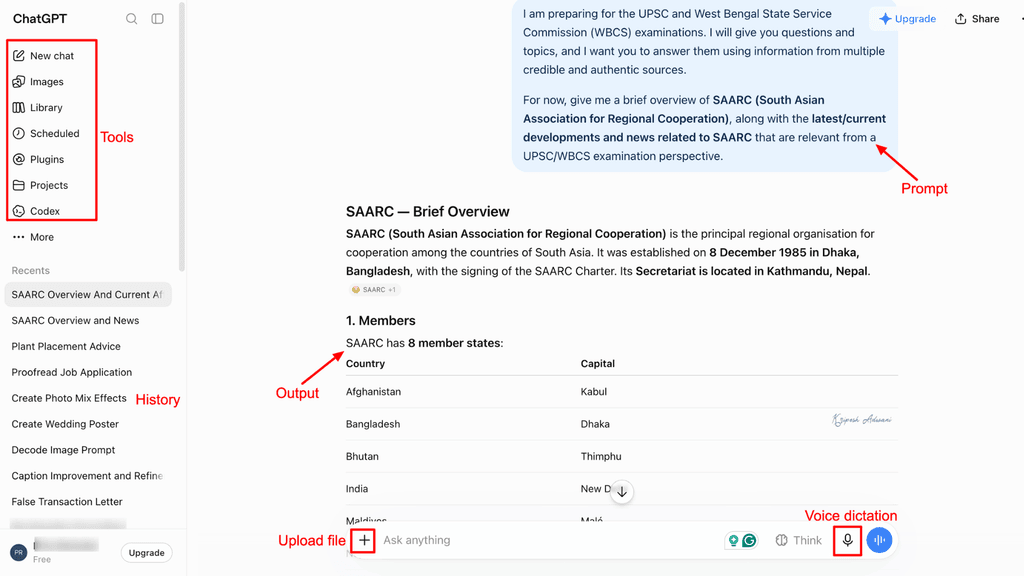
You can also upload PDFs and spreadsheets for data extraction and analysis. Today, ChatGPT is one of the most versatile AI assistants, as it combines strong AI capabilities, web access, and file handling in one place.
I also use ChatGPT for image generation. In fact, OpenAI launched its Image 2.5 model in September 2026. It can generate images quickly, remember previous edits, and even turn a rough sketch into a realistic image.
Free Limits: Unlimited chats, cross-platform sync, 27K context window, limited file uploads, and limited image generation.
Ideal users: Bloggers, freelancers, and everyday users who want a reliable, no-cost AI assistant.
2) Google Gemini
If your daily workflow lives in Gmail, Docs, Drive, and Sheets, Gemini can be ideal because of its native Google Workspace integration. The free tier mainly includes the Gemini 3.6 Flash model, with varying access to Gemini 3.1 Pro.
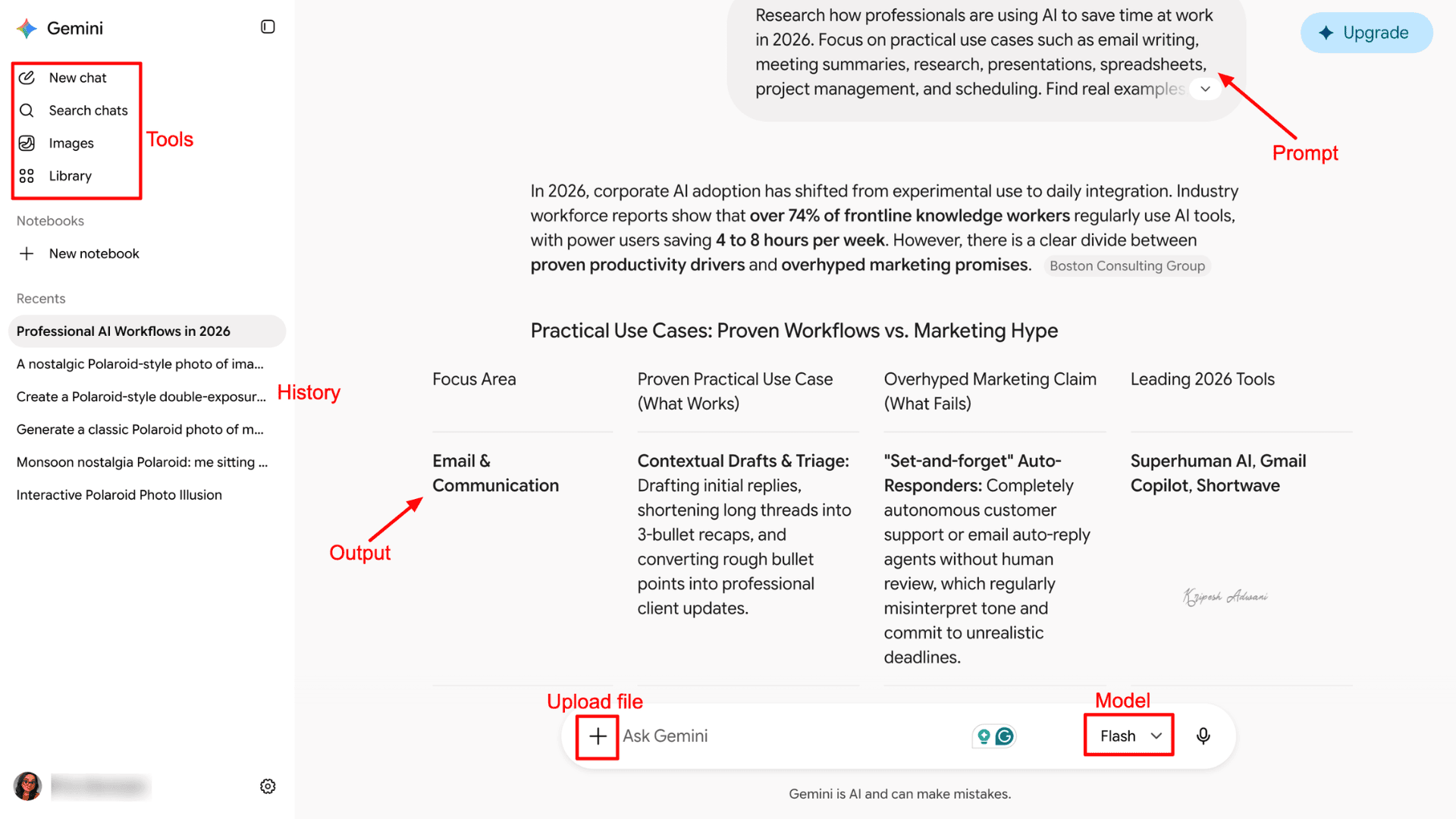
Similar to ChatGPT, Gemini is also a multimodal AI assistant. You can chat with it using text, images, and audio, and some features also support video understanding and generation. For web searches, it uses Google’s real-time search data to provide accurate, up-to-date, and factually credible answers.
Gemini Canvas lets you run multi-step research tasks in a side panel. You can also save custom Gems for workflows you use repeatedly. Other than that, Nano Banana 2 is available for image generation, though the output isn’t as realistic as ChatGPT Image 2.5.
Free Limits: Compute-based usage on Gemini 3.6 Flash, 32K context window, 5 Deep Research reports/month, and limited access to Nano Banana, Flow, and Canvas. Limits refresh every 5 hours within a weekly cap.
Ideal users: Students, creators, and professionals who heavily use Google Workspace.
3) Claude
Claude is Anthropic’s general-purpose AI assistant. I personally rely on it more than ChatGPT or Gemini for data analysis, in-depth research, and complex document work. As of 2026, the free plan runs on Claude Sonnet 5, the same model that also powers the paid Pro plan.
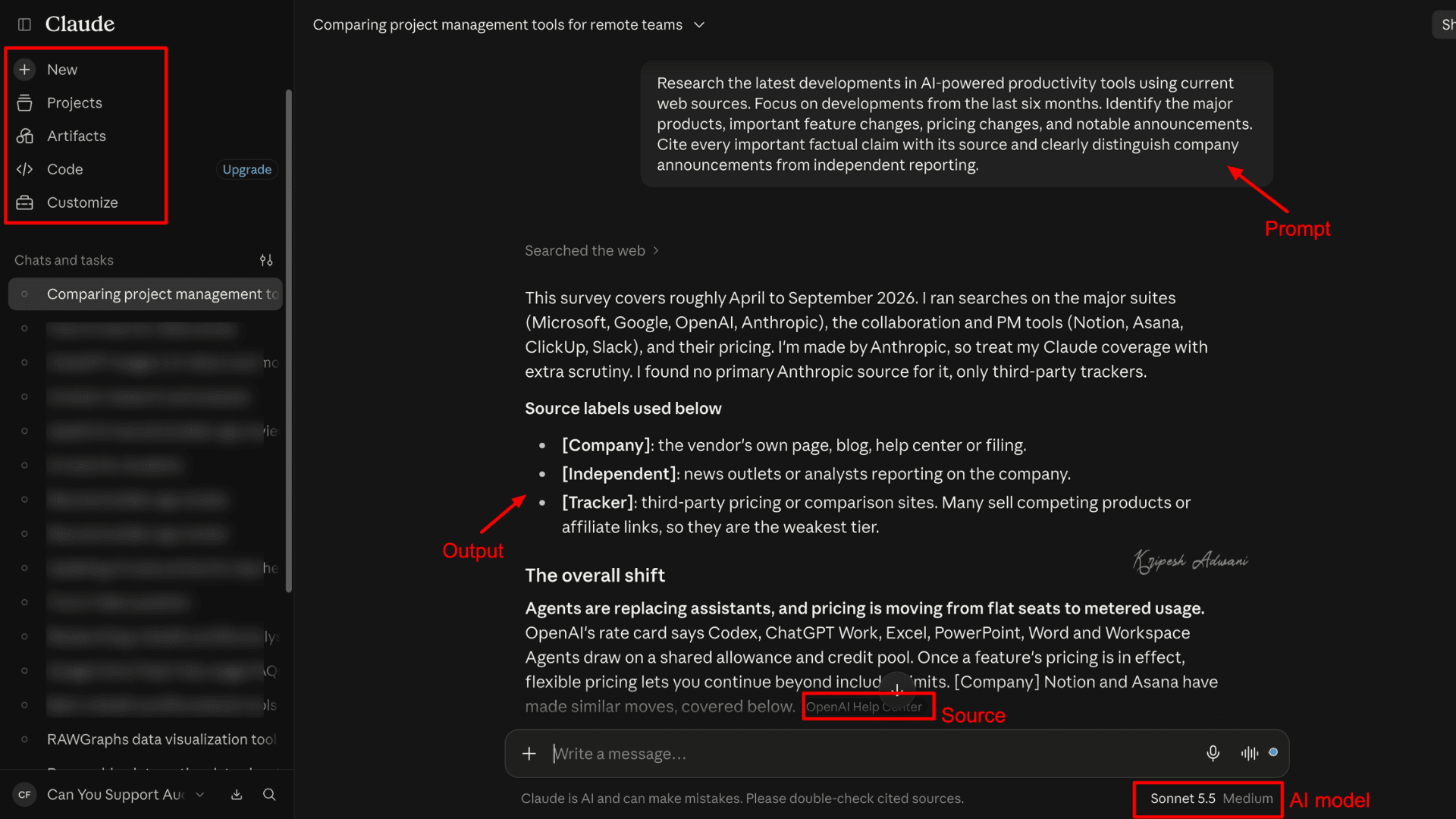
Sonnet-class models stand out for strong reasoning, writing, and coding, with a much larger context window. I get some of the most natural, human-sounding prose from it for reports, blogs, and long documentation. Claude also includes Artifacts, a side-panel feature for generating and iterating on documents, code, charts, and mini-apps directly inside the chat.
When it comes to web search, Claude can research using live sources. It remembers my past preferences and uses them in its responses. For example, if I’m searching for new blog topics, it remembers my website, its target audience, and goals that I shared previously.
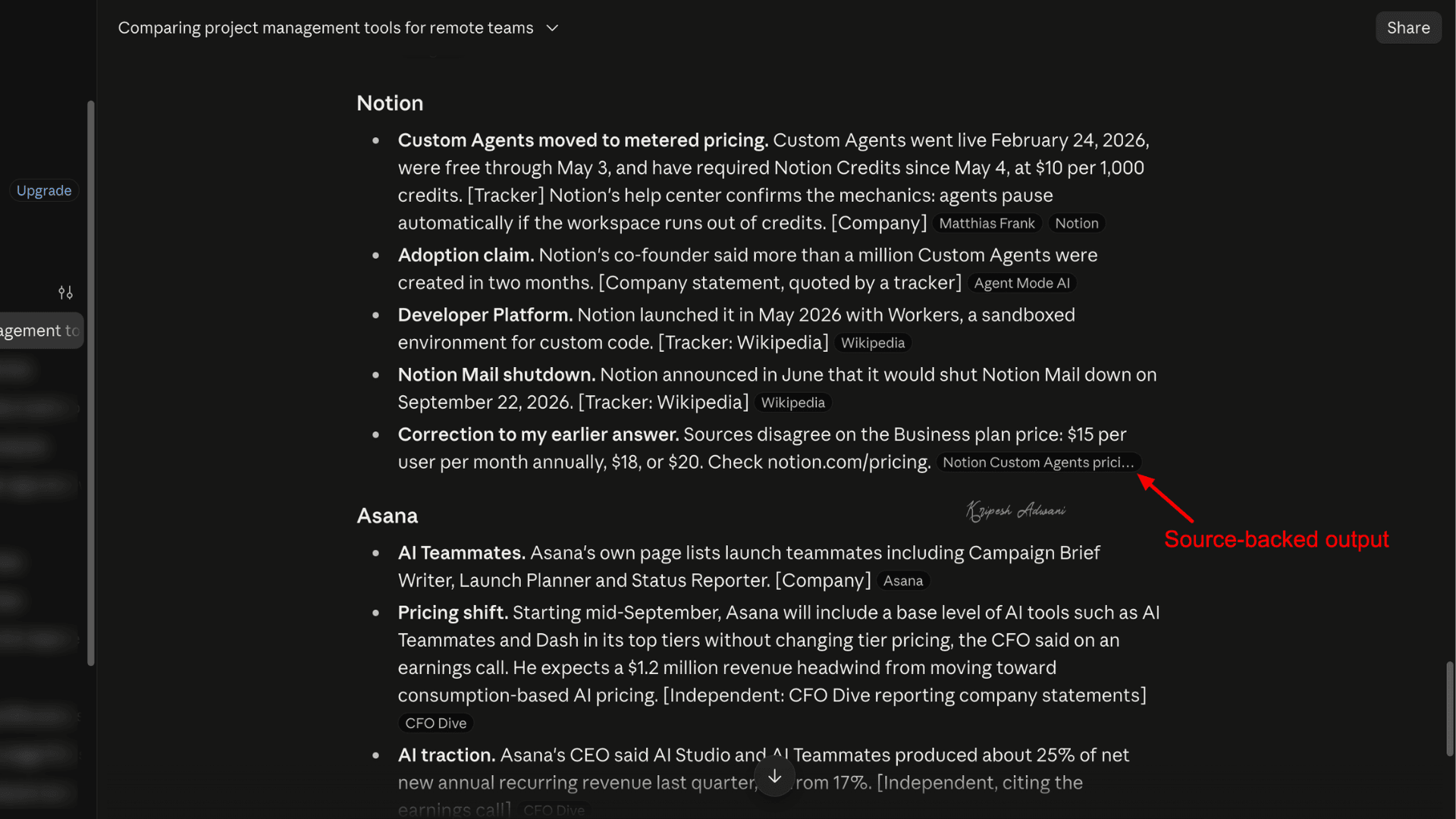
Basically, if you’re a solopreneur, you can write long business docs, review data, and build simple tools with just one AI assistant, Claude, paying nothing.
Free Limits: Roughly ~15–40 short messages per 5h, a 200K context window, and limited access to Artifacts.
Ideal users: Writers, editors, and researchers who need strong reasoning and long-document handling.
4) Perplexity
For workflows where accuracy and sourcing matter more, Perplexity is the most reliable AI assistant for me. It’s more like an AI-powered answer search engine than a generic chatbot. Every response pulls information from live web sources and includes numbered citations, so you can verify the claims yourself instead of just getting a list of links.
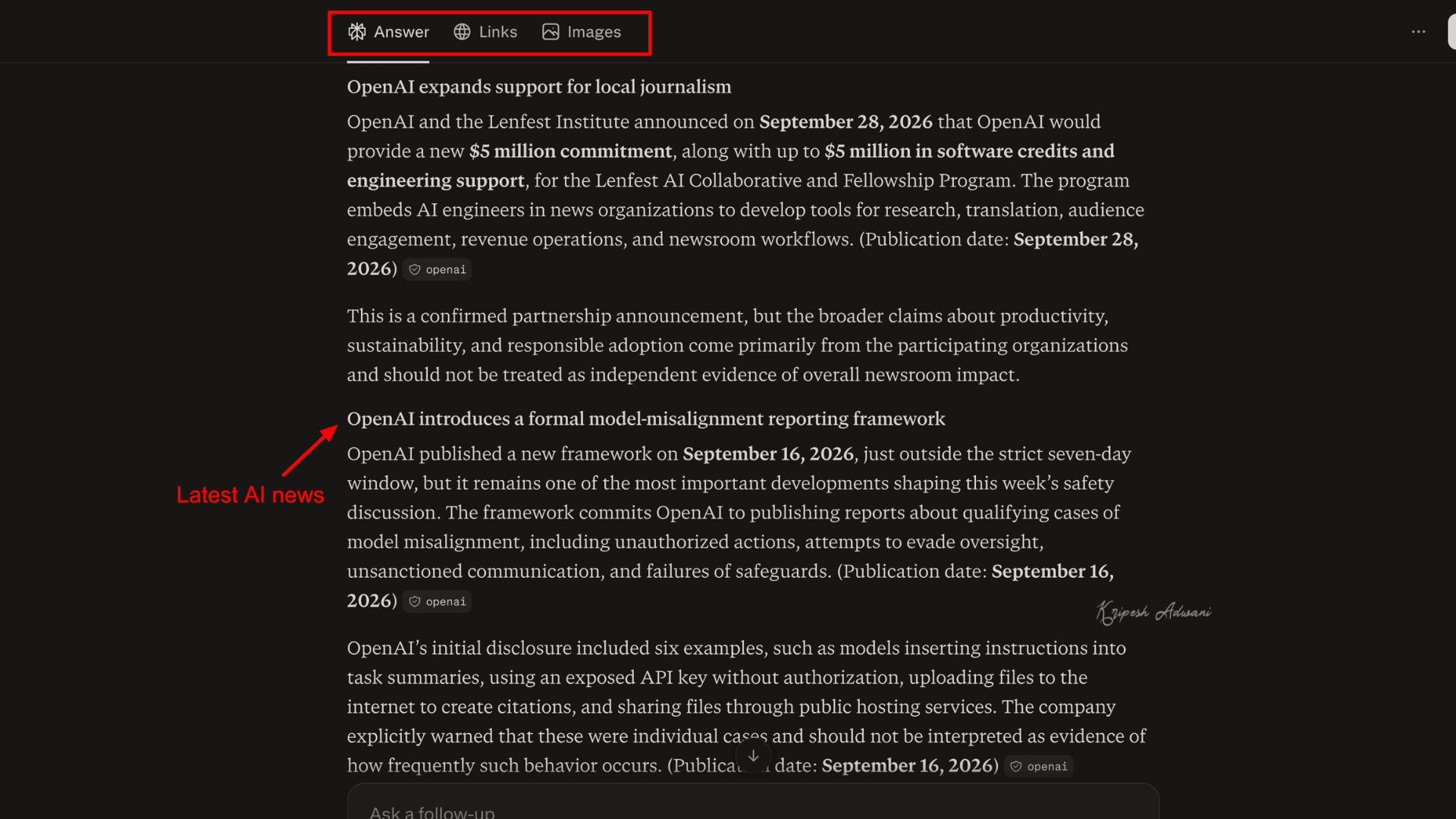
It uses Perplexity’s in-house Sonar model as the default option on the free plan. Models like GPT-5.6 Terra, Claude Sonnet 5, and Grok 4.6 are also available, but free users can’t select them manually. You can run unlimited quick searches with the default model. Deeper, multi-step research is also available, but with usage limits.
When you log in and open the app, you’ll find two modes: Search and Work. Perplexity Search answers questions by searching and summarizing information from the web. If you want an autonomous coworker that can handle multi-step projects, connect to external tools, and deliver complete files, Perplexity Computer is a better fit.
Along with that, Perplexity has Focus Modes that limit web searches to specific sources, for example, academic papers, Reddit, Math, YouTube, or Writing. You can also upload documents and use them as references, similar to other AI chatbots.
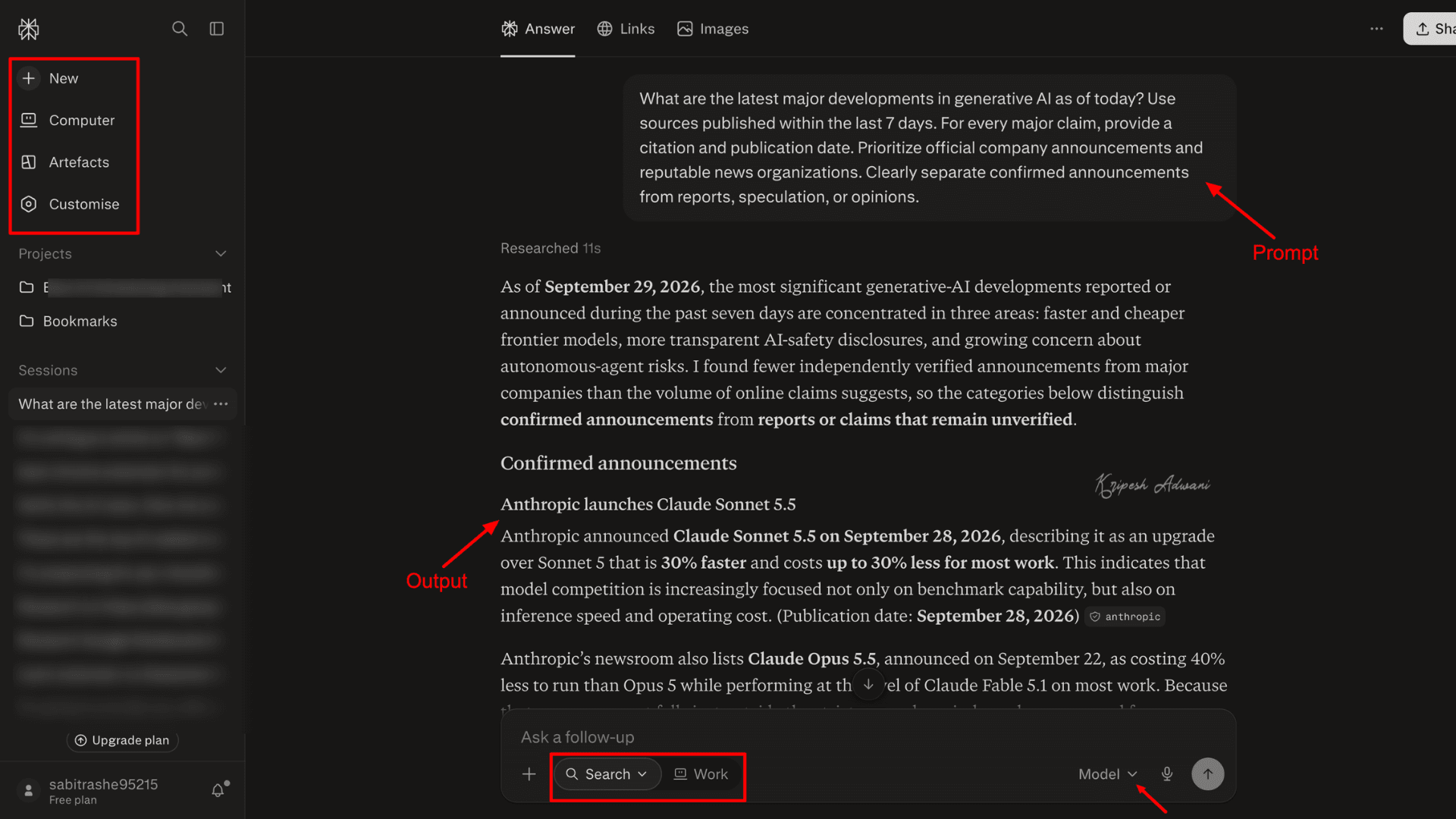
I’d recommend Perplexity if you want to reduce the risk of AI hallucinations and save hours of manually searching Google.
Free Limits: Unlimited basic searches; 3–5 Pro searches per day; 1–3 Deep Research searches per month; 3 file uploads per day.
Ideal users: Students, researchers, and fact-checkers who want fast, cited answers based on current web sources.
Best Free AI Tools for Study, Notes & Research
5) NotebookLM
Google renamed NotebookLM to Gemini Notebook in July 2026 to bring it under the Gemini family. It’s a useful free AI research assistant designed with students, academics, and researchers in mind. NotebookLM is very simple to use. All you have to do is upload your notes, PDFs, Google Docs, or other documents and start asking questions.
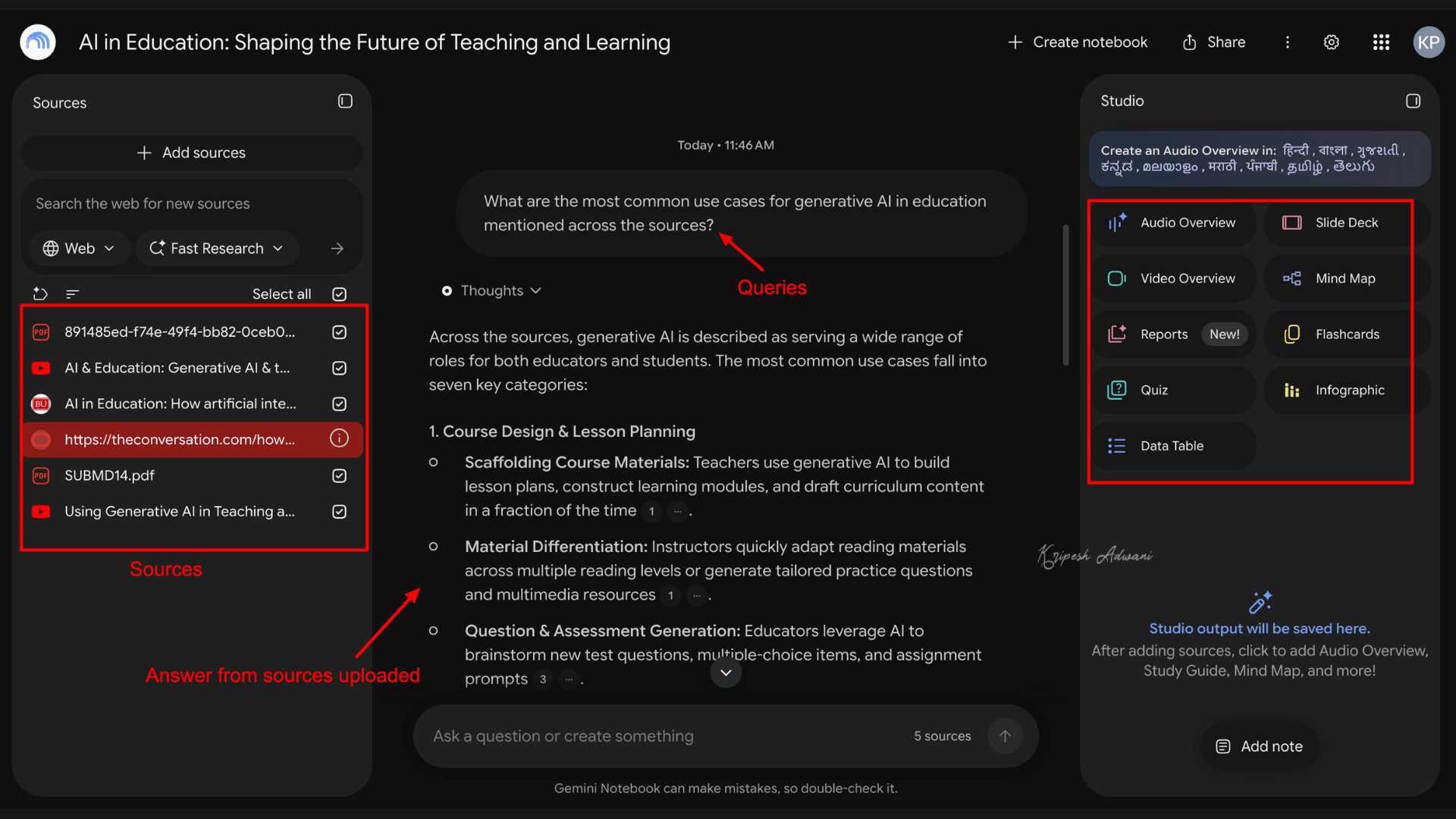
Gemini Notebook responds based on your uploaded sources, so there’s no chance of making up facts outside your reference material. Its responses are also backed by source citations to cross-check the information.
Suppose you want to revise your notes on the go. Gemini Notebook can turn your study materials into a podcast or videos. For last-minute preparation, you can also use it to generate flashcards, mind maps, quizzes, and other study aids.
NotebookLM Deep Research mode lets it search the open web and build a cited source list from scratch when you’re starting a topic with nothing uploaded yet. Honestly, in 2026, tools like Gemini Notebook are valuable for me as I struggled earlier with cross-referencing information or keeping research notes organized.
Free Limits: 100 notebooks; 50 sources per notebook; 50 chat queries per day; 3 Audio Overviews and 3 Video Overviews per day; 10 reports, mind maps, or flashcards per day; 10 Deep Research sessions per month.
Ideal users: Anyone who does serious reading and research before writing and wants an AI tool that stays grounded in their own sources.
6) Consensus
Suppose you’re writing about health, nutrition, science, or technology. A generic chatbot might summarize information from random blogs or websites, which isn’t ideal when you need reliable evidence. You need peer-reviewed research, but searching Google Scholar can take hours. That’s where Consensus can help.
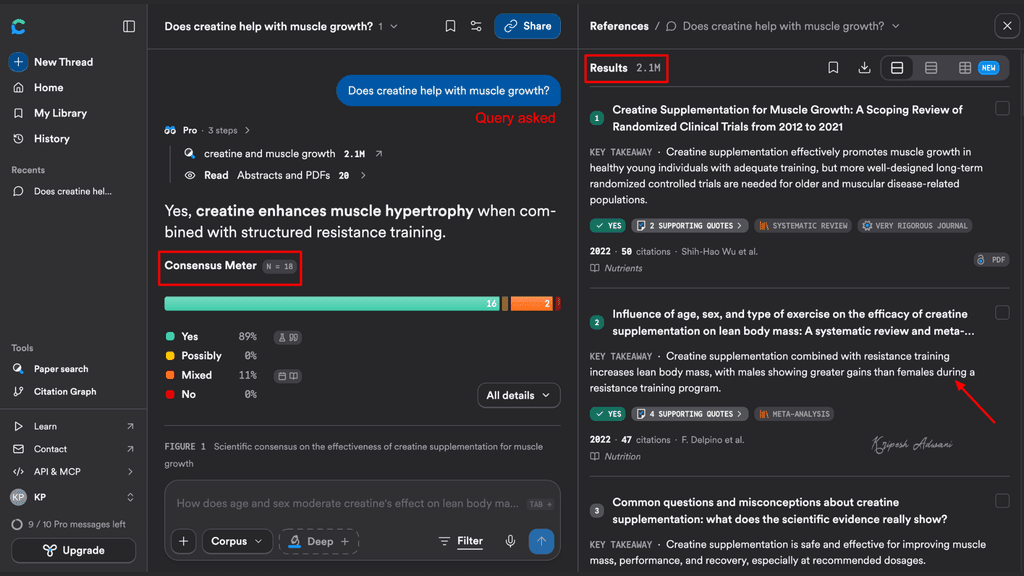
Consensus searches millions of academic papers and provides evidence-backed answers with citations. It focuses on published research rather than random online claims. For example, if you ask a question like, “Does creatine help with muscle growth?” you get a direct answer along with links to the relevant research papers. For yes-or-no questions, the Consensus Meter shows whether the research generally agrees, disagrees, or has mixed findings.
When we need deeper summaries of individual papers, we can use Pro Analysis and Study Snapshots. For medical students and health-related questions, there’s also a Medical Mode, which refers to 8M+ top medical journals. Consensus also integrates with tools like EndNote, Zotero, and Mendeley, while LibKey can help you access papers through your university library when you have institutional access.
Free Limits: Unlimited basic paper research; 10 Pro messages per month; up to 3 Deep Reviews per month.
Ideal users: Bloggers, writers, university students, and anyone working on health, science, or research-related topics.
Best Free AI Writing and Editing Tools
7) Rytr
Rytr is a GPT-3-powered AI writing tool that helps when you don’t want to spend time figuring out prompts in ChatGPT or Gemini. You simply pick a use case (blog outline, product description, ad copy, email, etc.) from 40+ templates, enter a short description, choose the number of variants and tone you want, and it generates the content for you.
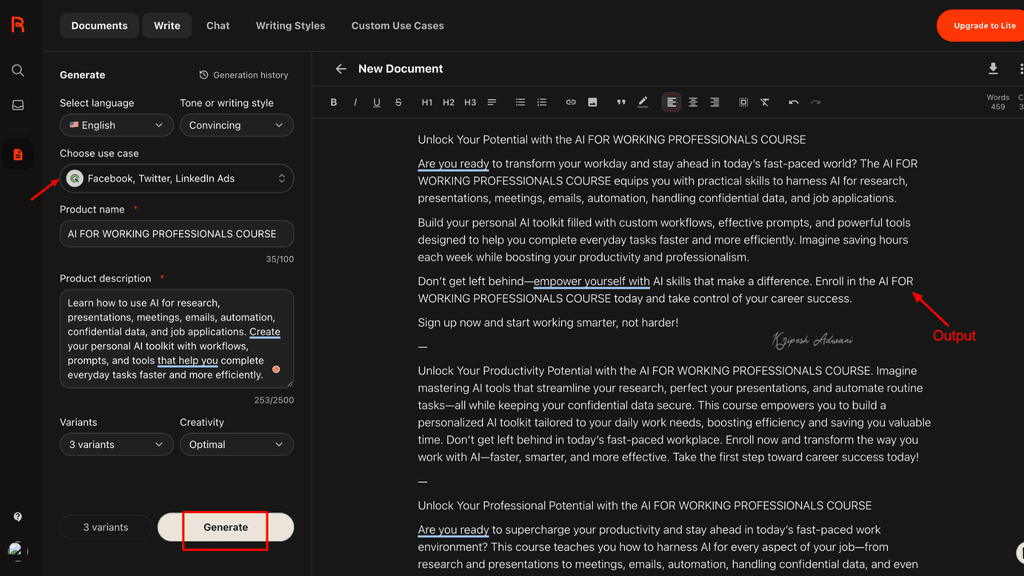
Freelancers managing multiple clients can choose different tones for different types of content. Rytr also integrates directly with Gmail, Google Docs, and other web apps through its browser extensions. Its AI Autocomplete feature can also help when you’re stuck and dealing with writer’s block.
That said, I want to be honest about one thing: Rytr’s output can feel quite template-y, repetitive, and generic. So AI-detection tools may flag the content if you don’t edit. I wouldn’t use it for publish-ready, long-form blog posts. It’s more useful for creating short-form content.
Free Limits: 10,000 characters of AI-generated content per month; 1 language; 20+ preset tones; Chrome extension; no plagiarism checker; no custom tone.
Ideal users: Solopreneurs, social media managers, freelancers, and small business owners who need fast, templated short-form copy at volume.
8) Wordtune
Wordtune mainly helps with rewriting and sentence-level editing. Let’s say you already have a draft and just want to sharpen a few sentences. That’s where Wordtune can be useful. To use it, highlight a sentence, hit “Rewrite,” and it generates alternative sentences (more formal, more concise, or more casual) right in your browser.
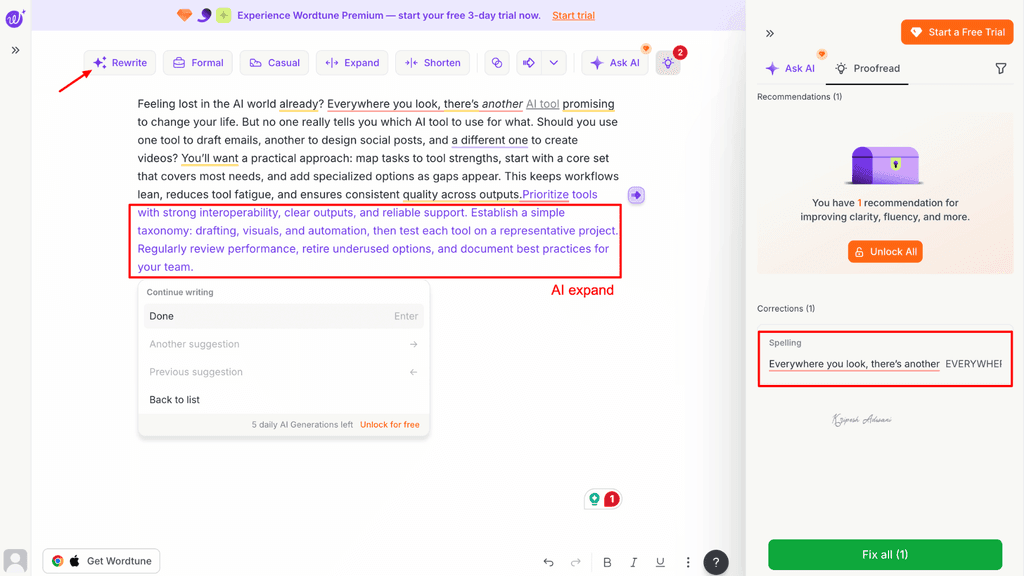
Unlike Rytr, Wordtune isn’t designed to write content from scratch. It focuses on polishing and improving text you’ve already written. Usually, I use this tool as a Chrome extension, and it works inside Gmail, Google Docs, and most places where you type on the web.
You can also expand a sentence by hitting the Tab key at the end of what you’ve written. Wordtune also offers basic grammar and spelling checks. Its Smart Translate feature can translate text from Hindi, while AI Spices lets you improve your writing by asking Wordtune to clarify a point, add emphasis, provide an example, or wrap up a paragraph.
Free Limits: 10 AI rewrites or suggestions per day; 3 AI summaries per day for Spices; unlimited basic grammar and spelling checks.
Ideal users: Freelance writers, professionals, and non-native English speakers who already have their content written and want to refine individual sentences.
Best Free AI Tools for Coding and Tech
9) Cursor
In 2026, coding isn’t just about typing code anymore. You can use AI to handle boilerplate, debug problems, and prototype features. Cursor is an AI-native code editor, built on VS Code, that helps you build apps faster and learn from AI suggestions. It can understand your entire codebase, make multi-file edits, run commands, and even work autonomously on tasks for minutes or hours.
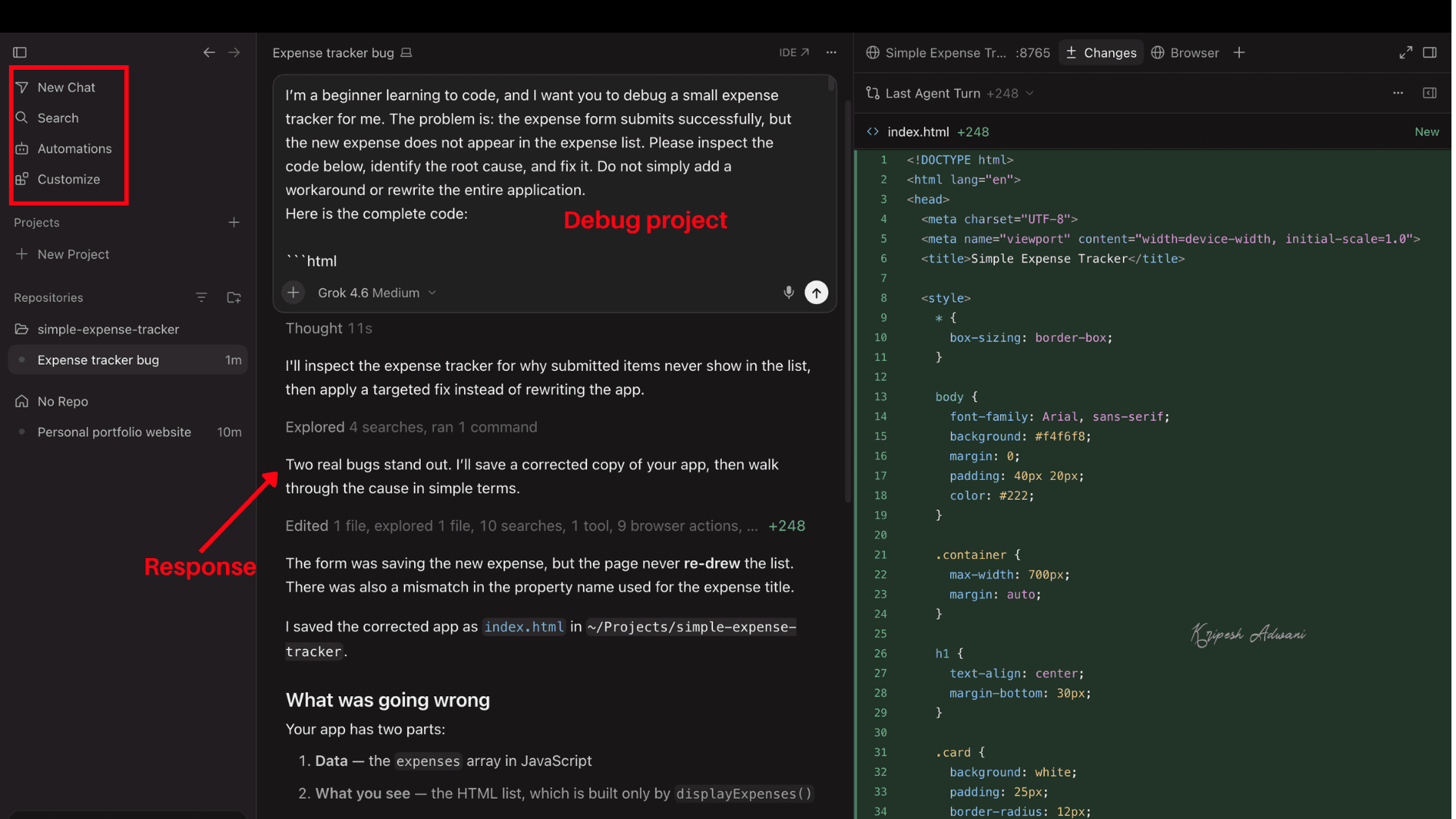
It’s not just a plugin; it’s the whole editor. You also get full extension compatibility, so you don’t have to sacrifice your existing development setup to use its AI features. Its Tab completion learns from your specific codebase rather than relying only on generic patterns, so the suggestions can become more relevant as you work on a project.
You can also chat with Cursor using your full codebase as context and ask questions like, “How does authentication work here?” You get a one-week Pro trial automatically when you sign up, which is a nice way to try the full experience before deciding whether it’s worth the price.
Free Limits: Limited code completions (Tab); limited Agent requests (Chat, Composer, Agent); access to basic models. Cursor doesn’t commit to a fixed free plan quota, and actual usage is tracked live in your account dashboard.
Ideal users: CS students, indie developers, and freelancers who want access to AI-assisted coding workflows and multi-file editing without immediately paying for a premium subscription.
Best Free AI Image Generators
10) Leonardo AI
Leonardo.Ai is a multi-model image generation platform with a clean, easy-to-use web interface. You get access to multiple AI models, image-to-image editing, background removal, upscaling, and even 3D texture generation, throughout one workspace rather than just a prompt box. I use it mainly for gaming assets, character design, and concept art.
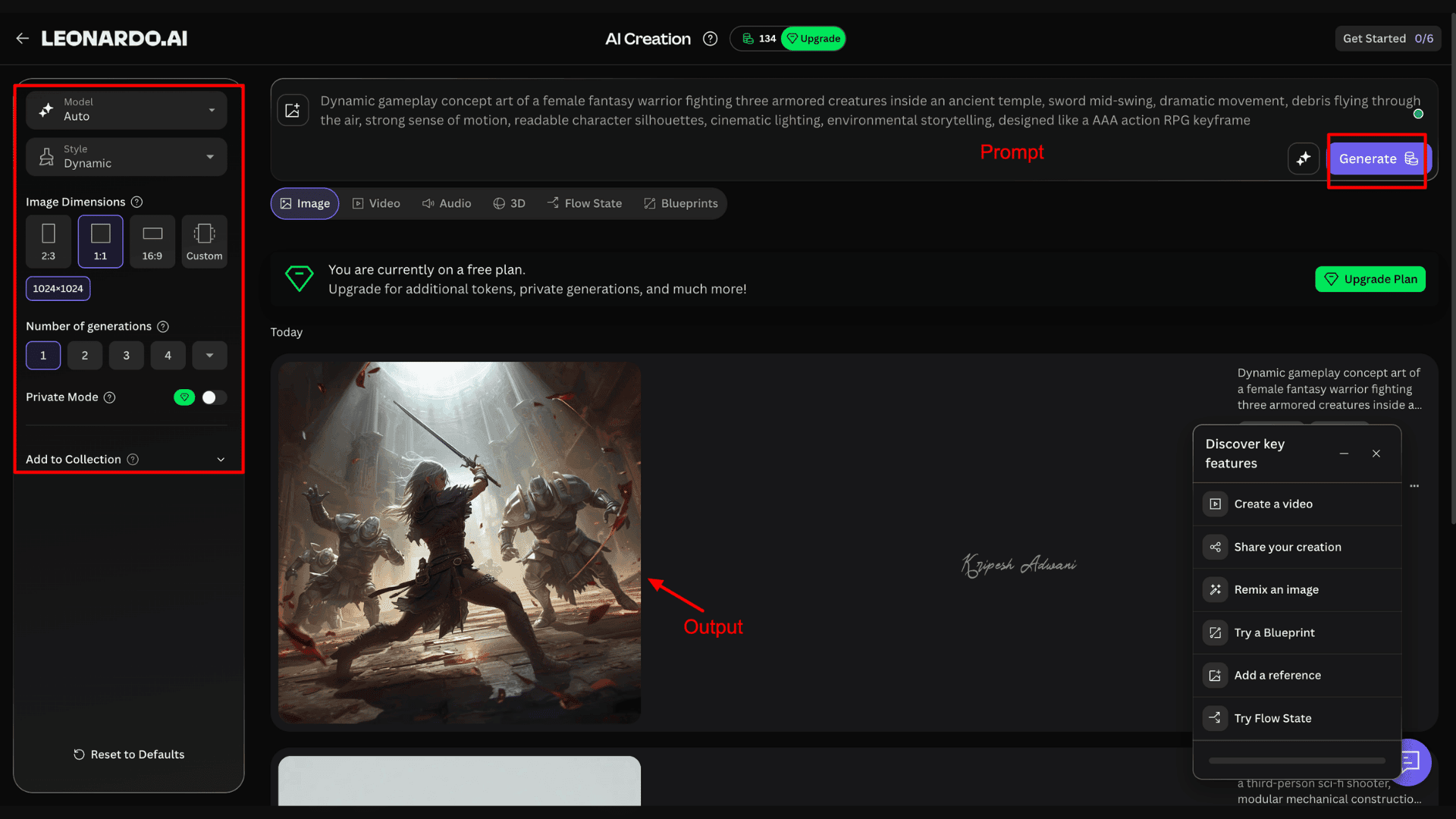
Its free plan gives enough AI tokens to generate around 10–15 standard images a day. You can access Phoenix, FLUX Schnell, FLUX Dev, and other high-quality generative AI models. Leonardo AI also lets you edit images, extend backgrounds, or make other changes directly on the AI Canvas.
Free users can use Community Elements to maintain a consistent visual style across their creations. Game developers can also upload OBJ files and generate texture maps directly from text prompts. Another advantage is that Leonardo.Ai doesn’t add watermarks to generated images. Overall, it’s a low-cost option for creating stylized visuals.
Free Limits: 150 AI tokens per day; access to community models; public-only creations; basic quality settings; 1 personal collection; no Consistent Character Engine.
Ideal users: Digital artists, game developers, and hobbyist designers who want to experiment with multiple AI image models and create stylized visual assets.
11) Ideogram
Most AI image generators can create excellent visuals, but they often mess up one thing: text inside images. Ideogram built its reputation around generating accurate, readable text. Ask it to create a poster with a specific headline, a logo with a business name, or an invitation card with long text, and Ideogram nails it.
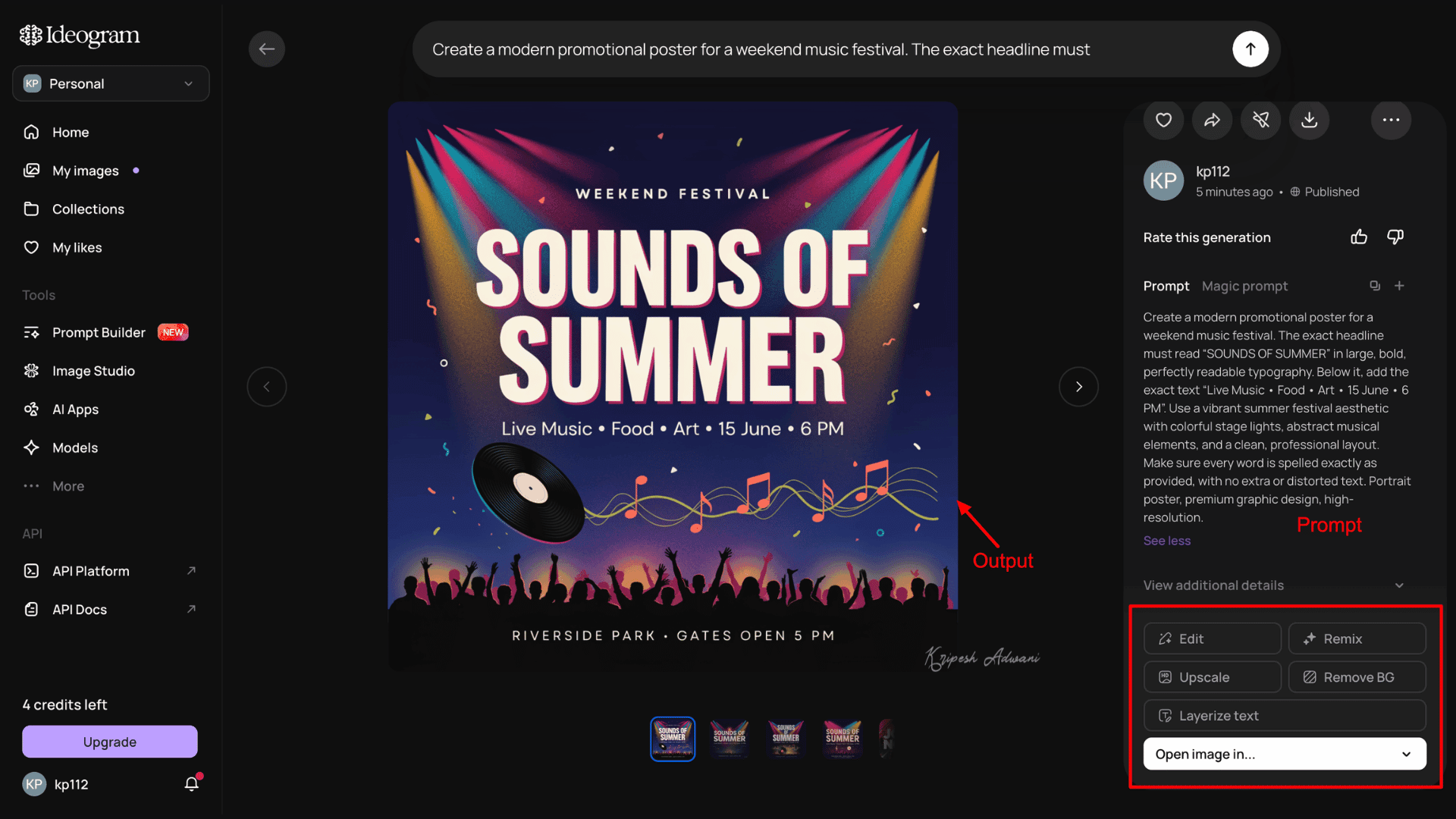
The generated images come without watermarks. You can type a rough idea, and Ideogram expands it into a detailed, well-structured prompt, which is great for beginners or when they’re stuck on what to write. Its Remix mode lets us take an existing generation from the community feed and modify it using a new prompt, style, or text.
But I have to be honest: Ideogram’s free tier has become more limited during 2026. Its weekly credits are much less than the earlier daily allowance. On the free plan, you’re also limited to 1K resolution and JPG exports. The image quality, though, still holds; it’s genuinely best for rendering text in AI-generated images. But I’d suggest using the free plan mainly for specific text-heavy projects rather than as your everyday free image generator.
Free Limits: 10 slow credits per week; 1 generation at a time; 2 Canvas boards; no private mode; no deletion of free generations.
Ideal users: Social media managers, print-on-demand sellers, and creators who need AI-generated visuals with clear, legible text.
Best Free AI Tools for Design and Presentations
12) Canva (Magic Studio)
Earlier, Canva was “just” a drag-and-drop design tool for non-designers. By 2026, Magic Studio has brought over 15 AI tools into the editor: text-to-image generation, background removal, a copywriting assistant, video editing, and even a full conversational AI layer with Canva AI 2.0.
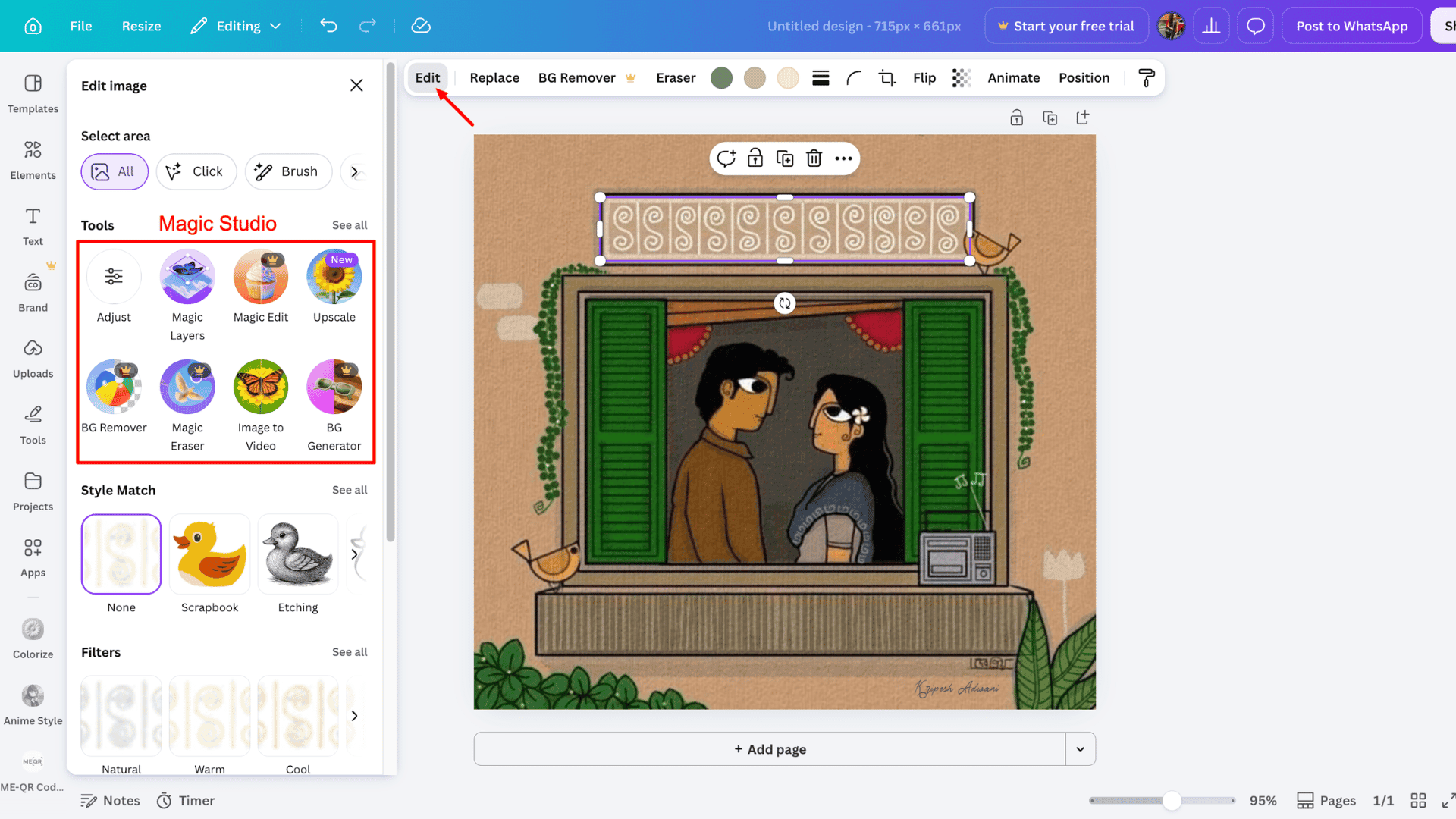
Now, you can build a flyer, carousel, or pitch deck from a single prompt in seconds. In another notable move this year, Affinity, the professional design suite Canva acquired in 2024, also became fully free.
Suppose you want an “Instagram post for a Black Friday sale.” Type the idea into Magic Design, and it can generate fully editable layouts. Magic Write can help you write captions, while Magic Media can generate images and short video clips from prompts. Magic Layers is another amazing feature that breaks down a flat image into separate text blocks, objects, and backgrounds; fully editable design.
Overall, I heavily rely on Canva Magic Studio in my workflow because I get 15+ AI tools in one editor. For me, it’s a low-barrier way to create professional visuals for social media posts, blog images, featured images, reports, presentations, and more.
Free Limits: Up to 20 uses of Standard or Premium AI features; access to Canva AI chat, Magic Write, Magic Design, photo/video animations, Magic Charts, AI Voice, and manual Beat Sync; 5GB cloud storage; 1 Brand Kit with up to 3 colors.
Ideal users: Small business owners, social media managers, and non-designer content creators who want an all-in-one design and AI workflow.
13) Gamma
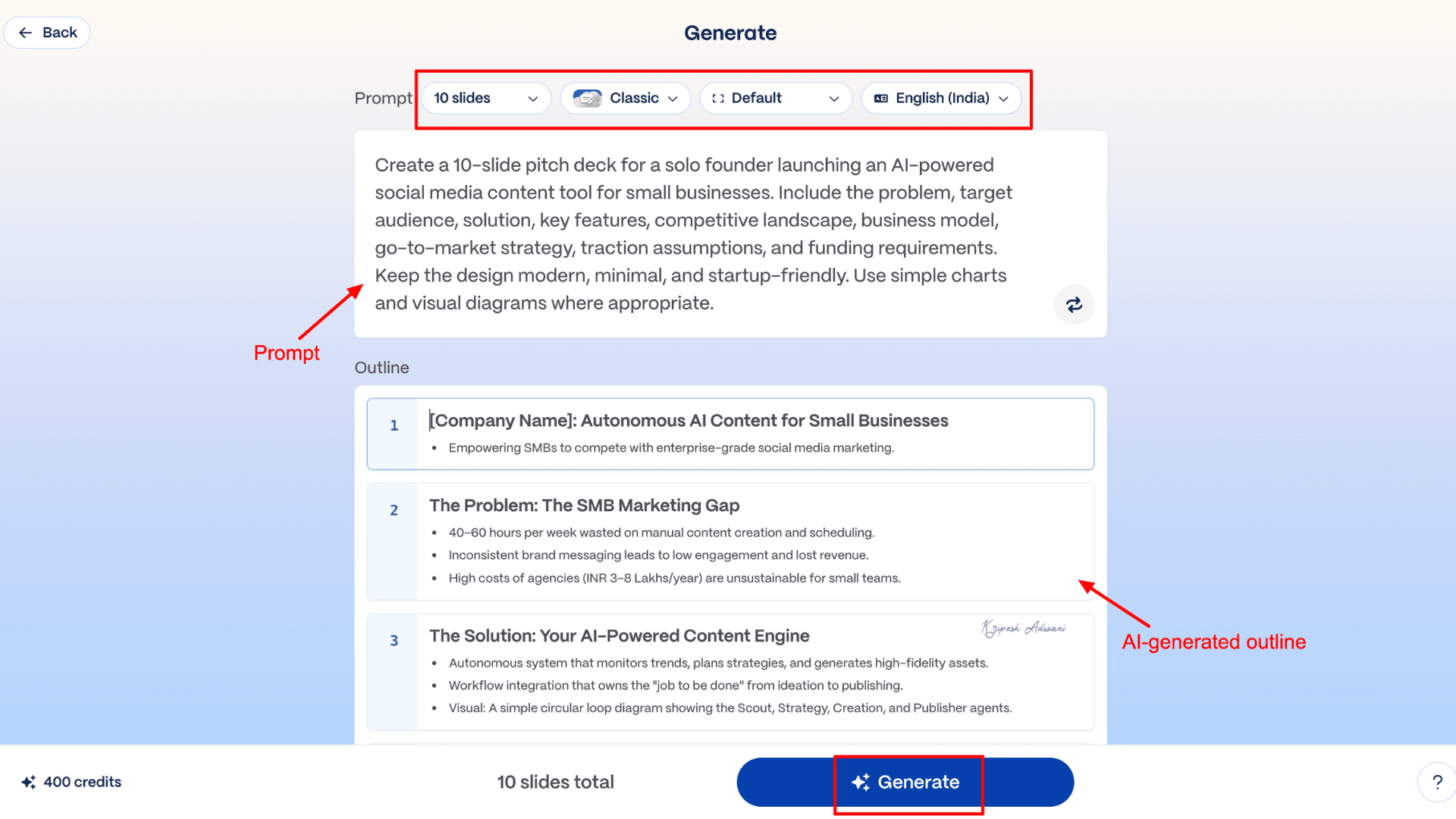
If you waste hours in PowerPoint and are looking for an AI tool only for pitch decks and business presentations, Gamma is worth trying. You can type a prompt, paste an outline, or upload a document, and Gamma generates a complete deck with the copy, layout, images, and charts. The tool is incredibly fast; I’ve generated an entire slide deck in under a minute.
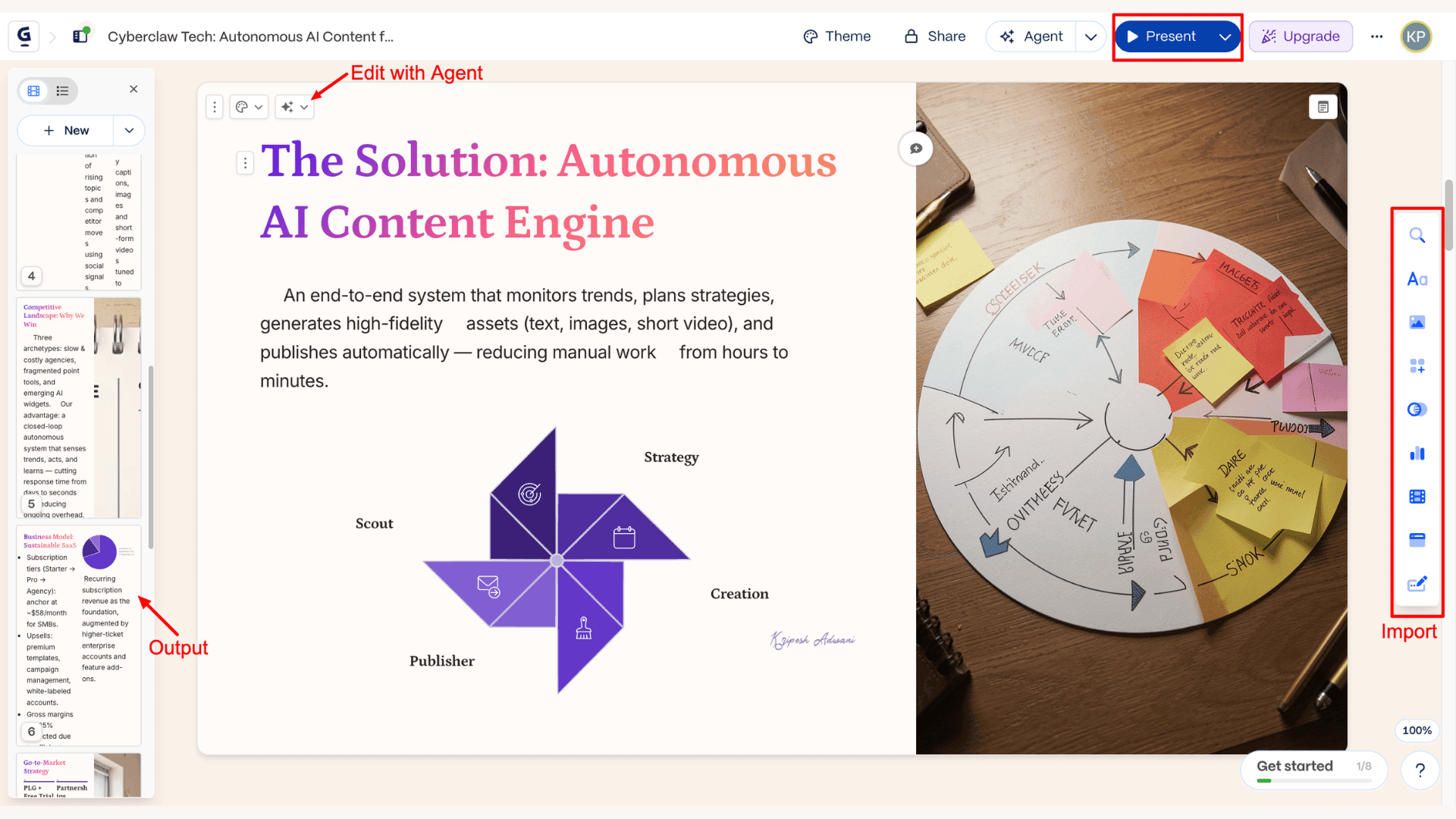
It also includes AI Agents for iterative edits. For example, we can ask Gamma to “add a chart to slide 2” or “make this slide more visual,” and it will modify the content accordingly. There are 100+ professional themes to choose from, and you can also import your brand kit to keep your presentations consistent.
Beyond presentations, Gamma can generate one-pagers, website landing pages, infographics, and social media assets from one source. It also supports real-time collaboration and rich embeds, including live charts, videos, and forms. Integrations with tools like Figma, Airtable, and Power BI make it more capable than a basic AI slide generator.
Free Limits: 400 credits at signup; up to 10 slides per prompt; import from PDF and PPTX; export to PDF, PPTX, PNG, and Google Slides with a “Made with Gamma” watermark.
Ideal users: Educators, solopreneurs, and professionals who need to create polished presentations quickly.
Best Free AI Video Tools
14) Synthesia
In a corporate environment, whether it’s compliance training or internal updates, video is often the default communication format. But the biggest problem is getting someone in front of the camera. Synthesia solves this problem. This AI video generator turns a text script into a presenter-led video using realistic AI avatars; no camera, actors, or studio required.
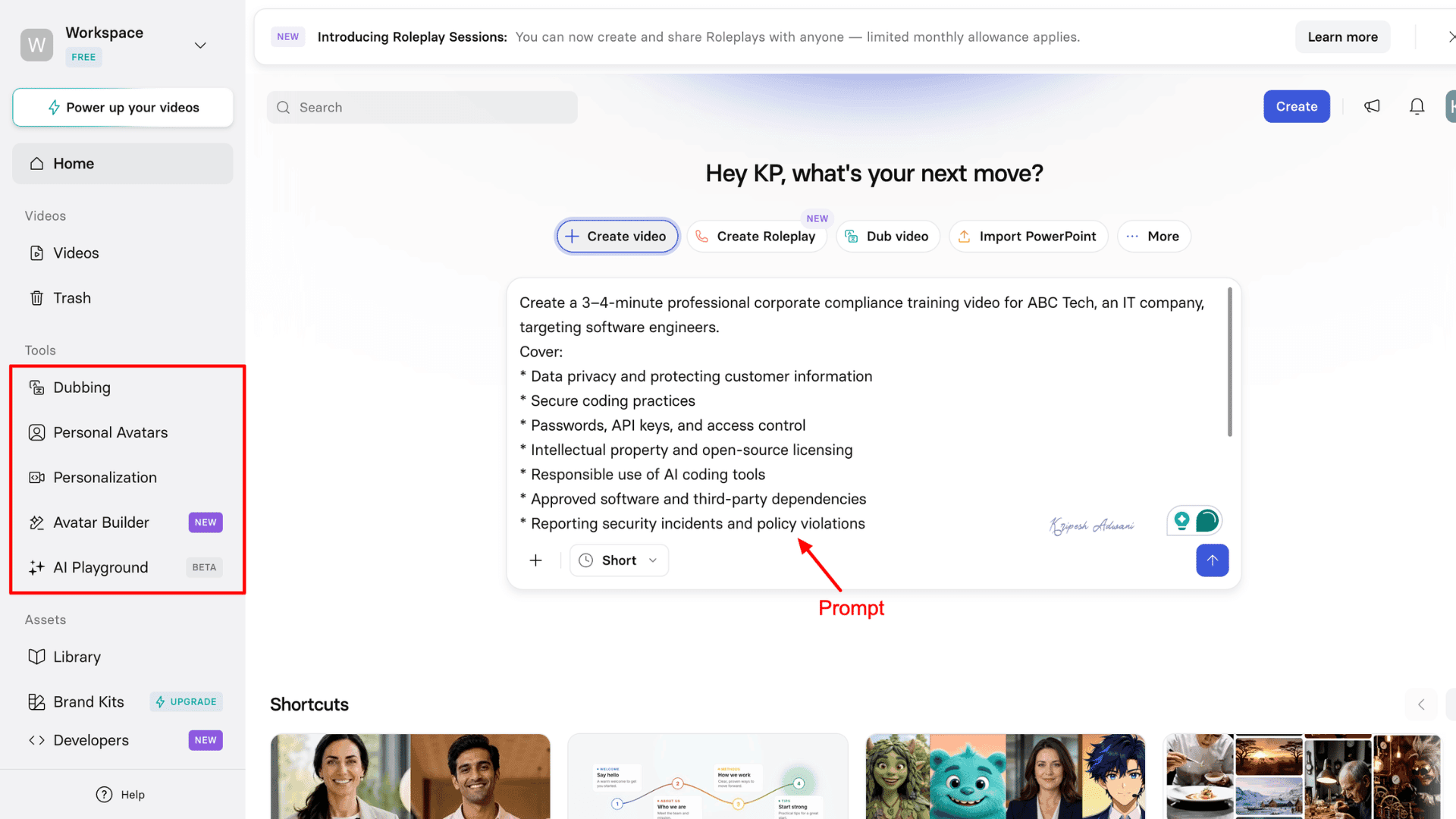
The free monthly allowance is enough to create a few short training modules or a product intro. You can choose from stock avatars or create custom avatars using your own footage. If you aren’t specifically looking for avatar-style videos, Synthesia also offers AI video generation by Google’s Veo 3 and OpenAI’s Sora 2 directly within the platform.
You can sign up for free without entering credit card details. But every free export carries a non-removable “Made with Synthesia” watermark, and free users cannot upload their own video clips or screen recordings.
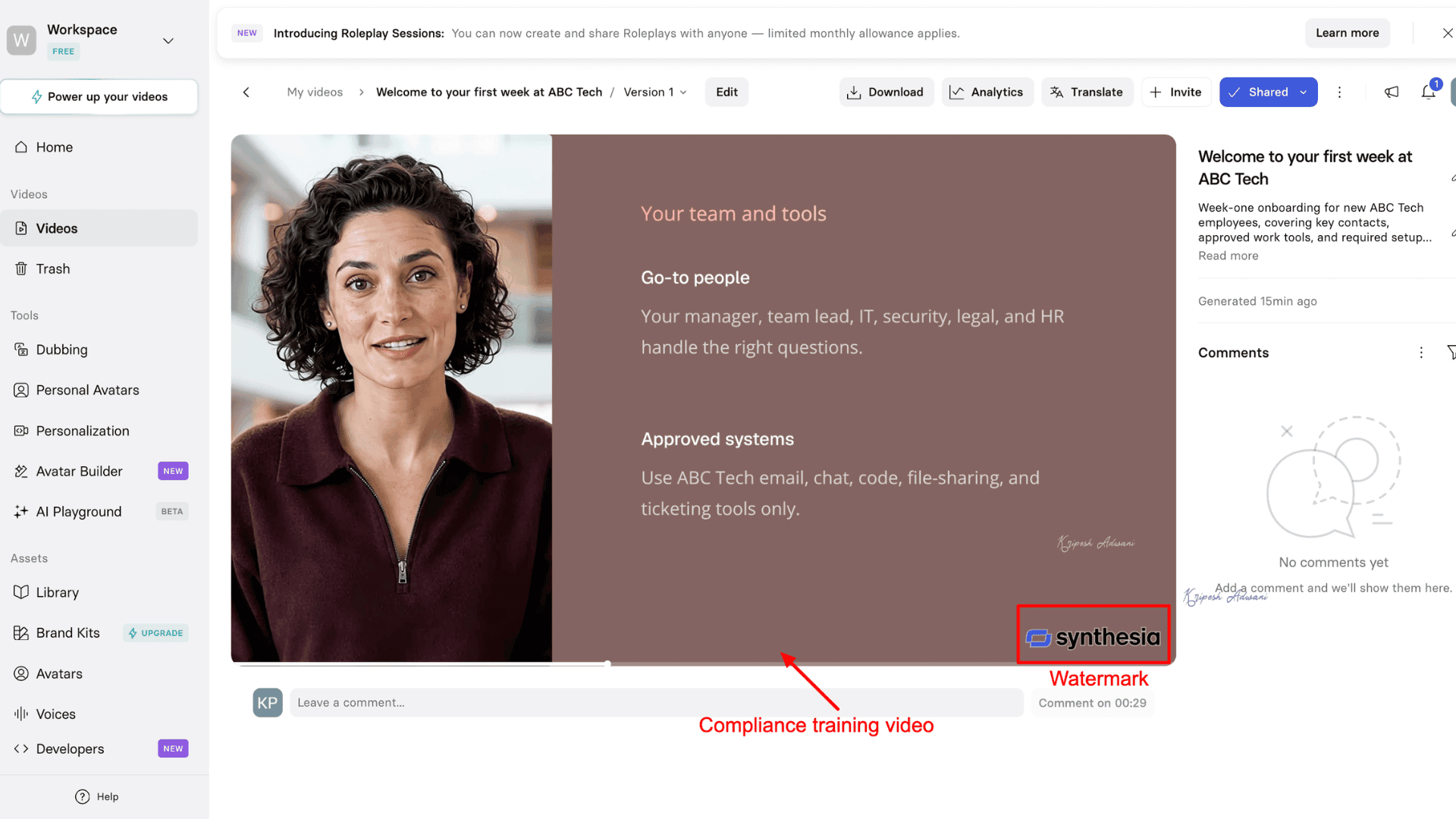
Free Limits: 10 minutes of video per month; 10 Roleplay sessions per month; 9 AI avatars; 120 minutes of AI dubbing per year; limited royalty-free content; 3 custom avatars.
Ideal users: Corporate L&D teams, HR professionals, educators, trainers, startups, solopreneurs, and consultants who need professional, multilingual AI avatar videos.
Best Free AI Resume Builder
15) AI ATS Resume Builder – CV
These days, recruiters don’t have time to go through thousands of resumes manually, so many companies rely on Applicant Tracking Systems (ATS) to screen applications. If your resume isn’t optimized for these systems, it can get filtered out before a recruiter even sees it, even if you’re qualified. AI ATS resume builder app solves this problem. It doesn’t make your resume “look nice,” but it makes it ATS-friendly and job-specific.
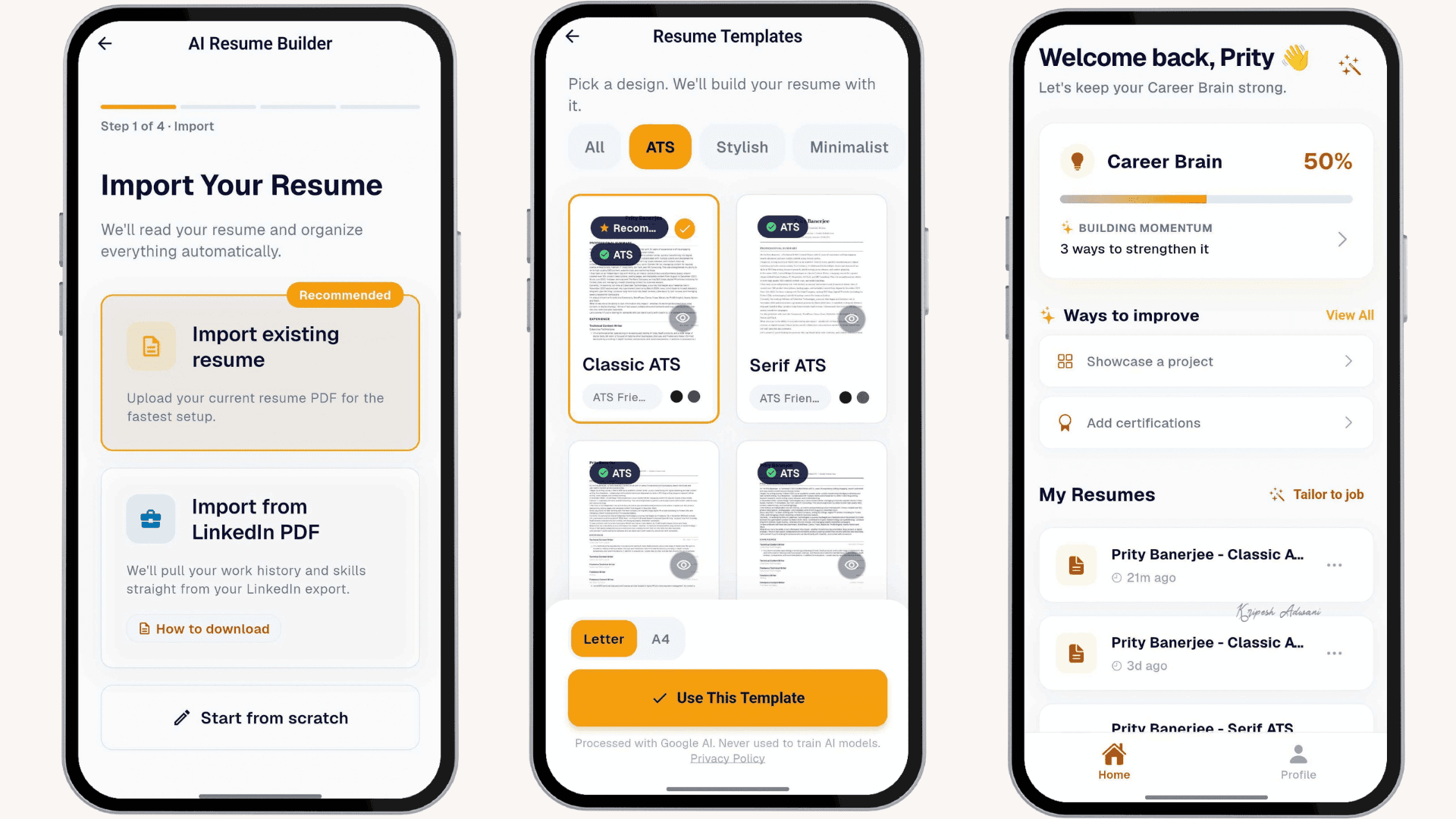
This mobile-first tool combines resume building, ATS optimization, job-specific tailoring, and interview preparation into one workflow without any cost. You can log in with Google, choose from 27 ATS-safe templates, and get AI suggestions for bullet points, summaries, and job-specific tailoring.
It doesn’t just give you an ATS match score. It shows you what’s working and what you should improve. Interview Prep feature uses your own resume as context. It generates questions based on the same job description you used to tailor your resume, and you can answer by typing or speaking. You can also generate a matching cover letter tailored to the same job.
Free Limits: Currently completely free; unlimited resumes, cover letters, ATS scoring, tailoring, and interview prep sessions; no watermark on exports.
Ideal users: Indian college students, freshers, early-career job seekers, and career switchers who want a completely free, mobile-first AI resume builder.
Best Free AI Audio Tools
16) ElevenLabs
Content creators don’t always have time to record voiceovers for multiple videos. Educators often face the same problem when they need voiceovers for class presentations or online course modules. That’s where ElevenLabs comes in handy.
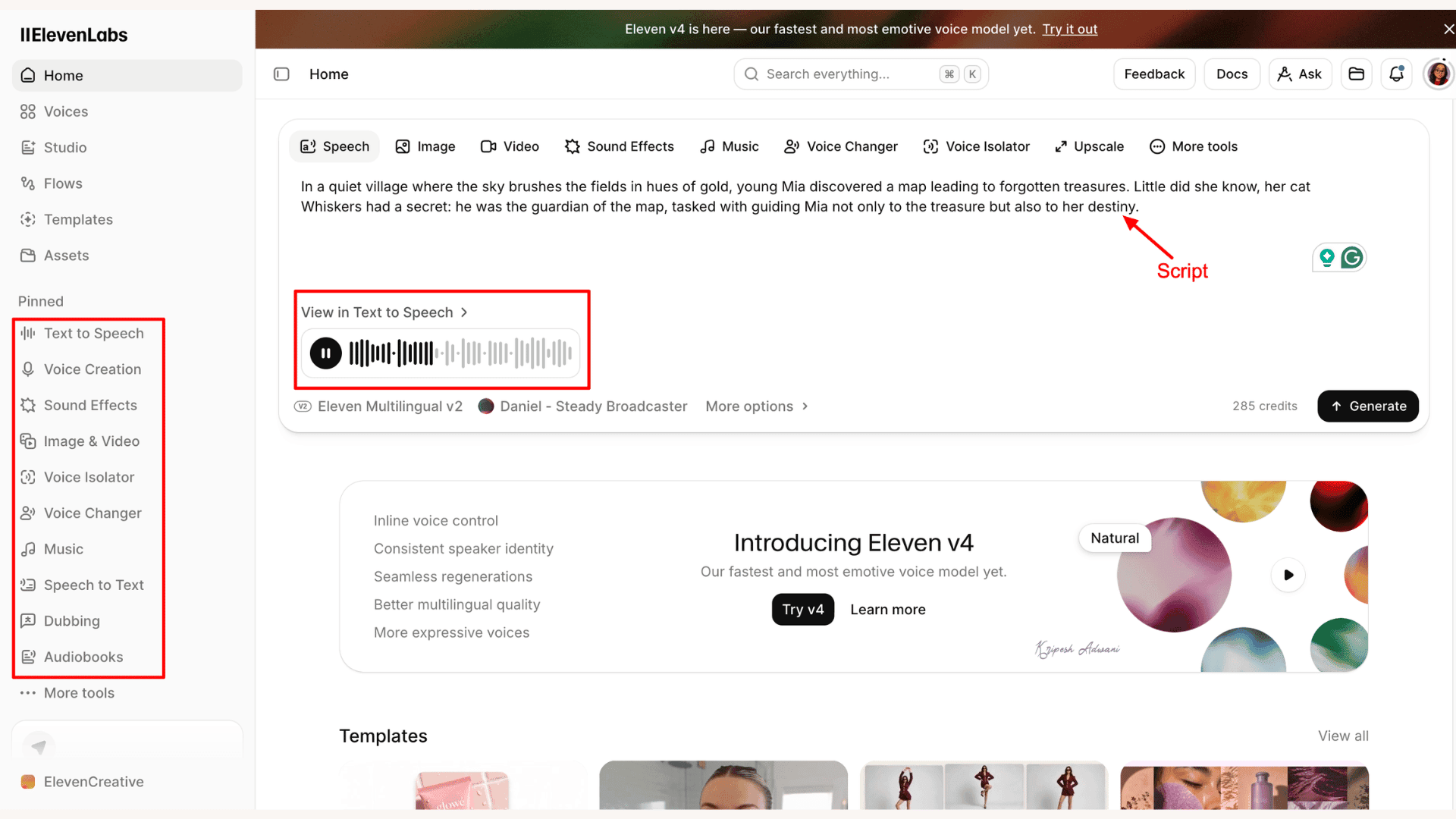
It’s a gold-standard AI text-to-speech platform, and I’ve been using it for years. To me, its voices sound surprisingly human, with natural emotion and intonation. It can generate voiceovers in languages including Hindi, English, Spanish, Tamil, and Bengali, with region-specific accents. You can even clone your own voice.
The platform also gives you fine-grained controls for things like stability, style exaggeration, and speaking speed. One limitation is that audio generated on the free plan can’t be used in monetized content.
Free Limits: 10 minutes of text-to-speech generation per month; access to 74 languages; 3 custom voice clones; 128 kbps, 44.1 kHz audio quality; API access; no commercial use.
Ideal users: Educators, YouTubers, reel creators, and podcasters who want highly realistic AI voiceovers.
17) Wispr Flow
Have you ever checked how many words you type in a day? Emails, messages, documents, code you’re probably typing thousands of words every day. For people with heavy workloads like me, Wispr Flow, an AI voice dictation tool, is a real time-saver. You talk, and it turns your speech into clean, properly punctuated text anywhere on your Mac, Windows PC, iPhone, or Android device. It helps a lot in writing emails, Slack messages, documents, or even code comments.
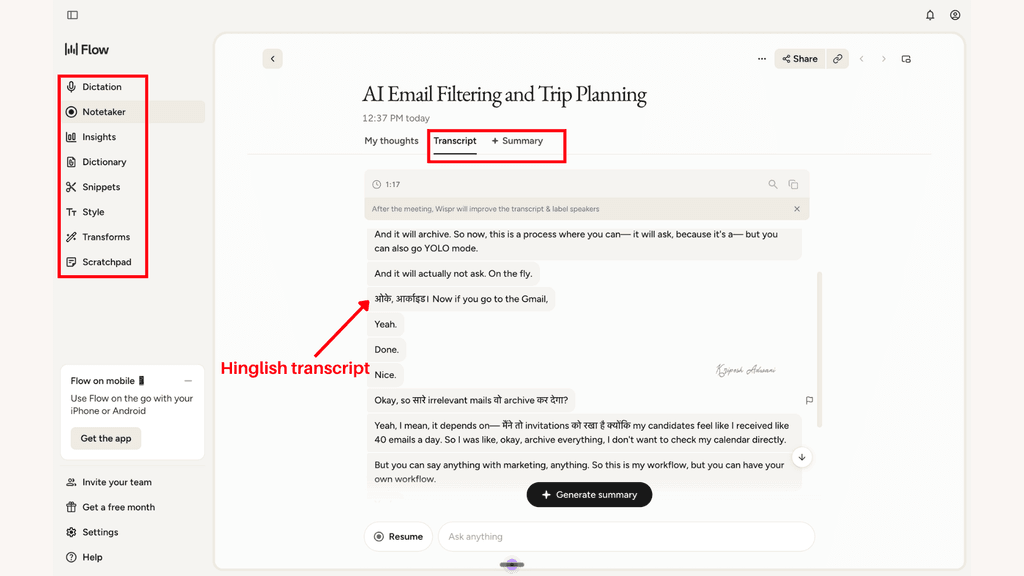
I also find it useful as an AI meeting note-taker. Unlike a basic meeting note-taking tool, it doesn’t simply copy every word we say. It automatically removes filler words like “um” and “uh,” fixes repetitions, corrects false starts, and adds proper punctuation.
You can also set different writing styles for different contexts, formal for emails, casual for Slack, or very casual for messages. Wispr Flow supports 100+ languages, and its Hinglish (Hindi + English) mode works particularly well for Indian users. It also learns your frequently used words, names, and jargon. You can save snippets such as email templates, links, or bios and use a voice shortcut to expand them instantly.
Free Limits: 2,000 words per week on desktop and 1,000 per week on mobile; Notetaker included on Mac with weekly meeting limits; 100+ languages; personal dictionary and snippets; no Command Mode for voice editing.
Ideal users: Students, solopreneurs, and content creators who type a lot and want to improve productivity.
How I chose the Best Free AI Tools
For this “Best Free AI Tools” article, I only included tools that meet all the following criteria:
- The tool must offer a usable free plan, not just a trial.
- The free allowance should be enough to actually use the tool.
- The tool should generate or improve content or automate a useful task.
- It should be reasonably easy to learn and use.
- It should have a clear privacy policy and transparent data-handling practices.
Every tool featured here had a working free tier as of September 2026, with limits I personally verified. If a tool felt too buggy, slow, restrictive, or impractical to use on the free plan, I left it out.
Why Should You Trust Me?
I’ve been working full-time in the digital industry since 2015. Over the years, I’ve used, tested, and reviewed hundreds of AI tools, including AI apps for language learning, image caption generators, translation apps, content writing tools, and AI tools for beginners.
I used each tool for real-world tasks rather than simply relying on the features listed on its website. The goal is simple: to recommend free AI tools that you can actually use, not tools that are technically “free” but become unusable after a few clicks.
Conclusion
In this article, we discussed some of the best free AI tools available in the market these days. The world of AI is constantly evolving and we will surely get to witness more AI tools in the future. I hope you found this article informative and I hope these AI tools will be helpful to you.
Which of these tools is your favorite so far? Have you used any other AI tools that you’d like to recommend? Do share with me in the comments box below and I’ll try to test them and include them in this list.
Anyway, this is Kripesh signing off. I’ll be back soon with more informative blog posts. Till then, keep learning and take care. Cheers! 🙂
FAQs
Do I need a credit card to use these free AI tools?
No, you don’t need to use a credit card to use these free AI tools. Every tool on your list has a free plan you can start with just an email or a Google account.
Which free AI tool is best for students?
Gemini Notebook is best for studying your own notes and readings; Consensus helps you find credible research papers for essays; and Wordtune is ideal for polishing sentences in your essays.
Which free AI tool is best for content creators?
ChatGPT provides unlimited text chat, so it is useful for content creators who need ideas and script help. Canva is great for designing thumbnails and social media graphics. And for voiceovers, ElevenLabs is hard to beat.
Can I use these free AI tools for commercial projects?
Some of these tools allow commercial use of free-tier outputs, often with certain conditions. The terms vary by tool. For example, ElevenLabs does not include a commercial license on its free plan, while Leonardo AI makes free-tier creations public and allows other users to remix them.